
Giving birth is the process by which a baby moves through the birth canal and is delivered, typically occurring between 37 and 42 weeks of pregnancy. According to the American College of Obstetricians and Gynecologists (ACOG), labor progresses through three distinct stages — cervical dilation, delivery of the baby, and delivery of the placenta — with the entire process lasting an average of 12 to 18 hours for first-time mothers. Understanding what happens at each stage helps you feel prepared and confident as your due date approaches.
Key takeaways
- ✓Giving birth involves three stages: cervical dilation, baby delivery, and placenta delivery.
- ✓Early signs include regular contractions, bloody show, and water breaking.
- ✓The 5-1-1 rule helps determine when to head to the hospital.
- ✓Pain relief options range from epidural to nitrous oxide to unmedicated techniques.
- ✓About one in three births in the United States involves a cesarean delivery.
- ✓A written birth plan communicates your preferences but should remain flexible.
- ✓First-time labor averages 12 to 18 hours; subsequent births are often faster.
- ✓Start preparing for giving birth by week 36 with a hospital bag, birth plan, and provider discussion.
Giving birth is one of the most physically and emotionally transformative experiences in a woman’s life — and one that very few feel fully prepared for. Whether you are approaching your due date for the first time or planning a subsequent delivery, understanding what actually happens during labor and delivery can reduce anxiety and help you make informed decisions. According to the Centers for Disease Control and Prevention (CDC), approximately 3.6 million babies are born in the United States each year, with about 68 percent delivered vaginally and 32 percent by cesarean section.
This guide covers every aspect of giving birth that expectant mothers and their partners need to know — from recognizing the earliest signs of labor through delivery and the moments that follow. Every section is sourced from Tier 1 medical authorities including ACOG, the Mayo Clinic, and the National Institutes of Health (NIH). No two births are the same, but the physiological process follows a well-documented pattern that your healthcare team monitors carefully. Understanding that pattern puts you in the strongest position to advocate for yourself and your baby when the time comes.
What are the three stages of labor?
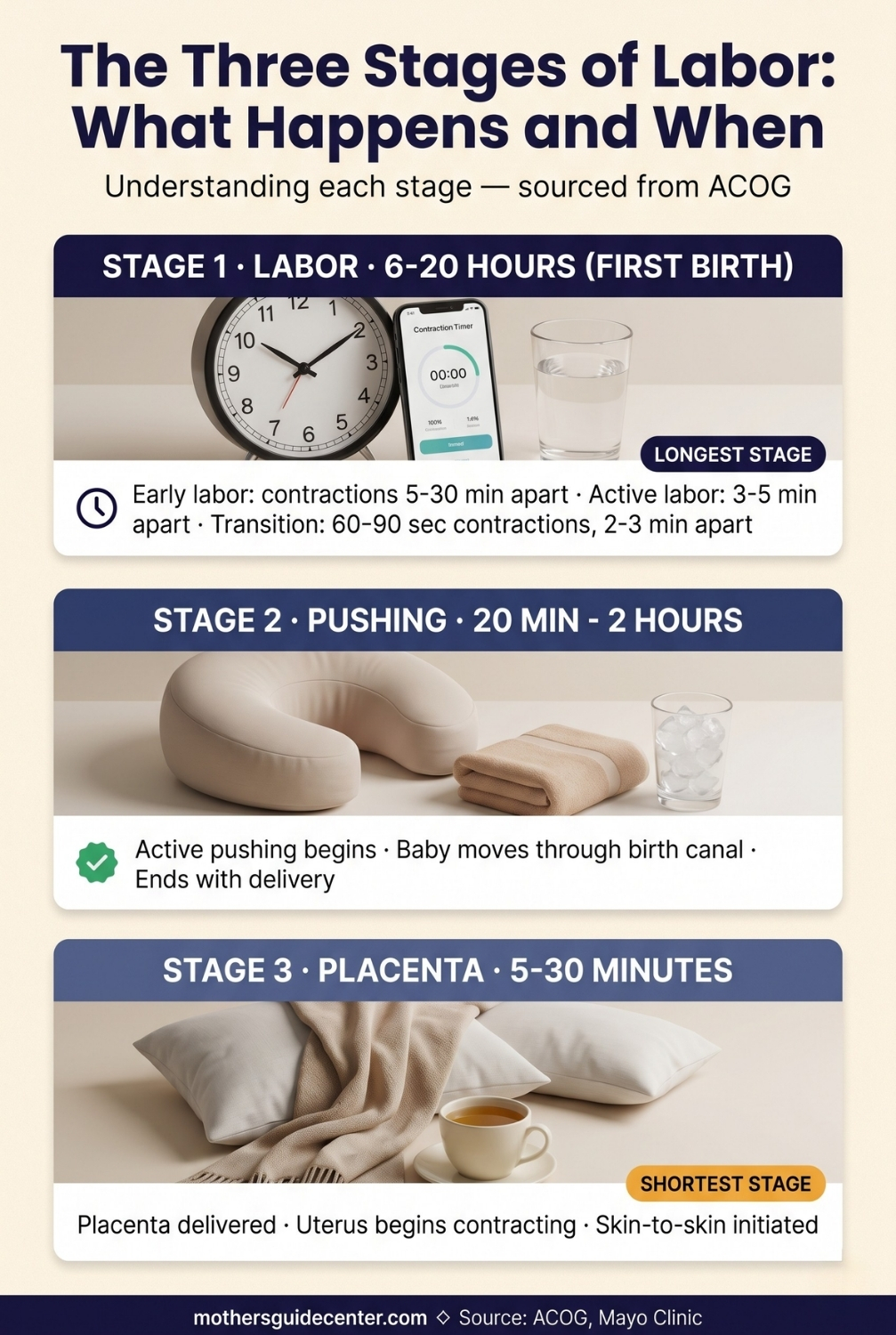
Giving birth is a three-stage physiological process that begins with regular uterine contractions and ends with the delivery of the placenta. According to ACOG, these stages provide a framework for monitoring progress and guiding clinical decisions, though every birth unfolds at its own pace.
Stage 1 — Cervical dilation: The longest stage, divided into early labor (latent phase) and active labor. During early labor, contractions gradually thin and open the cervix from 0 to about 6 centimeters. This phase may last 6 to 12 hours or longer for first-time mothers. Active labor begins around 6 centimeters dilation and continues until the cervix reaches 10 centimeters (fully dilated). Contractions during active labor become stronger, lasting 45 to 60 seconds and arriving every 3 to 5 minutes. The final portion of Stage 1 — transition — is the most intense, typically lasting 15 minutes to an hour as the cervix completes dilation from 8 to 10 centimeters.
Stage 2 — Delivery of the baby: This stage begins when the cervix is fully dilated and ends when the baby is born. According to the Mayo Clinic, the second stage can last from 20 minutes to several hours. For first-time mothers, it averages about 1 to 3 hours. During this stage, you push with each contraction to help move the baby through the birth canal. When the baby’s head becomes visible at the vaginal opening, this is called crowning.
Stage 3 — Delivery of the placenta: After the baby is born, mild contractions continue as the uterus contracts to separate and expel the placenta. According to the NIH, this stage usually takes 5 to 30 minutes. Your provider may gently massage the uterus and apply mild traction on the umbilical cord to assist delivery of the placenta.
What are the early signs that labor is starting?
Early labor signs are a collection of physical changes that indicate your body is preparing for giving birth, typically appearing days or even weeks before active labor begins. Recognizing these signs helps you distinguish between pre-labor preparation and the onset of true labor. According to the Mayo Clinic, the following are the most common indicators.
Lightening (baby dropping): The baby descends deeper into the pelvis, which may relieve pressure on the diaphragm but increase pelvic pressure. This can happen days to weeks before labor. Bloody show: A small amount of blood-tinged mucus discharge indicates the cervix is beginning to dilate. The mucus plug — a thick barrier that sealed the cervix during pregnancy — dislodges as the cervix opens. Water breaking: The amniotic sac ruptures, releasing fluid. Despite its dramatic portrayal in films, only about 10 percent of women experience their water breaking before contractions start, according to the American Pregnancy Association. Regular contractions: True labor contractions follow a pattern — they become progressively closer together, longer in duration, and stronger in intensity. Nesting instinct: An urge to clean, organize, or prepare the home is reported by many women in the final days before labor, though it is not a medically defined sign.
What is the difference between Braxton Hicks and real contractions?
Braxton Hicks contractions are irregular, typically painless uterine tightenings that occur throughout pregnancy as the uterus practices for giving birth, while true labor contractions follow a predictable pattern of increasing intensity, frequency, and duration. According to Cleveland Clinic, the key differences are as follows:
| Feature | Braxton Hicks | True Labor |
|---|---|---|
| Timing | Irregular, unpredictable | Regular, predictable pattern |
| Intensity | Mild, does not increase | Progressively stronger |
| Location | Front of abdomen | Back to front (wrapping) |
| With movement | Stop with position change | Continue regardless |
| Cervical change | No dilation or effacement | Causes progressive dilation |
If you are unsure whether your contractions are Braxton Hicks or true labor, try walking, changing position, or drinking water. Braxton Hicks contractions typically ease with rest or movement changes. If contractions persist or intensify, time them — and contact your provider when they follow the 5-1-1 pattern (every 5 minutes, lasting 1 minute, for at least 1 hour).
How do you know when to go to the hospital?
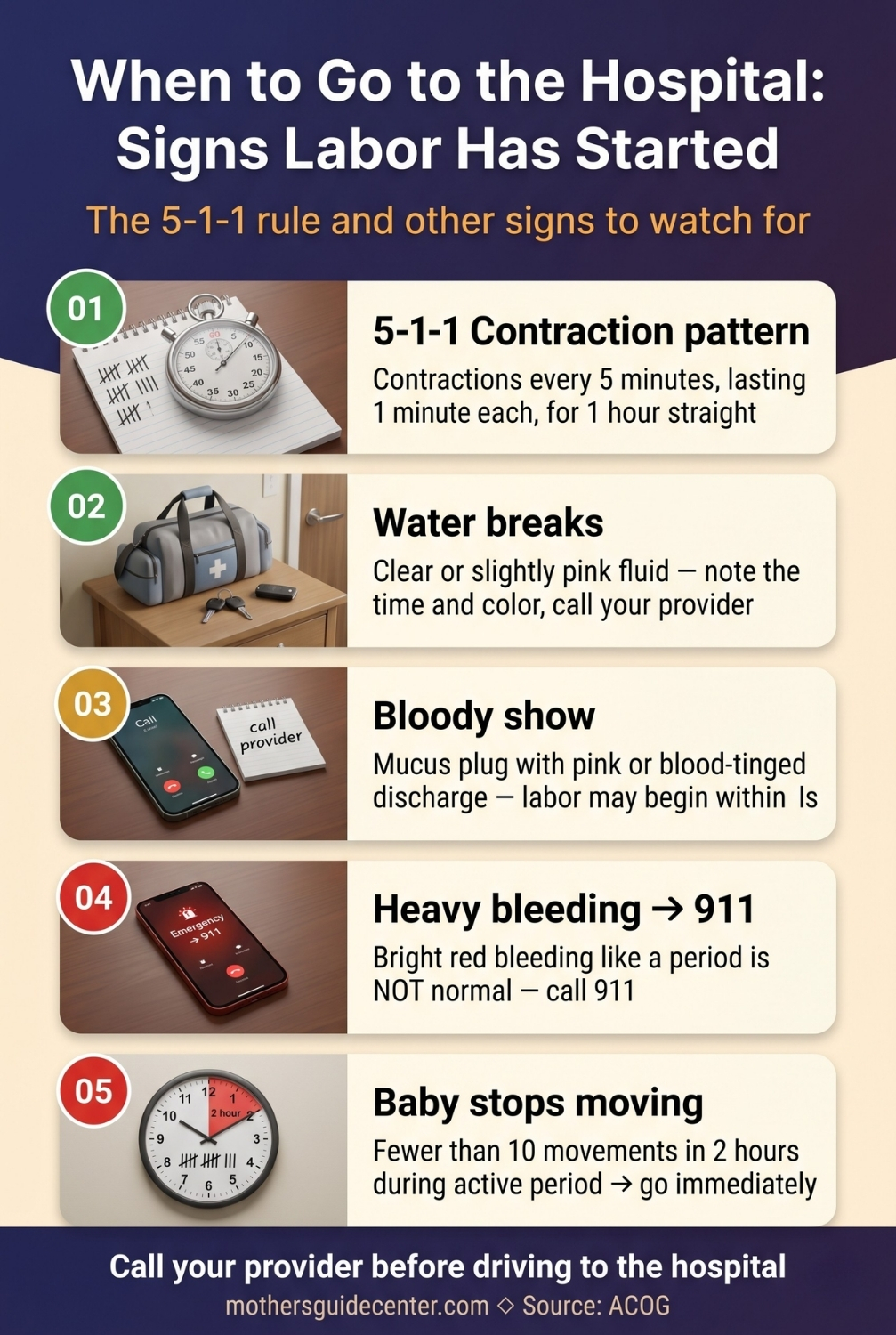
Knowing when to go to the hospital for giving birth is one of the most common concerns for expectant mothers, and the answer depends on contraction patterns, physical symptoms, and your individual risk factors. According to ACOG, the general guideline is to call your provider or head to the hospital when contractions follow the 5-1-1 rule: contractions every 5 minutes, lasting 1 minute each, for at least 1 hour. Some providers may recommend a 4-1-1 or 3-1-1 pattern depending on your distance from the hospital and birth history.
You should go to the hospital immediately — regardless of contraction timing — if your water breaks (especially if the fluid is green, brown, or foul-smelling, which may indicate meconium), if you experience heavy vaginal bleeding (not just spotting), if you notice decreased fetal movement, or if you have severe headache with vision changes. According to the March of Dimes, it is always better to be evaluated and sent home than to delay evaluation when warning signs are present. Your provider should give you specific instructions during your third trimester appointments about when to call and when to go directly to the hospital.
What pain relief options are available during labor?
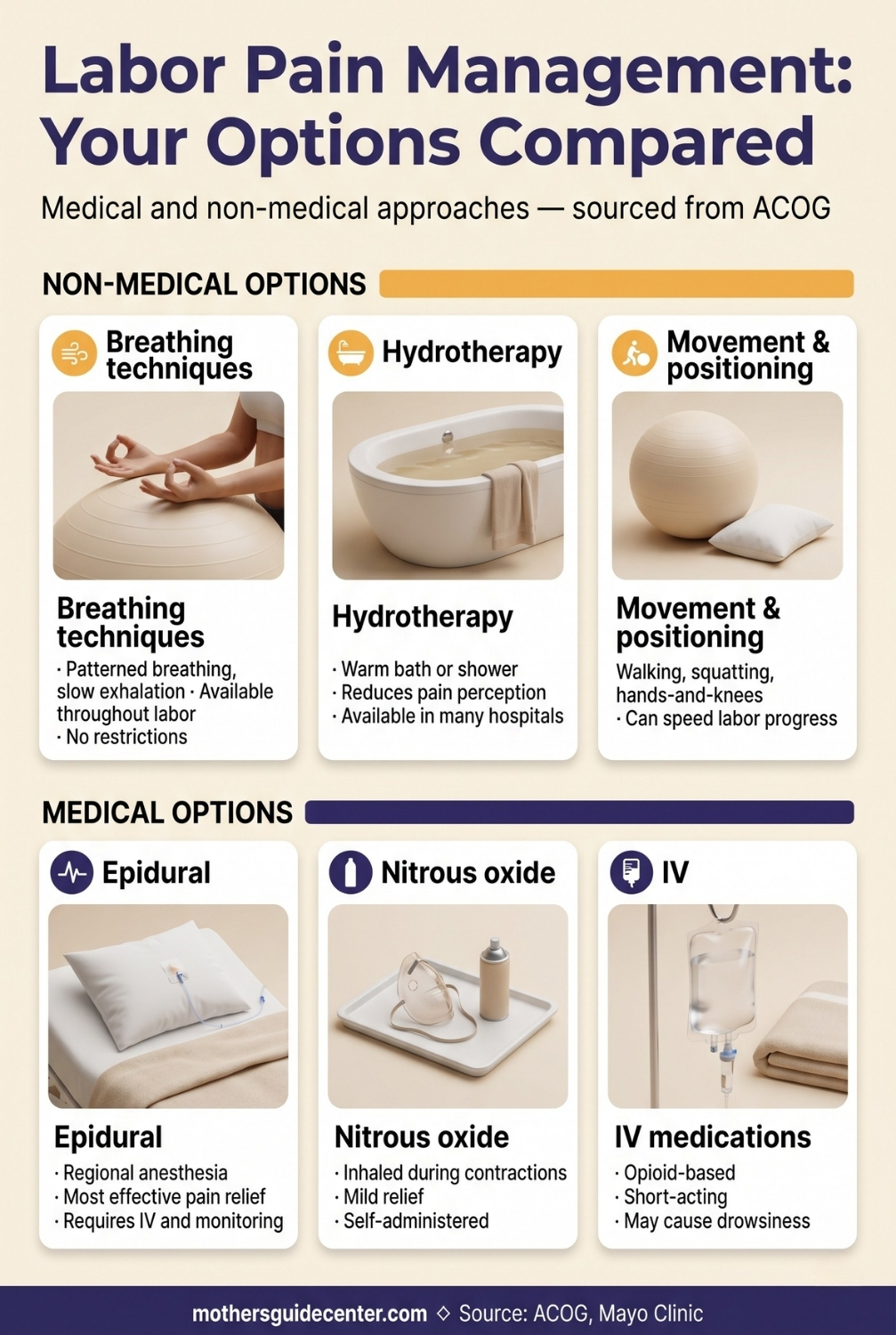
Pain management when giving birth is a spectrum of evidence-based options ranging from non-pharmacological techniques to regional anesthesia, and the right choice depends on your preferences, medical history, and how labor progresses. According to ACOG, no single method is superior for all women, and your pain management plan can change during labor as needed.
Epidural anesthesia is the most common form of pain relief during labor in the United States, used in approximately 73 percent of vaginal deliveries according to the CDC. An epidural involves placing a catheter in the lower back to deliver continuous local anesthetic and pain medication to the nerves serving the lower body. Most women experience significant pain reduction within 10 to 20 minutes. An epidural allows you to remain alert and can be adjusted throughout labor. Possible effects include lowered blood pressure, difficulty pushing, and in some cases a longer second stage of labor.
Nitrous oxide (laughing gas) is a self-administered inhaled analgesic that reduces the perception of pain without eliminating it completely. According to the Mayo Clinic, it is widely used in Europe and increasingly available in U.S. hospitals. It allows full mobility and wears off within minutes. IV opioids such as fentanyl or morphine may be administered during early or active labor to take the edge off pain, though they can cause drowsiness and may affect the newborn’s breathing if given too close to delivery.
Non-pharmacological methods include breathing techniques, hydrotherapy (laboring in warm water), movement and position changes, massage, birthing balls, and transcutaneous electrical nerve stimulation (TENS). These methods can be used alone for an unmedicated birth or in combination with medical pain relief. Evidence supports that continuous labor support from a doula or partner can reduce the need for medical pain intervention and improve birth satisfaction.
What happens during a cesarean birth?
A cesarean birth (C-section) is a surgical delivery in which the baby is born through incisions made in the mother’s abdomen and uterus, performed when vaginal giving birth poses risks to the mother or baby. According to the CDC, approximately 32 percent of all births in the United States are cesarean deliveries. A C-section may be planned in advance (elective) or performed as an emergency when complications arise during labor.
Common reasons for a planned cesarean include breech presentation (baby positioned feet-first), placenta previa (placenta covering the cervix), carrying multiples, or a previous cesarean with certain types of uterine incisions.
Emergency cesareans may be needed if labor stalls despite interventions, the baby shows signs of distress on fetal monitoring, the umbilical cord prolapses, or the placenta separates from the uterine wall prematurely (placental abruption). The procedure typically takes 45 to 60 minutes. Most women receive spinal or epidural anesthesia, allowing them to remain awake during the birth. Recovery from a cesarean is typically longer than vaginal birth — hospital stays average 2 to 4 days, and full recovery may take 6 to 8 weeks. According to ACOG, many women who have had a cesarean may be candidates for vaginal birth after cesarean (VBAC) in subsequent pregnancies, depending on the type of uterine incision and individual circumstances.
What is a birth plan and should you make one?
A birth plan is a written document that communicates your preferences for labor, delivery, and immediate postpartum care to your healthcare team. According to the March of Dimes, a birth plan covers topics such as who you want present during delivery, your pain management preferences, your positions for laboring and pushing, whether you want delayed cord clamping, and your preferences for immediate skin-to-skin contact after birth.
A birth plan is helpful because it encourages you and your partner to research options and discuss them with your provider before giving birth. It gives the labor and delivery nurses a quick reference for your preferences, especially during shift changes. However, it is important to approach a birth plan with flexibility. Labor is inherently unpredictable, and clinical circumstances may require changes. ACOG recommends discussing your birth plan with your provider during a prenatal visit around 32 to 36 weeks. Topics to address include your preferences for fetal monitoring (continuous vs. intermittent), IV fluids, mobility during labor, episiotomy, delayed cord clamping, vitamin K and eye ointment for the newborn, and breastfeeding initiation within the first hour.
How long does labor usually last?
Labor duration is the total time from the onset of regular contractions to giving birth and delivery of the placenta, and it varies significantly based on whether this is a first birth, the baby’s position, and whether labor is induced or spontaneous. According to NIH, the average durations for each stage are as follows.
For first-time mothers (nulliparous), the first stage averages 6 to 12 hours for early labor and 4 to 8 hours for active labor. The second stage (pushing) averages 1 to 3 hours, and the third stage (placenta) usually completes within 5 to 30 minutes. Total average for a first birth: approximately 12 to 18 hours, though wide variation is normal. For women who have given birth before (multiparous), labor is often faster — the first stage may be 2 to 5 hours, and pushing may last only minutes to an hour. According to Cleveland Clinic, induced labor tends to progress differently than spontaneous labor and may take longer, particularly during the early phase.
It is important to understand that these are averages. Some women progress through labor in a few hours, while others experience early labor for a day or more. ACOG updated its definition of “prolonged labor” in recent guidelines, emphasizing patience during the latent phase and defining active labor as beginning at 6 centimeters rather than the previously used 4 centimeters — a shift that has reduced unnecessary cesarean interventions.
What happens immediately after giving birth?
The period immediately after giving birth is a critical transition for both mother and baby, involving physiological changes, initial bonding, and medical assessments that set the foundation for postpartum recovery. According to ACOG, the first hour after birth — sometimes called the “golden hour” — is an important window for skin-to-skin contact and breastfeeding initiation.
Within minutes of delivery, the umbilical cord is clamped and cut (delayed cord clamping for 30 to 60 seconds is now recommended by ACOG for most births to increase the newborn’s iron stores). The baby is placed on your chest for skin-to-skin contact, which helps regulate the newborn’s temperature, heart rate, and breathing, and stimulates early breastfeeding. Your healthcare team assesses the baby using the Apgar score at 1 and 5 minutes after birth, evaluating heart rate, breathing, muscle tone, reflexes, and color.
For you, the uterus continues to contract to expel the placenta and begin shrinking back toward its pre-pregnancy size. Your provider examines the placenta to ensure it is intact and checks for any tears to the perineum or birth canal that may require stitches. According to the Mayo Clinic, uterine massage after delivery helps prevent excessive bleeding (postpartum hemorrhage). You may experience shaking, chills, or nausea immediately after delivery — these are normal physiological responses. A nurse monitors your vital signs, bleeding, and uterine firmness frequently during the first few hours after birth.
How should you prepare for giving birth?
Preparing for giving birth is a structured process that ideally begins in the third trimester and includes physical readiness, logistical planning, and emotional preparation. According to ACOG, discussing your birth preferences with your provider around 32 to 36 weeks gives you time to make informed decisions about pain management, delivery options, and postpartum care.
Physical preparation includes staying active with provider-approved exercise (walking, prenatal yoga, and pelvic floor exercises are commonly recommended), practicing breathing and relaxation techniques, and attending a childbirth education class. According to the Mayo Clinic, classes offered by hospitals typically cover the stages of labor, pain management options, breathing exercises, and what to expect during recovery.
Logistical preparation includes packing a hospital bag by week 36, pre-registering at your hospital or birth center, installing the infant car seat, arranging childcare for older children, understanding your insurance coverage for delivery and newborn care, and planning your route to the hospital including a backup route. Keep your provider’s after-hours phone number in your phone contacts.
Emotional preparation involves discussing fears or anxieties with your provider or a therapist, learning about your pain management options so you feel confident about your choices, and talking with your birth partner about their role during labor — whether that means coaching through contractions, advocating for your preferences, or simply being a calm presence.
Frequently asked questions
What does a contraction feel like?
A contraction is an involuntary tightening of the uterine muscles that most women describe as intense pressure starting in the lower back and wrapping around to the front of the abdomen. According to ACOG, true labor contractions become progressively stronger, longer, and closer together over time, unlike Braxton Hicks contractions which remain irregular and fade with movement or rest.
Can labor start without your water breaking?
Labor beginning without water breaking is the most common scenario. According to the American Pregnancy Association, only about 10 percent of women experience their water breaking before contractions begin. For most women, the amniotic sac ruptures during active labor, and in some cases a healthcare provider may need to break it manually during delivery.
How dilated do you have to be to be admitted to the hospital?
Hospital admission for giving birth typically occurs when the cervix has dilated to approximately 4 to 6 centimeters and contractions follow a consistent pattern. According to ACOG, active labor is now defined as beginning at 6 centimeters dilation, though providers may admit earlier if contractions are regular, water has broken, or complications are present.
What is the 5-1-1 rule for contractions?
The 5-1-1 rule is a widely used guideline that suggests calling your provider or heading to the hospital when contractions come every 5 minutes apart, each lasting 1 minute long, and this pattern has continued for at least 1 hour. Some providers use a 4-1-1 or 3-1-1 variation depending on distance to the hospital, previous birth history, and individual risk factors.
Can you eat or drink during labor?
Eating and drinking during labor depends on individual circumstances and provider policy. According to ACOG, low-risk women in labor may consume clear liquids and light foods during early labor. Many hospitals allow clear liquids throughout labor. However, eating is typically restricted if a cesarean birth becomes likely, to reduce aspiration risk during anesthesia.
Is it better to give birth naturally or with an epidural?
Both unmedicated and epidural-assisted approaches to giving birth are evidence-supported options, and neither is inherently better than the other. According to ACOG, the choice depends on individual pain tolerance, medical history, labor progression, and personal preference. An epidural provides effective pain relief for most women but may slightly increase the risk of assisted delivery, while unmedicated birth allows full mobility but involves managing intense pain through other techniques.
When to contact your healthcare provider
Contact your provider or go to the hospital immediately if you experience:
- ⚠️Heavy vaginal bleeding — soaking a pad in an hour or passing large clots
- ⚠️Green, brown, or foul-smelling amniotic fluid — may indicate meconium in the amniotic sac
- ⚠️Decreased fetal movement — fewer than 10 movements in 2 hours during the third trimester
- ⚠️Severe headache with vision changes — possible sign of preeclampsia, especially with swelling
- ⚠️Fever over 100.4°F (38°C) — may indicate infection requiring immediate evaluation
- ⚠️Umbilical cord visible or felt in vagina — cord prolapse is a medical emergency, call 911
This article is for educational purposes only and does not replace medical advice from a qualified healthcare provider.
Sources
- American College of Obstetricians and Gynecologists. (2024). How to Tell When Labor Begins. ACOG.org.
- American College of Obstetricians and Gynecologists. (2024). Medications for Pain Relief During Labor and Delivery. ACOG.org.
- American College of Obstetricians and Gynecologists. (2024). Cesarean Birth. ACOG.org.
- Mayo Clinic. (2024). Stages of Labor and Birth: Baby, It’s Time!. mayoclinic.org.
- Mayo Clinic. (2024). Signs of Labor: Know What to Expect. mayoclinic.org.
- National Institutes of Health / NICHD. (2024). What Are the Stages of Labor?. nichd.nih.gov.
- Centers for Disease Control and Prevention. (2024). Births — FastStats. cdc.gov.
- Centers for Disease Control and Prevention. (2024). Delivery Method — FastStats. cdc.gov.
- Cleveland Clinic. (2024). Stages of Labor: What to Expect During Labor and Delivery. clevelandclinic.org.
- March of Dimes. (2024). Stages of Labor. marchofdimes.org.
- March of Dimes. (2024). Contractions and Signs of Labor. marchofdimes.org.
- American Pregnancy Association. (2026). The 3 Stages of Labor. americanpregnancy.org.