
Postpartum recovery is the physical and emotional healing process that begins immediately after birth and continues through the first twelve weeks — a period now recognized by the American College of Obstetricians and Gynecologists as the “fourth trimester.” Nearly three in four new mothers experience at least one postpartum health challenge, from physical recovery and hormonal shifts to mood changes and sleep disruption. Most are manageable with the right information and timely medical support.
Key takeaways
The weeks after birth are among the most physically and emotionally demanding of a woman’s life — and among the most underserved by the healthcare system. According to the American College of Obstetricians and Gynecologists, nearly 40 percent of postpartum women in the United States do not attend a follow-up visit, leaving them to navigate bleeding, hormonal shifts, mood changes, and physical healing largely alone. The good news: nearly every common postpartum challenge has evidence-based solutions, and understanding what to expect makes it possible to distinguish normal recovery from warning signs that need prompt attention.
This guide draws on current recommendations from ACOG, the CDC, the Postpartum Support International organization, and Mayo Clinic to walk you through everything from physical recovery and mood changes to nutrition, exercise, sex, and when to call your provider. It covers both vaginal and cesarean birth recovery, and it addresses postpartum mental health — a topic that affects 1 in 5 new mothers — with the same evidence-based clarity as physical recovery.
What is the fourth trimester?
The fourth trimester is the twelve-week period immediately following birth, defined by ACOG as a distinct and critical phase of maternal recovery that requires the same structured medical attention as pregnancy itself. The term was formally adopted by ACOG in their 2018 Committee Opinion on optimizing postpartum care, which shifted the standard from a single 6-week visit to an ongoing, individualized care process throughout the first twelve weeks.
During this period, the body undergoes significant hormonal recalibration. Estrogen and progesterone levels — which were elevated throughout pregnancy — drop sharply within 24 hours of delivery, triggering a cascade of physical and emotional changes: lochia (postpartum bleeding), uterine involution, breast engorgement if breastfeeding, night sweats, mood fluctuations, and fatigue. According to research cited by ACOG, common postpartum health challenges affect nearly three in four birthing people, making the fourth trimester a period that demands attention, not dismissal.
ACOG now recommends that all women have contact with their obstetric provider within the first three weeks after birth, with a comprehensive well-woman visit no later than twelve weeks postpartum. This replaces the outdated single 6-week visit standard.
What physical changes happen in the first weeks after birth?
Postpartum physical changes are the body’s coordinated process of returning to its pre-pregnancy state, driven primarily by the sharp drop in reproductive hormones and the mechanical demands of uterine involution. Most changes resolve within six to twelve weeks; a few take longer.
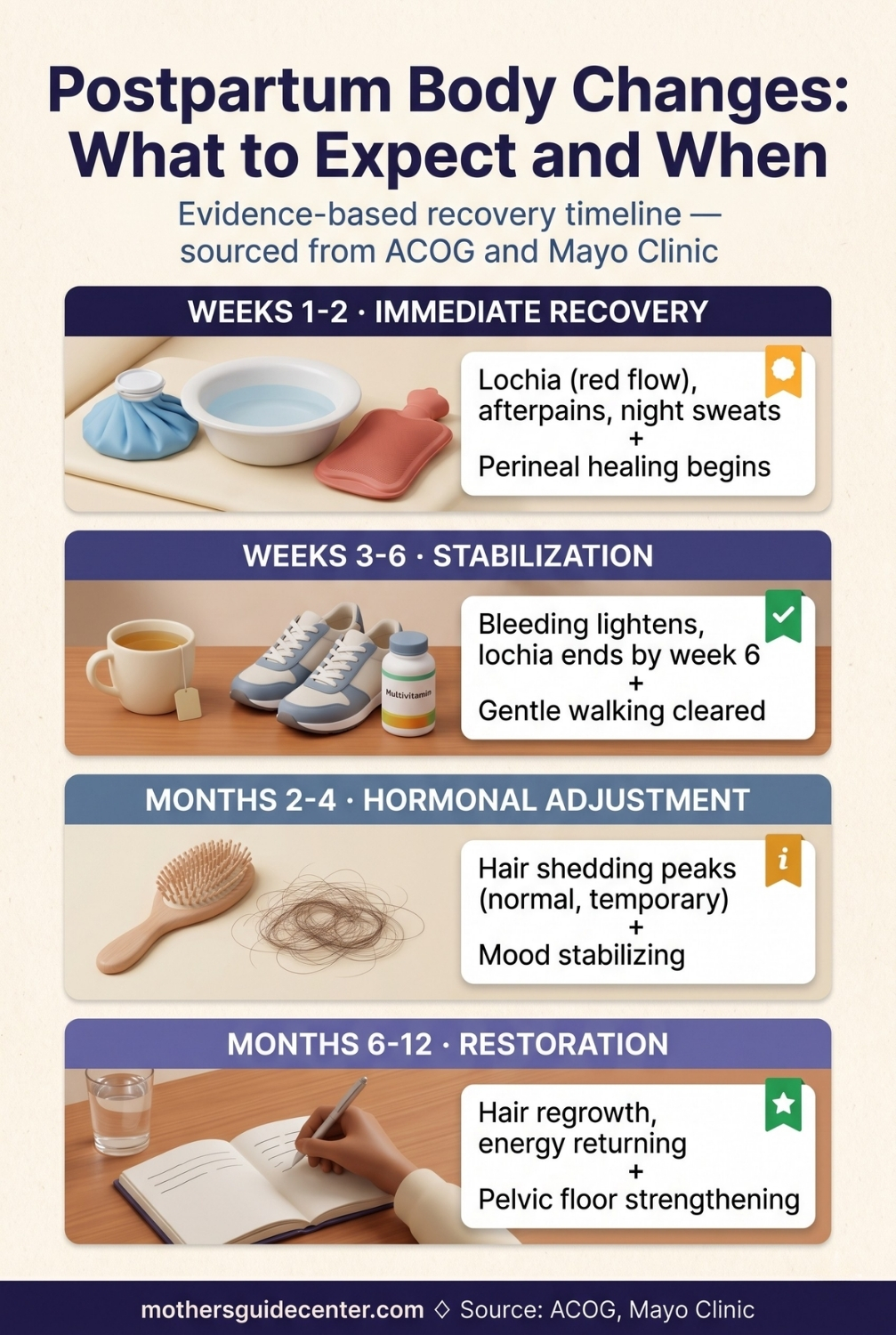
Uterine involution: The uterus contracts from roughly the size of a watermelon back to its pre-pregnancy size over approximately six weeks. These contractions — sometimes called afterpains — are strongest in the first 2 to 3 days and are more pronounced in women who have given birth before and in those who are breastfeeding, because oxytocin released during nursing stimulates uterine contractions.
Night sweats: Heavy night sweating in the first two to four weeks is caused by estrogen withdrawal and is the body’s way of shedding excess fluid retained during pregnancy. According to the Mayo Clinic, postpartum night sweats typically resolve within two to three weeks as hormone levels stabilize.
Postpartum hair loss (telogen effluvium): Hair shedding that begins around three to four months after birth is a normal hormonal response, not a sign of permanent hair loss. During pregnancy, elevated estrogen prolongs the hair growth phase; after delivery, hormone levels drop and hair follicles enter the shedding phase simultaneously. Most women see regrowth by twelve months.
Perineal soreness and healing: Whether from a vaginal tear, episiotomy, or the pressure of labor, perineal discomfort is common in the first two to six weeks. Ice packs, sitz baths, and a peri-bottle for rinsing during urination are standard first-line comfort measures recommended by ACOG.
How does recovery differ after vaginal birth versus cesarean?
Recovery timelines differ significantly between vaginal and cesarean birth because a cesarean is a major abdominal surgery requiring healing at multiple tissue layers, while vaginal birth recovery centers primarily on perineal healing and uterine involution.
| Recovery factor | Vaginal birth | Cesarean birth |
|---|---|---|
| Hospital stay | 1–2 days | 2–4 days |
| Pain focus | Perineal soreness, afterpains | Incision pain, gas pain, shoulder tip pain |
| Lifting restriction | No specific restriction beyond comfort | Nothing heavier than the baby for 6 weeks |
| Driving | When no longer taking opioid pain medication | Typically 4–6 weeks; provider clearance needed |
| Incision healing | Perineal tear/episiotomy: 2–6 weeks | Skin closure: ~6 weeks; internal: up to 3 months |
| Return to full activity | 4–6 weeks for most activity | 6–8 weeks minimum; varies by individual |
For cesarean recovery, the Mayo Clinic advises keeping the incision dry and clean, watching for signs of infection (increased redness, warmth, discharge, or opening of the wound), and sleeping on your side with a pillow supporting your abdomen in the early weeks.
What is postpartum bleeding and when is it normal?
Postpartum bleeding, called lochia, is the normal discharge of blood, mucus, and uterine tissue that occurs as the uterus sheds its lining after birth. Lochia typically follows a predictable color and flow pattern over four to six weeks, and understanding this pattern helps distinguish normal recovery from postpartum hemorrhage — a medical emergency.
Lochia rubra (days 1–4): Bright red flow, similar to a heavy period. Small clots the size of a grape are common.
Lochia serosa (days 4–10): Flow lightens to pink or brownish, thinner consistency.
Lochia alba (day 10 through 6 weeks): Creamy white or yellowish discharge with no odor.
Activity increases typically cause temporary increases in bleeding. If flow was slowing and then increases significantly after activity, this is a signal to rest. According to ACOG, soaking more than one pad per hour for two consecutive hours, passing clots larger than a golf ball, or foul-smelling discharge require immediate evaluation.
What are postpartum mood disorders and how are they treated?
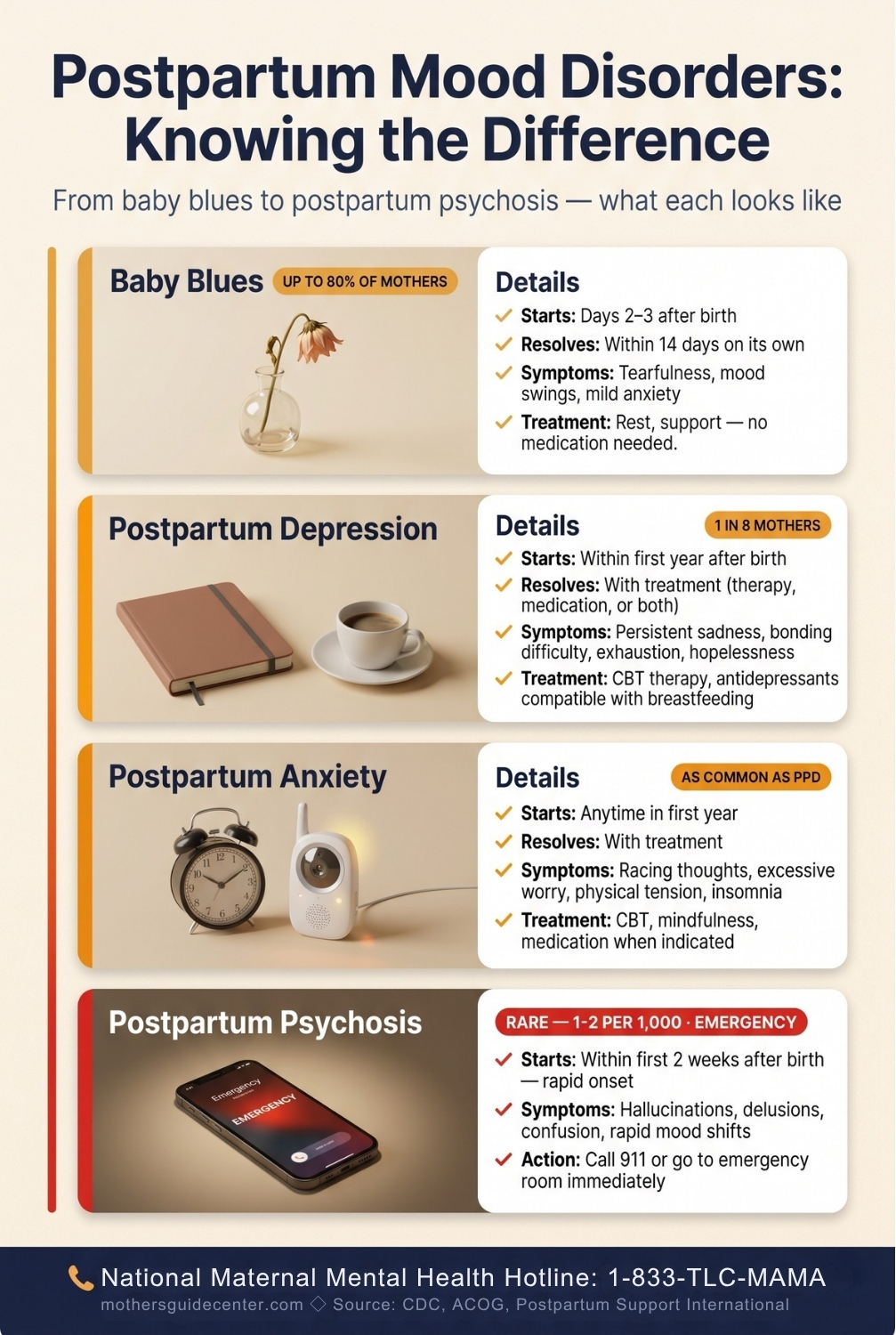
Postpartum mood disorders are a spectrum of emotional and psychological conditions triggered by the hormonal, physical, and social changes of the postpartum period, affecting approximately 1 in 5 new mothers in the United States, according to the CDC. They range from brief, self-resolving baby blues to serious conditions that require professional treatment.
Baby blues affect up to 80 percent of new mothers and are characterized by mood swings, tearfulness, anxiety, and irritability within the first two weeks after birth. They typically resolve on their own within fourteen days as hormone levels stabilize. No treatment is required beyond rest, support, and patience — but if symptoms persist beyond two weeks or are severe, contact your provider.
Postpartum depression (PPD) is a clinical depressive episode that begins within the first year after birth and is marked by persistent sadness, loss of interest in activities, difficulty bonding with the baby, exhaustion beyond normal new-parent fatigue, hopelessness, and in severe cases, thoughts of harming oneself or the baby. PPD affects approximately 1 in 8 women, according to the CDC, and requires evaluation and treatment. Effective treatments include therapy (particularly cognitive behavioral therapy), antidepressant medications that are compatible with breastfeeding, or a combination of both.
Postpartum anxiety is equally common as PPD but less frequently discussed. It is characterized by excessive worry, racing thoughts, inability to sleep even when the baby sleeps, and physical symptoms such as rapid heartbeat and shortness of breath. It responds well to therapy and, when needed, medication.
Postpartum psychosis is rare (affecting 1 to 2 per 1,000 births) but is a psychiatric emergency. Symptoms include hallucinations, delusions, rapid mood swings, confusion, and disorganized behavior, typically appearing within the first two weeks after birth. Call 911 or go to an emergency room immediately if these symptoms occur.
ACOG recommends that obstetric providers screen all women for perinatal mood disorders at least once during the postpartum period using a validated screening tool such as the Edinburgh Postnatal Depression Scale.
You are not alone
If you are struggling emotionally, support is available 24/7. The National Maternal Mental Health Hotline offers free, confidential help in English and Spanish — for pregnancy and up to one year postpartum.
📞 1-833-TLC-MAMA
(1-833-852-6262)
How does postpartum affect your body in the months ahead?
Postpartum body changes extend well beyond the first six weeks and reflect the ongoing hormonal and structural adjustments that follow pregnancy and birth. Understanding typical timelines helps distinguish normal changes from those that warrant evaluation.
Postpartum hair loss typically peaks at three to four months after birth and resolves by twelve months. It results from the synchronized exit of hair follicles from the growth phase (triggered by the postpartum hormone drop) and requires no treatment. Severe or prolonged shedding should be evaluated for thyroid dysfunction, which can develop postpartum.
Joint pain and carpal tunnel symptoms are common in the postpartum period due to retained fluid and hormonal effects on connective tissue. Postpartum carpal tunnel typically improves within three to six months. Wrist splints and activity modifications help manage symptoms. For a detailed guide, see postpartum carpal tunnel.
Diastasis recti — separation of the abdominal muscles — affects up to 60 percent of women after birth. Mild cases resolve with targeted rehabilitation exercises; severe cases may require physical therapy. Exercises that increase intra-abdominal pressure (such as traditional crunches or heavy lifting) should be avoided until assessed.
Pelvic floor changes including urinary incontinence, pelvic organ prolapse, and pelvic pain are common after birth. According to the Cleveland Clinic, pelvic floor physical therapy is one of the most effective evidence-based interventions for postpartum pelvic floor dysfunction and can begin once cleared by your provider.
What should you eat and how should you move postpartum?
Postpartum nutrition and movement guidelines are designed to support physical healing, energy recovery, and — if breastfeeding — milk production, without placing unrealistic demands on a body that has just completed the work of pregnancy and birth.
Nutrition: The CDC recommends that breastfeeding mothers consume approximately 340 to 400 additional calories per day above their pre-pregnancy needs, prioritizing protein, calcium, iron, and omega-3 fatty acids. Key food sources include lean proteins (chicken, fish, legumes), dairy or fortified alternatives, leafy greens, and whole grains. Postpartum iron-rich foods are particularly important for women who experienced significant blood loss during delivery. Continuing a prenatal vitamin through the breastfeeding period is generally recommended by ACOG.
Exercise: According to ACOG’s postpartum guidelines, low-impact activity such as gentle walking can begin as soon as it is comfortable, even before the six-week visit. Higher-impact activity, core strengthening, and resistance training should wait for provider clearance, which typically occurs at the six-week or twelve-week visit depending on individual recovery. Women who have had a cesarean section or significant perineal trauma should receive specific guidance before resuming any exercise beyond gentle walking.
Postpartum exercise has strong evidence for improving mood, reducing postpartum depression symptoms, and restoring cardiovascular fitness, per a 2024 systematic review published in the British Journal of Sports Medicine. The priority is consistency and comfort — not pace or intensity.
When is it safe to have sex after birth?
The standard guidance on resuming sexual activity after birth is to wait until lochia has stopped and any perineal or abdominal incision has healed — typically a minimum of six weeks for most women, though this timeline can vary. ACOG emphasizes that readiness is both physical and emotional, and neither partner should feel pressured by an arbitrary timeline.
Vaginal dryness is common in the postpartum period, particularly in breastfeeding women, because estrogen levels remain suppressed while prolactin is elevated. Water-based lubricant can reduce discomfort significantly. Persistent pain with sex (dyspareunia) that does not improve with lubricant warrants evaluation — it may indicate pelvic floor tension, scar tissue, or hormonal factors that respond well to treatment.
Contraception: Ovulation can return before the first postpartum period — sometimes as early as three weeks postpartum in women who are not exclusively breastfeeding. Discussing contraception at the discharge visit or first postpartum appointment is important to avoid unintended pregnancy. ACOG supports a wide range of postpartum contraceptive options, including progestin-only pills, hormonal IUDs (compatible with breastfeeding), copper IUDs, and barrier methods.
What postpartum care appointments do you need?
A postpartum care schedule is the structured series of medical appointments designed to monitor physical recovery, screen for mood disorders, address breastfeeding challenges, and coordinate contraception — all within the first twelve weeks after birth. Under ACOG’s updated model, postpartum care is a process, not a single encounter.
Initial contact (within 3 weeks): ACOG recommends that all women have at least one contact with their obstetric provider within the first three weeks — by phone, telehealth, or in person. Women with hypertensive disorders during pregnancy should be seen within 7 to 10 days; those with severe hypertension, within 72 hours.
Comprehensive postpartum visit (by 12 weeks): This full appointment should include assessment of physical recovery, mood screening (Edinburgh Postnatal Depression Scale), blood pressure, weight, contraception counseling, pelvic floor assessment, and thyroid function testing if indicated.
Baby’s appointments: Your newborn has separate well-child visits with the pediatrician — typically at 3 to 5 days, 2 weeks, and 2 months. These are separate from your own postpartum care, which is managed by your ob-gyn, midwife, or family physician.
Lactation consultations, pelvic floor physical therapy, and perinatal mental health therapy can be added to the care plan at any point during the postpartum period based on individual need.
When should you seek immediate medical help?
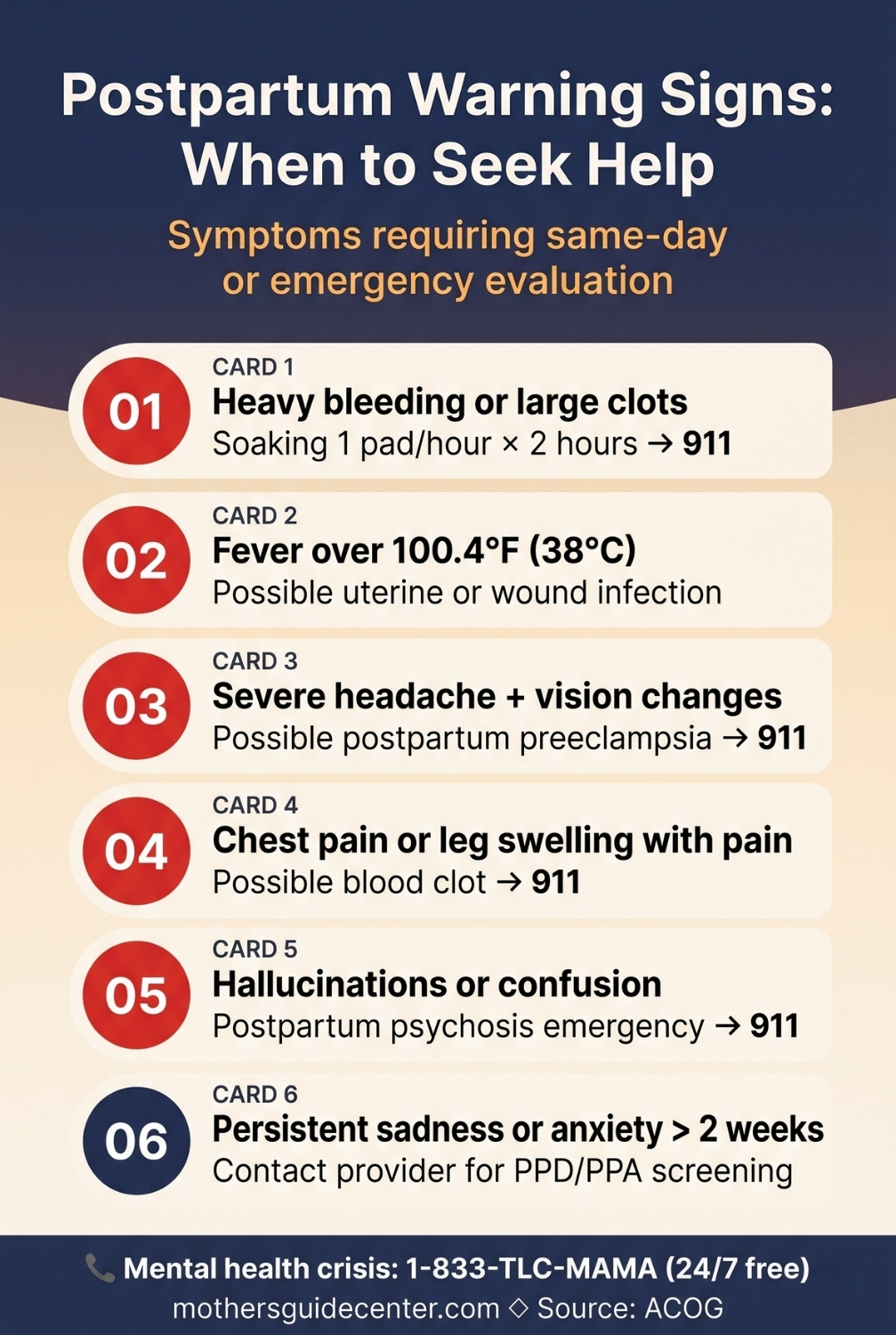
Postpartum warning signs are specific symptoms that indicate a complication requiring same-day or emergency evaluation, distinguishable from the discomfort of normal recovery. The postpartum period carries real medical risks — maternal mortality is highest in the days and weeks after birth — and prompt response to warning signs saves lives.
Frequently asked questions
How long does postpartum recovery take?
Postpartum recovery is a process that unfolds over twelve weeks for most women, though certain changes — such as hormonal recalibration, hair regrowth, and pelvic floor restoration — can take up to twelve months. ACOG defines the fourth trimester as the first twelve weeks, during which structured medical support is recommended. Individual timelines vary based on birth type, complications, and overall health.
What is the difference between baby blues and postpartum depression?
Baby blues are a brief, self-resolving mood disruption affecting up to 80 percent of new mothers in the first two weeks after birth, caused by the sharp hormonal drop after delivery. Postpartum depression is a clinical diagnosis marked by persistent symptoms lasting beyond two weeks, including significant sadness, inability to function, difficulty bonding, and in severe cases, thoughts of self-harm. PPD requires professional evaluation and treatment; baby blues do not.
When does postpartum bleeding stop?
Postpartum bleeding (lochia) typically stops between four and six weeks after birth. It transitions from heavy red flow in the first few days to lighter pink discharge around day four to ten, then to a creamy or yellowish discharge that gradually tapers. Bleeding that returns to bright red after lightening, especially if heavy, requires evaluation.
Is postpartum hair loss permanent?
Postpartum hair loss is temporary in the vast majority of cases and is a normal hormonal response to the estrogen drop after delivery. Shedding typically peaks around three to four months postpartum and resolves by twelve months, with full regrowth occurring for most women. Hair loss that is severe, patchy, or persists beyond twelve months should be evaluated for thyroid dysfunction, iron deficiency, or other underlying causes.
Can I exercise right after giving birth?
Low-impact activity such as gentle walking can begin as soon as it feels comfortable, even within the first days after a vaginal birth. ACOG does not require waiting until the six-week visit to begin gentle movement. However, high-impact exercise, core strengthening, and heavy lifting should wait for explicit provider clearance, which is typically given at the six-week or twelve-week postpartum visit based on individual recovery.
When does postpartum anxiety go away?
Postpartum anxiety is a treatable condition that does not resolve on its own the way baby blues do. Without treatment, symptoms can persist for months or years. With appropriate intervention — which may include cognitive behavioral therapy, medication, or both — most women experience significant improvement within weeks. If you are experiencing persistent worry, racing thoughts, or physical anxiety symptoms, contact your provider for a screening evaluation.
When to contact your healthcare provider same day
Contact your provider or go to urgent care if you experience any of the following:
This article is for educational purposes only and does not replace medical advice from a qualified healthcare provider.
Sources
- American College of Obstetricians and Gynecologists. (2018). Committee Opinion 736: Optimizing Postpartum Care. ACOG.org.
- Centers for Disease Control and Prevention. (2024). Postpartum Depression Facts. CDC.gov.
- Mayo Clinic. (2025). Postpartum Care: After a Vaginal Delivery. MayoClinic.org.
- Mayo Clinic. (2025). C-section Recovery: What to Expect. MayoClinic.org.
- Cleveland Clinic. (2024). Postpartum Care. ClevelandClinic.org.
- American College of Obstetricians and Gynecologists. (2023). Postpartum Depression (FAQ131). ACOG.org.
- National Maternal Mental Health Hotline. (2024). About the Hotline. HRSA.gov.
- American Academy of Pediatrics. (2022). Postpartum Depression. HealthyChildren.org.
- National Institutes of Health. (2024). Postpartum Health Research. NIH.gov.
- Goom, T., et al. (2019). Returning to Running Postnatal — Guidelines for Medical, Health and Fitness Professionals Managing this Population. British Journal of Sports Medicine.
- American College of Obstetricians and Gynecologists. (2022). Physical Activity and Exercise During Pregnancy and the Postpartum Period. ACOG.org.
- Postpartum Support International. (2024). Postpartum Depression & Anxiety. Postpartum.net.