
Pregnancy is a 40-week process measured from the first day of your last menstrual period, divided into three trimesters: first (weeks 1-13), second (weeks 14-27), and third (weeks 28-40). According to the American College of Obstetricians and Gynecologists (ACOG), most pregnancies progress through predictable developmental milestones, with the heartbeat detectable around week 6 and full term reached at 39 weeks.
Key takeaways
- ✓Pregnancy week by week is measured across 40 weeks from your last period, not from conception.
- ✓The first trimester (weeks 1-13) is when all major organs form, by week 12.
- ✓Most women feel their first fetal movements between weeks 16 and 25.
- ✓The third trimester focuses on growth, with most babies head-down by week 36.
- ✓Prenatal visits occur every 4 weeks until 28 weeks, then every 2, then weekly.
- ✓Folic acid (400-600 mcg daily) and 150 minutes of weekly exercise support pregnancy.
- ✓Heavy bleeding, severe headache with vision changes, or reduced fetal movement need immediate care.
Pregnancy week by week is the most practical way to understand the 40-week journey, transforming a fertilized egg into a fully developed baby ready to meet the world. According to the American College of Obstetricians and Gynecologists (ACOG), this journey is divided into three trimesters, each with distinct developmental milestones, physical changes, and clinical care needs. Understanding what happens week by week — what your baby is doing, what symptoms are normal, which tests come when, and when to call your provider — helps you make informed decisions throughout your pregnancy.
This complete pregnancy week by week guide synthesizes current guidance from ACOG, the Centers for Disease Control and Prevention (CDC), Mayo Clinic, and other Tier 1 medical authorities. Whether you are newly pregnant, planning conception, or supporting someone who is expecting, you’ll find evidence-based answers to the most common questions about each stage of pregnancy. The information here is educational and does not replace the personalized care of your healthcare provider, who knows your medical history and can guide decisions tailored to your situation.
How is pregnancy measured week by week?
Pregnancy is measured in weeks counted from the first day of your last menstrual period (LMP), a method that assigns a 40-week timeline even though actual fertilization usually occurs about two weeks later. This LMP-based system, used by virtually all healthcare providers in the United States, exists because the date of the last period is far easier to identify than the precise moment of conception.
Your estimated due date (EDD) is calculated by adding 280 days to your LMP, a calculation known as Naegele’s rule. According to ACOG, only about 4% of babies are born on their exact due date — most arrive within two weeks before or after. An early ultrasound between weeks 6 and 13 is the most accurate way to confirm or adjust the due date, particularly if your menstrual cycles are irregular or you are unsure of your LMP.
ACOG defines pregnancy duration in five specific categories:
- Early term: 37 weeks 0 days through 38 weeks 6 days
- Full term: 39 weeks 0 days through 40 weeks 6 days
- Late term: 41 weeks 0 days through 41 weeks 6 days
- Post term: 42 weeks 0 days and beyond
- Preterm: before 37 weeks
The three trimesters — first (weeks 1-13), second (weeks 14-27), and third (weeks 28-40) — group these weeks into broader phases with distinct physiological characteristics. This framework helps both patients and providers track development, anticipate symptoms, and schedule the right tests at the right time.
What happens in the first trimester (weeks 1-13)?
The first trimester encompasses the most rapid and consequential phase of fetal development, spanning conception through the formation of all major organ systems by week 12. Despite the dramatic biological changes occurring inside the body, many women look outwardly unchanged during these early weeks.
Fertilization typically occurs about two weeks after the LMP, even though those first two weeks are counted as part of the pregnancy. According to Mayo Clinic, the fertilized egg implants in the uterine wall around days 6 to 12 after conception, and the placenta begins to form shortly after. By the end of week 4, the embryo is the size of a poppy seed.
Major milestones during the first trimester include:
- Week 5-6: The neural tube, which becomes the brain and spinal cord, begins to form. A heartbeat is often detectable on ultrasound by week 6.
- Week 8: All essential organs have begun to develop, and tiny limb buds are visible.
- Week 9-11: The embryo transitions to being called a fetus. Fingers and toes are distinct.
- Week 12: All major organs are formed, and the fetus measures about 2 inches (5 cm) — roughly the size of a plum.
- Week 13: The first trimester closes. Miscarriage risk drops significantly after this point.
According to ACOG, approximately 10% of clinically recognized pregnancies end in miscarriage, with the vast majority occurring in the first trimester. By the start of the second trimester, that risk drops to between 1% and 5%. Most early miscarriages are caused by chromosomal abnormalities that occur randomly at conception and are not preventable.
Common first-trimester symptoms include nausea (often called morning sickness despite occurring at any hour), fatigue, breast tenderness, frequent urination, and food aversions. Hormones — particularly human chorionic gonadotropin (hCG), progesterone, and estrogen — rise sharply during this phase, driving most of these changes.
What happens in the second trimester (weeks 14-27)?
The second trimester is often described as the most comfortable phase of pregnancy, marked by reduced nausea, returning energy, and the first perceptible fetal movements. Spanning weeks 14 through 27, it brings the major diagnostic milestone of the anatomy ultrasound and the beginning of a clearly visible pregnancy bump.
By week 14, many women find that morning sickness has subsided as hCG levels plateau, according to Mayo Clinic. Energy typically rebounds, and prenatal appetite returns. The fetus measures about 3.5 inches at week 14 and grows rapidly throughout this phase — reaching roughly 14 inches and 2 pounds by week 27.
Key second-trimester developments include:
- Week 14: External genitalia have developed enough that biological sex may be visible on ultrasound.
- Week 16-25: Quickening — the first sensation of fetal movement — typically occurs. First-time mothers often feel it closer to week 20.
- Week 18-22: The anatomy ultrasound (also called the level 2 scan) examines fetal organs in detail and confirms the placenta and amniotic fluid are healthy.
- Week 19: Vernix caseosa, the waxy coating that protects fetal skin, begins to form.
- Week 24: Lung surfactant production starts. This week is often considered the medical threshold of viability.
Round ligament pain — a sharp, brief twinge in the lower abdomen — commonly emerges as the uterus expands. Skin changes such as the linea nigra (a vertical pigmented line down the abdomen) and melasma (darkened patches on the face) may appear due to increased melanin production.
Toward the end of the second trimester, between weeks 24 and 28, ACOG recommends glucose screening to test for gestational diabetes. This test, sometimes called the one-hour glucola, is part of standard prenatal care for all pregnant women regardless of risk factors.
What happens in the third trimester (weeks 28-40)?
The third trimester is the home stretch — the phase where the fetus completes its preparation for life outside the womb through rapid weight gain, lung maturation, and final positioning for birth. From week 28 through delivery, prenatal visits become more frequent and the body undergoes its most visible changes.
During these final weeks, a fetus typically gains about half a pound per week. By week 36, most babies have moved into the head-down (cephalic) position in preparation for birth. According to ACOG, full term — when delivery is considered optimal for both mother and baby — begins at 39 weeks 0 days and continues through 40 weeks 6 days.
Major third-trimester milestones:
- Week 28: ACOG recommends becoming aware of daily fetal movement patterns. The brain begins forming complex grooves.
- Week 32: Lanugo (fine fetal hair) starts to shed, and the bones harden — except for the skull, which remains soft to allow passage through the birth canal.
- Week 36: Most babies settle into head-down position. The lungs are nearly mature.
- Week 37: Early term begins. The baby continues gaining weight and brain development accelerates.
- Week 39-40: Full term. The baby is considered ready for life outside the womb.
Common late-pregnancy symptoms include swelling in the feet and ankles, shortness of breath as the uterus pushes against the diaphragm, Braxton Hicks (practice) contractions, increased pelvic pressure, and difficulty sleeping. Most of these are normal physiologic responses to the body’s preparation for labor.
Toward the very end of pregnancy, the cervix may begin to soften, thin, and dilate — changes your provider may check during late-third-trimester appointments. Labor signs can vary widely, but contractions that grow stronger, longer, and closer together, the rupture of membranes (water breaking), or the loss of the mucus plug are common indicators that birth is approaching.
How does your baby develop during pregnancy week by week?
Fetal development is a sequential process in which the body’s organ systems form, mature, and refine across 40 weeks of pregnancy. Each week brings specific structural and functional changes that build on the prior week’s foundation.
The infographic below summarizes major fetal size and developmental milestones across all three trimesters, using familiar fruit comparisons drawn from ACOG and Mayo Clinic developmental references.
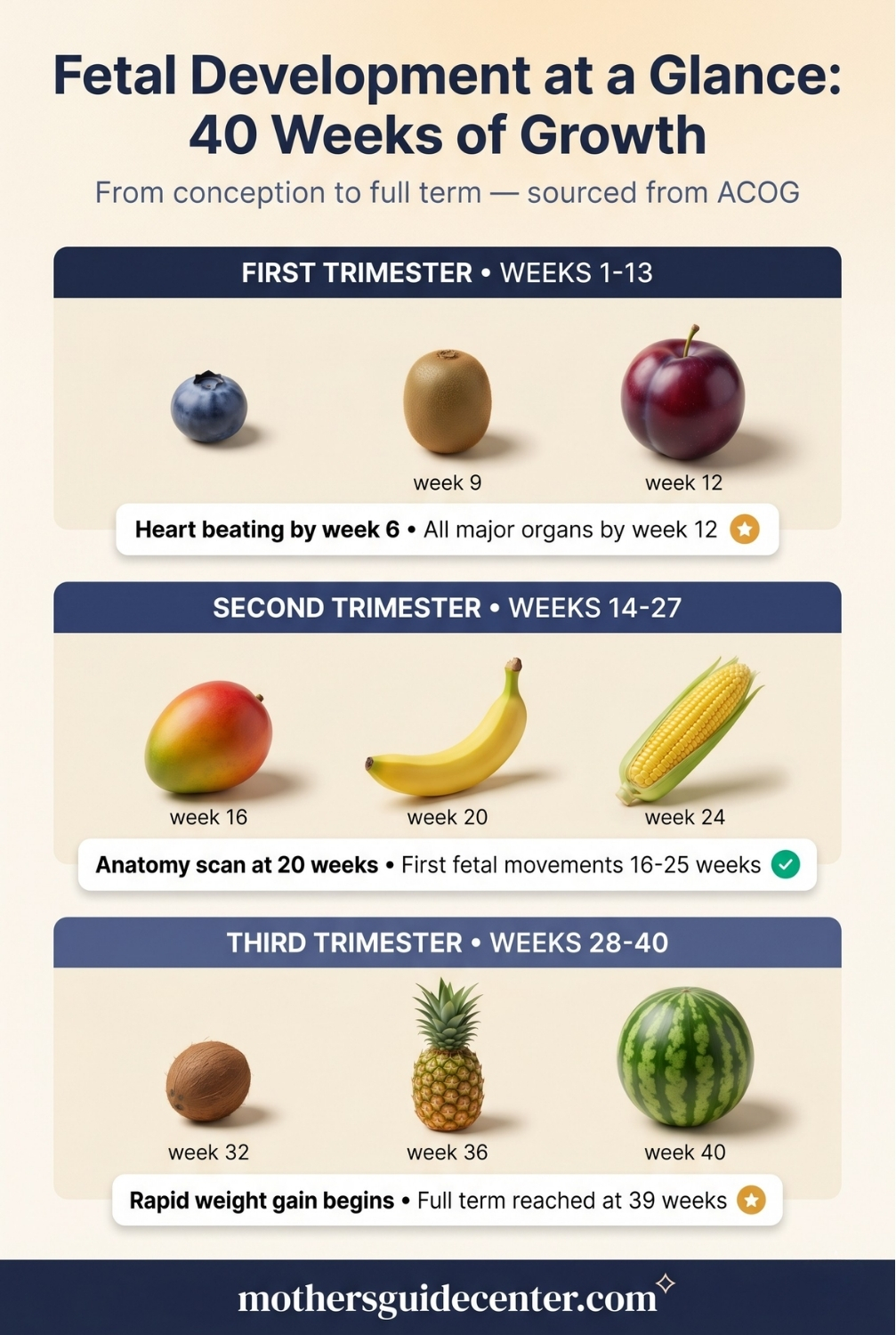
Several developmental milestones are particularly important to recognize. According to ACOG, the neural tube — the precursor to the brain and spinal cord — closes by week 6. This is why folic acid supplementation is recommended even before conception, since neural tube defects originate during the first month after the LMP, often before pregnancy is detected.
The heart, which begins as a simple tube, develops into a four-chambered organ by week 10. Hearing develops in stages, with the inner ear forming by week 18 and external sounds becoming detectable to the fetus by approximately week 25. By the third trimester, fetuses respond to maternal voice and external noise patterns, according to Cleveland Clinic.
Brain development continues throughout pregnancy and beyond birth, but the third trimester is especially significant: the cerebral cortex develops its characteristic folds, and neural connections multiply rapidly. This is one reason early term (37-38 weeks) delivery, when avoidable, is associated with slightly different outcomes than full term (39-40 weeks).
What pregnancy symptoms can you expect week by week?
Pregnancy week by week symptoms are a constellation of physical and emotional changes driven by shifting hormone levels, growing uterine size, and the metabolic demands of supporting fetal development. While every pregnancy is different, most symptoms follow recognizable trimester-by-trimester patterns.
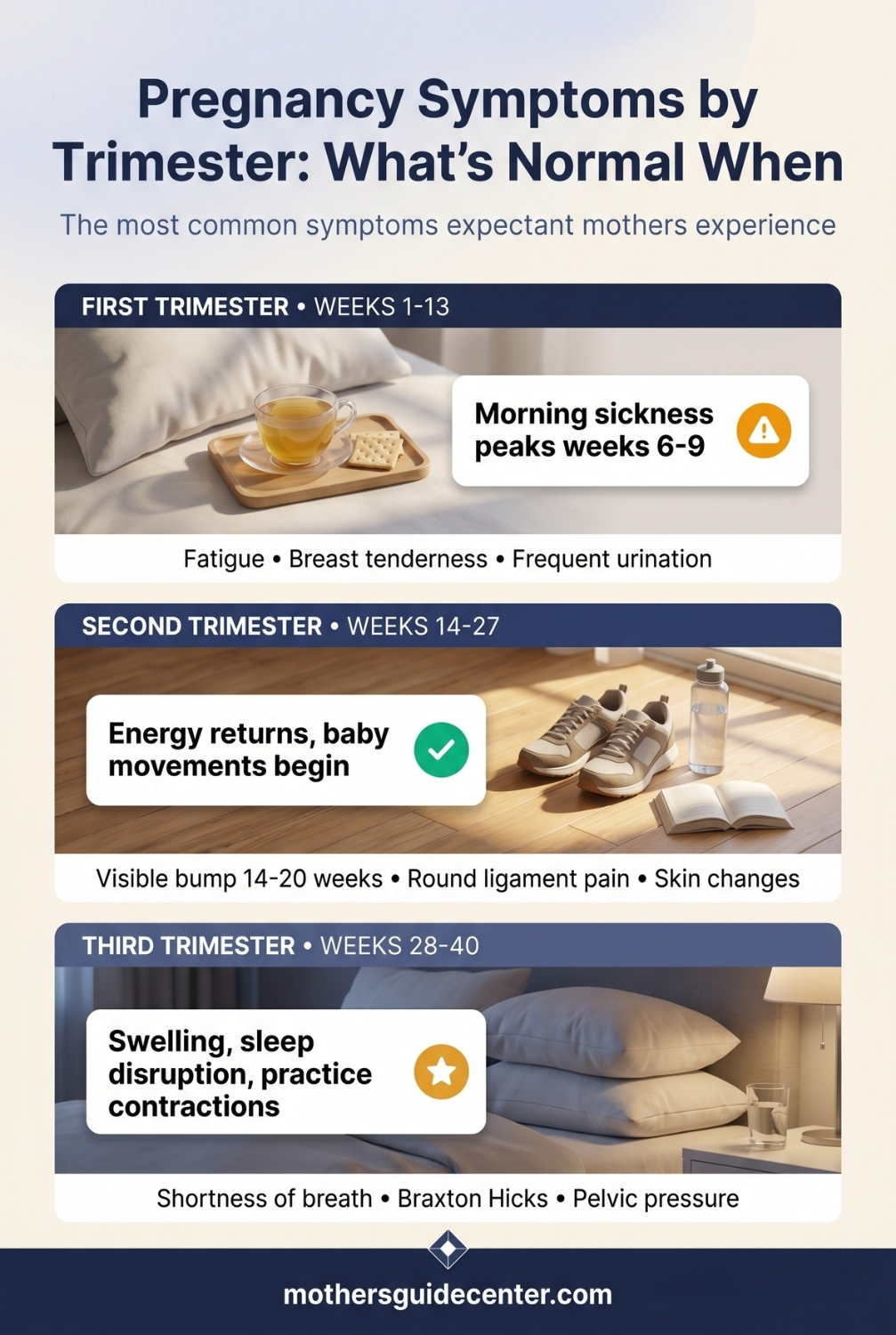
First-trimester symptoms are dominated by the rapid rise of hCG and progesterone. According to ACOG, nausea affects approximately 70-80% of pregnant women and typically peaks between weeks 6 and 9, easing by week 14 for most. Other common early symptoms include extreme fatigue, breast tenderness, heightened sense of smell, food aversions, and frequent urination.
The second trimester typically brings welcome relief. Energy returns, nausea subsides, and the visible bump emerges between weeks 14 and 20 for most women. New sensations may include round ligament pain (sharp, brief pulls in the lower abdomen as the uterus stretches), constipation, mild swelling, and skin changes such as stretch marks, the linea nigra, or melasma.
Third-trimester symptoms reflect the body’s intensive preparation for labor and the simple mechanics of carrying a near-term baby. Common experiences include:
- Sleep disruption: Side-sleeping (preferably left-side) is recommended for circulation. Many women use pillow support.
- Shortness of breath: Caused by the uterus pressing against the diaphragm; usually improves when the baby drops in the final weeks.
- Braxton Hicks contractions: Irregular practice contractions that do not progress in intensity or frequency.
- Pelvic pressure: Increases as the baby descends into the pelvis.
- Swelling (edema): Common in the feet, ankles, and hands; should be monitored as severe swelling can signal preeclampsia.
- Frequent urination returns: The growing uterus pushes against the bladder again.
Emotional changes — including mood swings, anxiety, and intermittent excitement or apprehension — are normal throughout pregnancy. If feelings of sadness, hopelessness, or anxiety become persistent or overwhelming, ACOG recommends speaking with your provider about screening for perinatal mood disorders. Effective treatment is available and important for both maternal and infant wellbeing.
What prenatal tests and appointments do you need each trimester?
Prenatal care is the system of regular medical appointments and tests designed to monitor maternal health and fetal development throughout pregnancy. The standard ACOG schedule includes visits every 4 weeks until 28 weeks of gestation, every 2 weeks from week 28 to week 36, and weekly visits from week 36 until birth.
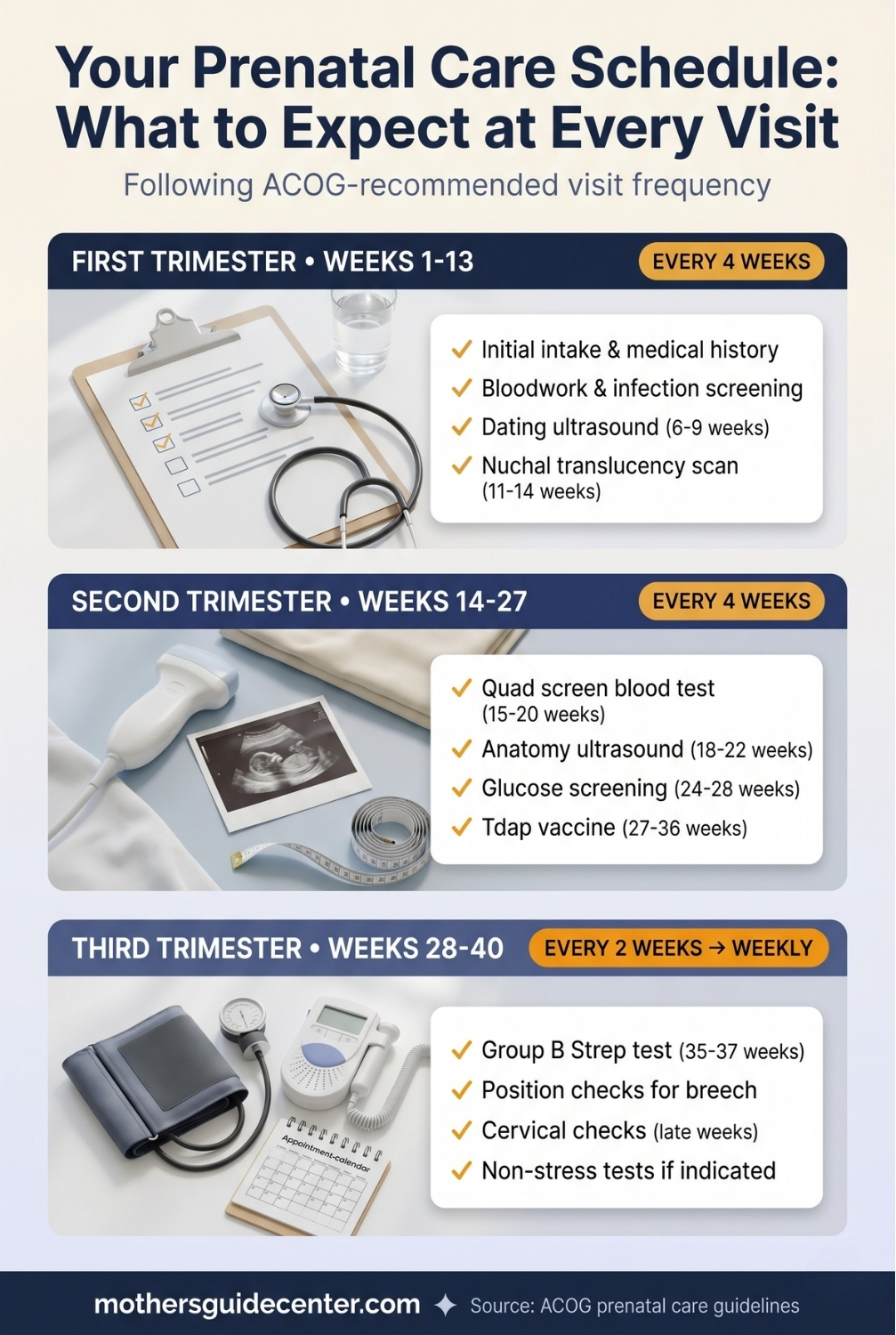
First-trimester care begins as soon as pregnancy is confirmed. The initial visit, ideally between weeks 8 and 10, typically includes:
- Medical and family history intake
- Blood type, Rh factor, complete blood count, and screening for infections (HIV, hepatitis, syphilis, rubella immunity)
- Urinalysis and urine culture
- Dating ultrasound between weeks 6 and 13
- First-trimester screening (cell-free DNA testing or nuchal translucency scan at weeks 11-14)
Second-trimester appointments add new diagnostic tools. The maternal serum quadruple screen (weeks 15-20) measures four substances in the blood to assess risk of certain genetic conditions and neural tube defects. The anatomy ultrasound (weeks 18-22) examines the fetus for structural development, checks the placenta and amniotic fluid, and often reveals biological sex. Between weeks 24 and 28, the one-hour glucose challenge test screens for gestational diabetes.
Third-trimester care intensifies with vaccinations and final screening tests. Key items include:
- Tdap vaccine (weeks 27 0/7 to 36 6/7): Every pregnancy, regardless of prior history. ACOG recommends getting the vaccine as early in this window as possible, since it prevents 78% of pertussis cases in infants under 2 months, per CDC data.
- RSV vaccine (Abrysvo, weeks 32 0/7 to 36 6/7): Seasonal administration during September through January in most of the United States, recommended to prevent RSV lower respiratory tract infection in infants under 6 months.
- Group B Streptococcus (GBS) screening (weeks 36 0/7 to 37 6/7): A vaginal-rectal swab that determines whether intrapartum antibiotics will be needed during labor. ACOG updated this timing in 2019 to ensure culture validity through 41 weeks.
- Fetal position monitoring: Providers check fetal position regularly in later weeks; most babies are head-down by week 36.
- Non-stress tests or biophysical profiles: Performed when indicated for monitoring fetal wellbeing.
Influenza and updated COVID-19 vaccines are also recommended during pregnancy and can be given in any trimester. According to ACOG, vaccinating during pregnancy provides newborns with protective antibodies during the first vulnerable months of life, before they can be vaccinated themselves.
How can you stay healthy during each week of pregnancy?
Staying healthy during pregnancy week by week is supported by a combination of evidence-based daily habits: prenatal vitamins, balanced nutrition, regular physical activity, adequate sleep, and avoidance of substances known to harm fetal development. These foundations apply across all 40 weeks, with individual adjustments by trimester.
Folic acid is the single most important prenatal nutrient. According to the CDC, all women capable of becoming pregnant should take at least 400 micrograms (mcg) of folic acid daily, ideally beginning at least one month before conception. Once pregnant, ACOG recommends a total of 600 mcg daily, typically achieved through a combination of a prenatal vitamin (often containing 800 mcg of folic acid) and a folate-rich diet. Folic acid significantly reduces the risk of neural tube defects, which begin to form in the first month of pregnancy — often before pregnancy is confirmed.
Other key prenatal nutrients include iron (to support increased blood volume), calcium and vitamin D (for fetal bone development), iodine, choline, and DHA. Most prenatal vitamins provide these in appropriate amounts. Discuss any specific dietary restrictions with your provider, who may recommend additional supplementation.
According to ACOG’s exercise guidelines, pregnant women without medical or obstetric complications should aim for at least 150 minutes of moderate-intensity aerobic activity each week, distributed throughout the week. This can be brisk walking, swimming, stationary cycling, prenatal yoga, or modified strength training. Moderate intensity means you are working hard enough to raise your heart rate and break a sweat, but you can still hold a conversation.
Activities to avoid during pregnancy include:
- Contact sports (soccer, basketball, hockey)
- Activities with high fall risk (downhill skiing, horseback riding, gymnastics)
- Scuba diving and exercise at altitudes above 6,000 feet
- Hot tubs and saunas, which can raise core body temperature dangerously
- Lying flat on the back for extended periods after the first trimester
Foods to avoid include raw or undercooked meat, fish, and eggs; unpasteurized dairy and soft cheeses; high-mercury fish; deli meats unless heated until steaming; and alcohol in any amount. Limit caffeine to under 200 mg per day, approximately one 12-ounce cup of coffee. Smoking and recreational drug use are linked to serious pregnancy complications; if you need help quitting, ask your provider for resources.
When should you contact your healthcare provider during pregnancy?
Certain pregnancy symptoms require immediate medical attention because they may signal serious complications such as preeclampsia, placental abruption, ectopic pregnancy, or preterm labor. Knowing the warning signs and acting quickly can be life-saving for both mother and baby.
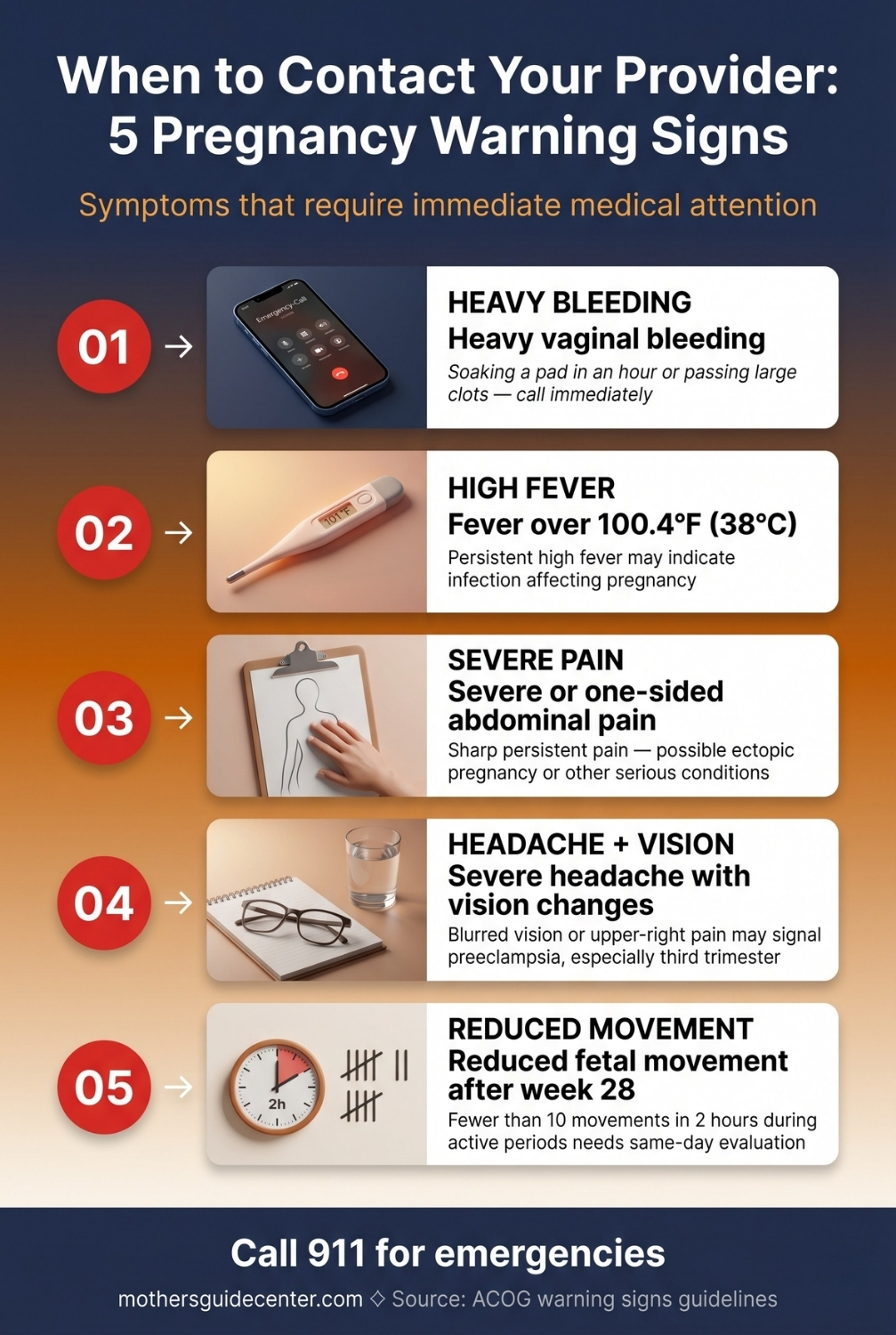
Contact your provider immediately if you experience:
- ⚠️Heavy vaginal bleeding — soaking a pad in an hour, passing large clots, or bleeding accompanied by cramping or pain.
- ⚠️Severe or persistent abdominal pain — especially one-sided pain in the first trimester (ectopic concern) or sharp pain in later pregnancy (possible placental abruption).
- ⚠️Severe headache with vision changes — blurred vision, light sensitivity, seeing spots, or pain in the upper right abdomen may signal preeclampsia, particularly in the second half of pregnancy.
- ⚠️Sudden swelling in face or hands — distinct from the gradual lower-extremity swelling that is common in late pregnancy.
- ⚠️Reduced fetal movement after week 28 — fewer than 10 movements in 2 hours during your baby’s usual active period warrants same-day evaluation, per ACOG and Cleveland Clinic guidance.
- ⚠️Fever over 100.4°F (38°C) — persistent high fever may indicate infection that requires evaluation.
- ⚠️Persistent vomiting — inability to keep down fluids or food, which can lead to dehydration and may be hyperemesis gravidarum.
- ⚠️Signs of preterm labor before 37 weeks — regular contractions, lower back pressure, pelvic pressure, fluid leak, or vaginal bleeding.
For emergencies — including severe bleeding, signs of stroke, sudden severe abdominal pain, difficulty breathing, or thoughts of harming yourself — call 911 or go to your nearest emergency department.
This article is for educational purposes only and does not replace medical advice from a qualified healthcare provider.
Frequently asked questions
When does the second trimester start?
The second trimester begins at week 14 of pregnancy and continues through week 27, according to the American College of Obstetricians and Gynecologists. Many women experience reduced nausea and increased energy during this phase, and the first fetal movements are typically felt between weeks 16 and 25. The anatomy ultrasound, a major diagnostic milestone, usually takes place between weeks 18 and 22.
How is my due date calculated?
Your due date is calculated by adding 280 days, or 40 weeks, to the first day of your last menstrual period (LMP). This method, known as Naegele’s rule, assumes a 28-day cycle with ovulation around day 14. According to ACOG, an early ultrasound between weeks 6 and 13 is the most accurate way to confirm or adjust this estimate, especially if your cycles are irregular.
When can I feel my baby move?
First fetal movements, often called quickening, are typically felt between weeks 16 and 25 of pregnancy. According to Cleveland Clinic, first-time mothers usually notice movement closer to week 20, while women who have been pregnant before may feel it earlier. By week 28, ACOG recommends being aware of your baby’s movement pattern; reduced movement after this point warrants a call to your provider.
How much weight should I gain during pregnancy?
Recommended weight gain during pregnancy depends on your pre-pregnancy body mass index (BMI), according to Institute of Medicine guidelines endorsed by ACOG. Women with a normal BMI (18.5-24.9) are typically advised to gain 25-35 pounds total, while underweight women may gain more and women with higher BMI less. Your healthcare provider will personalize this target based on your individual health profile.
What should I avoid eating during pregnancy?
Foods to avoid during pregnancy include raw or undercooked fish, meat, and eggs; unpasteurized dairy products and soft cheeses; high-mercury fish like swordfish and king mackerel; deli meats unless heated until steaming; and alcohol. The CDC and ACOG also recommend limiting caffeine to under 200 milligrams per day. Always wash produce thoroughly to reduce the risk of listeria and toxoplasmosis.
Is it safe to exercise during pregnancy?
Yes, exercise during pregnancy is safe and beneficial for most healthy pregnant individuals. ACOG recommends at least 150 minutes of moderate-intensity aerobic activity per week, such as brisk walking, swimming, or stationary cycling. Avoid contact sports, activities with high fall risk like skiing or horseback riding, and exercising at high altitudes. Always consult your provider before starting a new routine, particularly if you have pregnancy complications.
Sources
- American College of Obstetricians and Gynecologists. (2024). How Your Fetus Grows During Pregnancy. ACOG.org.
- American College of Obstetricians and Gynecologists. (2024). Preeclampsia and High Blood Pressure During Pregnancy. ACOG.org.
- American College of Obstetricians and Gynecologists. (2026). Maternal Immunizations Committee Statement. ACOG.org.
- American College of Obstetricians and Gynecologists. (2019). Prevention of Group B Streptococcal Early-Onset Disease in Newborns (Committee Opinion 782). ACOG.org.
- American College of Obstetricians and Gynecologists. (2020). Physical Activity and Exercise During Pregnancy and the Postpartum Period. ACOG.org.
- American College of Obstetricians and Gynecologists. (2024). Healthy Eating During Pregnancy. ACOG.org.
- American College of Obstetricians and Gynecologists. (2024). Morning Sickness: Nausea and Vomiting of Pregnancy. ACOG.org.
- American College of Obstetricians and Gynecologists. (2024). Early Pregnancy Loss FAQ. ACOG.org.
- Centers for Disease Control and Prevention. (2025). About Folic Acid. CDC.gov.
- Centers for Disease Control and Prevention. (2025). Tdap Vaccination for Pregnant Women. CDC.gov.
- Centers for Disease Control and Prevention. (2025). Guidelines for Vaccinating Pregnant Women. CDC.gov.
- Mayo Clinic. (2024). First Trimester Pregnancy: What to Expect. mayoclinic.org.
- Mayo Clinic. (2024). Second Trimester Pregnancy: What to Expect. mayoclinic.org.
- Mayo Clinic. (2024). Third Trimester Pregnancy: What to Expect. mayoclinic.org.
- Cleveland Clinic. (2024). Kick Counts (Fetal Movement Counting). my.clevelandclinic.org.