
Breastfeeding is the process of feeding an infant directly at the breast or with expressed human milk, and it is the recommended primary nutrition source for the first six months of life. The American Academy of Pediatrics recommends exclusive breastfeeding for approximately six months, with continued breastfeeding alongside solid foods for two years or beyond. About 60 percent of mothers in the United States do not breastfeed as long as they intend, often due to preventable challenges that evidence-based support can address.
Key takeaways
- ✓ Exclusive breastfeeding for six months is recommended by the AAP and WHO.
- ✓ A proper latch is the single most important factor for comfortable breastfeeding.
- ✓ Newborns typically eat 8 to 12 times in 24 hours during the first weeks.
- ✓ Expressed breast milk stays safe for four hours at room temperature and four days refrigerated.
- ✓ Formula is a safe, FDA-regulated option when breastfeeding is not possible or chosen.
- ✓ Most breastfeeding difficulties are solvable with early, skilled lactation support.
- ✓ Contact your provider promptly if you notice signs of mastitis, poor weight gain, or feeding refusal.
Feeding your baby is one of the most immediate decisions you face as a new mother — and one of the most personal. The evidence-based breastfeeding tips in this guide are designed to help you feed with confidence, whatever path you choose. Whether you breastfeed exclusively, pump and bottle-feed, supplement with formula, or choose formula from the start, the goal is the same: a well-nourished, growing infant and a mother who feels supported in her choice. According to the CDC, while approximately 84 percent of infants in the United States are breastfed at some point, only about 25 percent are exclusively breastfed through six months — a gap driven largely by preventable challenges like latch difficulty, perceived low supply, and inadequate postpartum support.
This guide brings together current recommendations from the American Academy of Pediatrics, the Centers for Disease Control and Prevention, the World Health Organization, and the Academy of Breastfeeding Medicine. It covers breastfeeding tips and technique, feeding frequency, pumping and storage, formula basics, common problems, and when to wean — giving you the sourced information you need to make confident decisions for your family. Every claim in this guide links to a Tier 1 clinical source, and we accept no advertising, affiliate partnerships, or brand sponsorships.
What are the most important breastfeeding tips for new mothers?
The most effective breastfeeding tips focus on three evidence-based habits: getting a deep latch, feeding on demand, and seeking skilled support early. These breastfeeding tips, drawn from the AAP, CDC, and WHO, prevent most of the problems that lead mothers to stop nursing before they intend to.
- Prioritize a deep latch. Aim the nipple toward the baby’s upper palate and bring the baby in with a wide-open mouth and flanged lips — the single biggest predictor of comfortable feeding.
- Feed on demand, not by the clock. Watch for early hunger cues and expect 8 to 12 feeds in 24 hours during the newborn weeks.
- Start skin-to-skin early. Holding your baby against your chest in the first hour supports natural latching reflexes and supply.
- Protect your supply. Frequent, effective milk removal signals your body to make more — supply follows demand.
- Track diapers, not minutes. Six or more wet diapers a day after day four and steady weight gain are the most reliable signs of enough intake.
- Ask for help early. An IBCLC can resolve most latch, pain, and supply concerns when contacted before problems escalate.
- Fed is the goal. Combination feeding and formula are safe, evidence-based options — any amount of breast milk benefits your baby.
How does breastfeeding work?
Breastfeeding is a supply-and-demand process in which an infant’s suckling stimulates the release of prolactin and oxytocin — two hormones that signal the breast to produce and release milk. Prolactin drives milk production, while oxytocin triggers the let-down reflex that moves milk through the ducts to the nipple. The more frequently and effectively a baby feeds, the more milk the body produces.
In the first two to five days after birth, the breasts produce colostrum — a concentrated, antibody-rich fluid that is yellow or golden in color. According to the AAP’s HealthyChildren.org, colostrum provides essential immune protection and helps establish the infant’s gut microbiome. Mature milk typically arrives between days three and five, and its composition adjusts continuously to meet the baby’s changing nutritional needs throughout infancy.
Skin-to-skin contact immediately after birth supports early breastfeeding initiation. The World Health Organization recommends placing the newborn on the mother’s chest within the first hour to encourage the baby’s natural rooting and suckling reflexes.

What are the benefits of breastfeeding?
Breastfeeding is a public health strategy supported by decades of research showing measurable benefits for both infant and parent health outcomes. For the baby, the AAP’s 2022 policy statement confirms that breastfeeding is associated with reduced rates of ear infections, respiratory illness, diarrheal disease, sudden infant death syndrome, childhood leukemia, obesity, and type 1 diabetes.
For the breastfeeding parent, evidence shows that longer breastfeeding duration is linked to decreased risk of type 2 diabetes, hypertension, and breast and ovarian cancers. According to the AAP’s updated policy, breastfeeding beyond 12 months provides continued cardiovascular and metabolic health benefits for the parent. Emerging research also suggests a protective association against postpartum depression.
It is equally important to acknowledge that formula-fed babies thrive. The benefits of breastfeeding exist on a population level and do not define individual outcomes. Every family’s feeding decision deserves respect and support.
How do you get a good breastfeeding latch?
A good latch is the foundation of comfortable and effective breastfeeding, defined by the baby taking a deep mouthful of breast tissue — not just the nipple — so that milk transfers efficiently and the parent experiences minimal discomfort. Signs of a proper latch include the baby’s mouth opened wide with flanged (turned-out) lips, the chin pressed into the breast, rhythmic suck-swallow patterns, and the absence of clicking sounds.
To achieve a deep latch, bring the baby to the breast rather than leaning forward. Support the breast with a C-hold or U-hold and aim the nipple toward the baby’s upper palate. Wait until the baby opens wide, then quickly bring the baby in close. According to the Cleveland Clinic, pain beyond initial tenderness during latch-on — especially sharp, pinching, or burning pain — is a sign that the latch needs adjustment.
If latch difficulties persist after the first week, consider requesting a referral to an International Board Certified Lactation Consultant (IBCLC). Tongue-tie and lip-tie are physical conditions that can restrict the baby’s ability to latch deeply and may require evaluation by a pediatrician or pediatric dentist.
What breastfeeding positions work best?
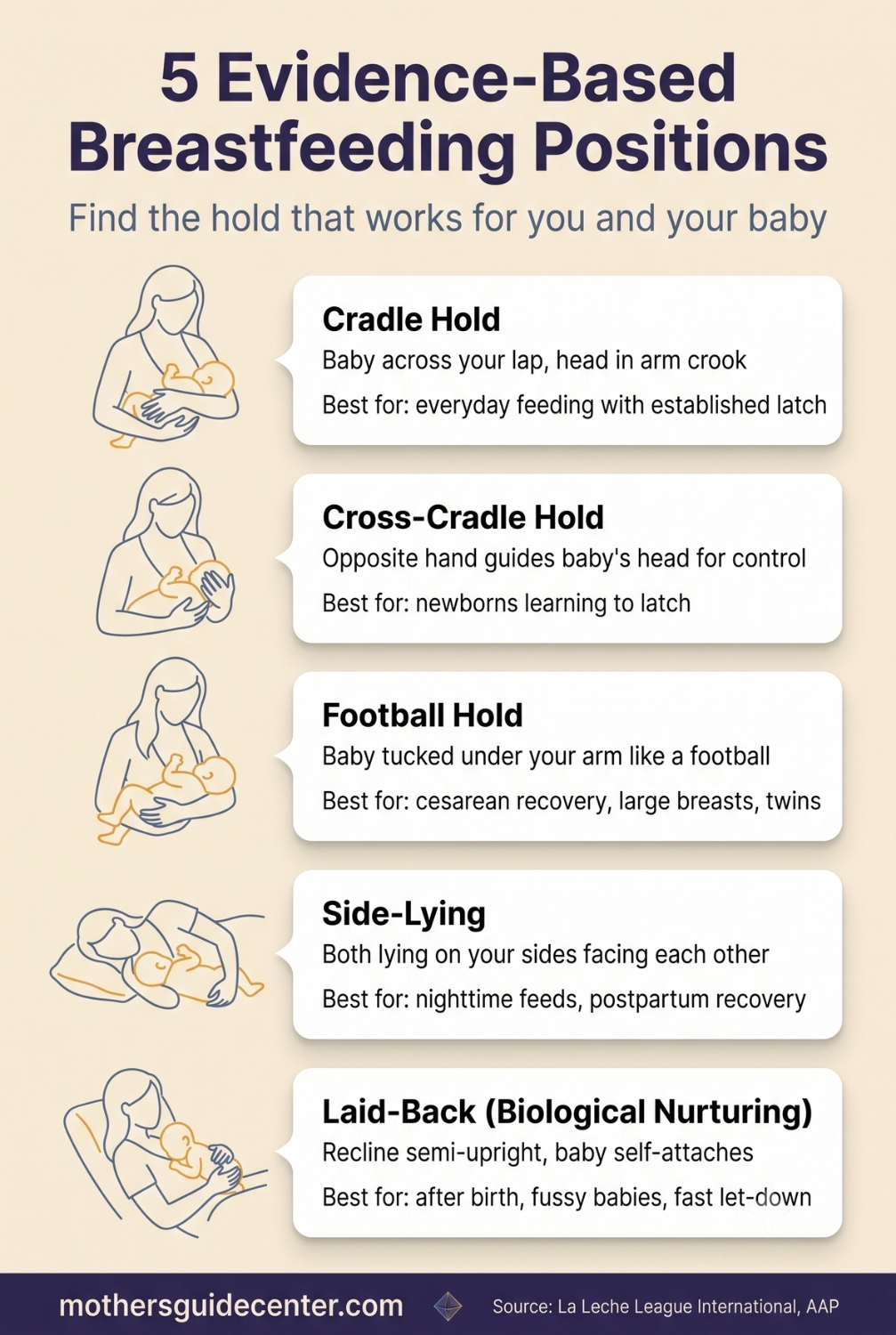
Breastfeeding positions are the physical arrangements of mother and baby that enable a comfortable, effective latch — and the best position is the one that works consistently for your body and your baby. Research supports multiple evidence-based positions, and many parents use different ones depending on the time of day, their energy level, or their recovery status after birth.
| Position | How it works | Best for |
|---|---|---|
| Cradle hold | Baby lies across your lap, head in the crook of your arm on the same side as the breast. | Full-term babies with established latch; everyday feeding. |
| Cross-cradle hold | Baby lies across your lap, but the opposite hand supports the head for more latch control. | Newborns still learning to latch; small or premature babies. |
| Football (clutch) hold | Baby is tucked under your arm on the same side, feet toward your back, head at breast level. | Cesarean recovery; large breasts; twins; plugged ducts on outer breast. |
| Side-lying | Both parent and baby lie on their sides facing each other on a flat surface. | Nighttime feeds; postpartum fatigue; cesarean or perineal recovery. |
| Laid-back (biological nurturing) | Parent reclines semi-upright; baby lies tummy-down on the parent’s chest and self-attaches. | Immediately after birth; overactive let-down; fussy babies. |
According to La Leche League International, the key principle across all positions is that the baby should be brought to the breast — not the breast to the baby — with ears, shoulders, and hips aligned and the body close enough that no gap exists between parent and child.
How often should a newborn eat?
Newborn feeding frequency is driven by the baby’s hunger cues rather than a fixed clock schedule, and most newborns eat 8 to 12 times in a 24-hour period during the first four weeks. According to the AAP, feeding on demand — also called responsive feeding — ensures adequate caloric intake and stimulates milk production to match the infant’s growing needs.
Hunger cues to watch for include rooting (turning the head and opening the mouth), bringing hands to the mouth, sucking motions, and fussing. Crying is a late hunger signal, and feeding before a baby becomes upset makes latching easier. In the early days, each feeding session may last 10 to 20 minutes per breast, though some newborns cluster-feed — eating very frequently for several hours — especially during growth spurts and in the evening.
For formula-fed newborns, the CDC recommends starting with 1 to 2 ounces per feeding in the first few days and gradually increasing to 2 to 3 ounces by the end of the first week. By one month, most formula-fed babies take approximately 4 ounces per feeding every 3 to 4 hours.
What are common breastfeeding problems and how can you solve them?
Breastfeeding challenges are common, treatable conditions that affect a significant number of nursing parents — and they are the leading reason mothers stop breastfeeding earlier than intended, according to the CDC. Most issues respond to early intervention.
Sore or cracked nipples are typically caused by a shallow latch. Correcting positioning, allowing nipples to air-dry, and applying expressed breast milk to the areola after feeds can promote healing. Persistent cracks or bleeding should be evaluated by a lactation consultant.
Engorgement occurs when breasts become overly full, often between days three and five when milk supply increases rapidly. Frequent feeding, gentle breast massage before latching, and cold compresses between feeds can relieve pressure. According to the Mayo Clinic, severe engorgement that does not respond to regular feeding warrants a call to your provider.
Plugged ducts feel like firm, tender lumps in the breast and are caused by incomplete milk removal. Continued breastfeeding on the affected side, massage toward the nipple during feeds, and warm compresses before nursing can help clear the blockage.
Mastitis is a breast tissue infection marked by a hard, red, warm area on the breast accompanied by flu-like symptoms such as fever and body aches. It requires prompt medical treatment, often with antibiotics. The Academy of Breastfeeding Medicine recommends continuing to breastfeed through mastitis, as frequent milk removal accelerates recovery.
Perceived low supply is the most frequently cited concern, but true insufficient production is relatively uncommon. Reliable indicators of adequate intake include six or more wet diapers per day after day four and consistent weight gain. If you have concerns, a board-certified lactation consultant (IBCLC) can conduct a weighted feed assessment and develop an individualized plan.
How do you pump and store breast milk safely?
Pumping is the process of expressing breast milk using a manual or electric pump so that it can be stored and fed to the baby later, and it is an essential tool for parents who return to work, share feeding duties, or need to maintain supply when separated from their baby. A properly fitted breast shield — one that allows the nipple to move freely without rubbing the tunnel walls — is critical for both comfort and effective milk removal.
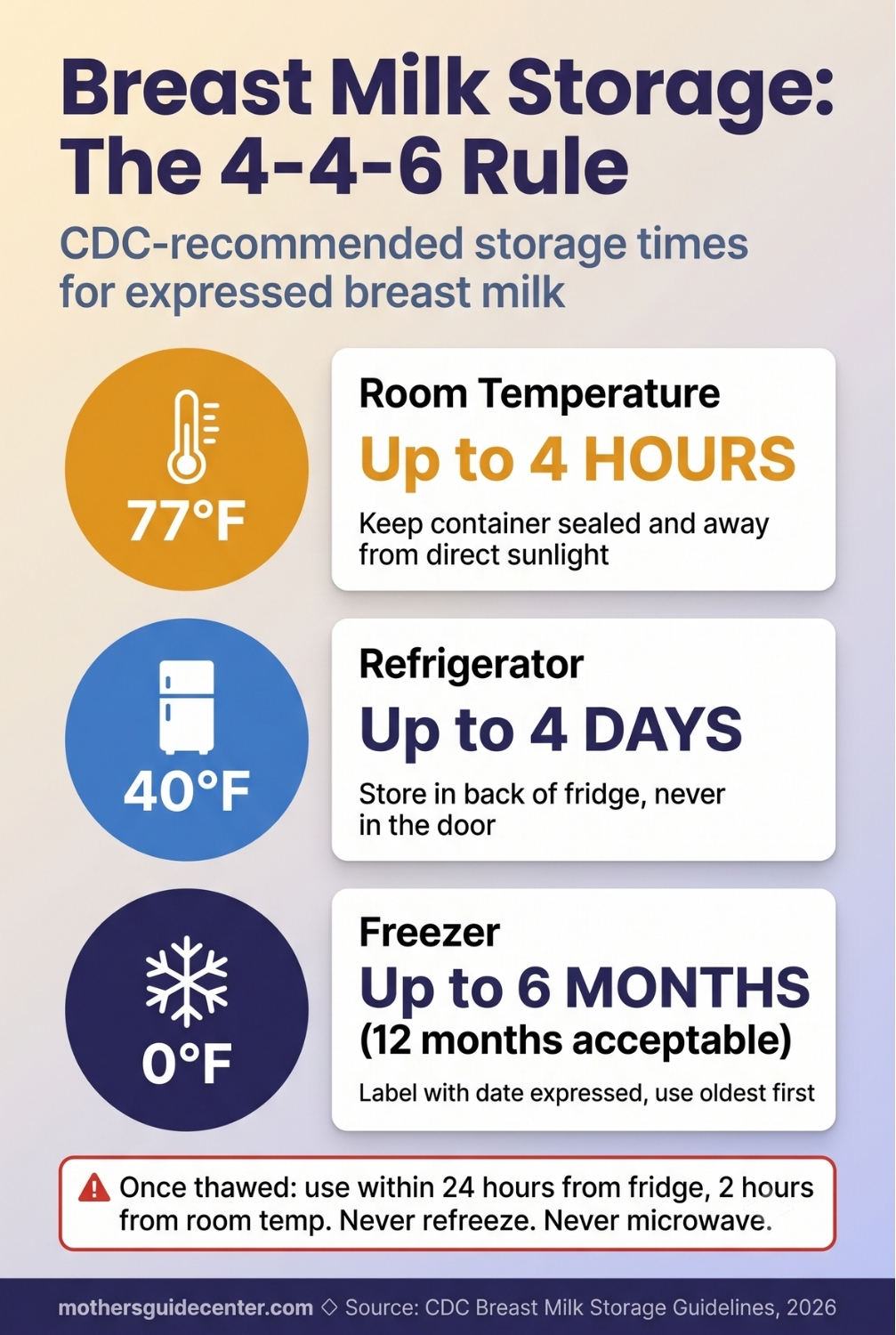
The CDC’s breast milk storage guidelines follow a straightforward pattern: freshly expressed breast milk stays safe for up to 4 hours at room temperature (77°F or below), up to 4 days in the refrigerator (40°F), and about 6 months in the freezer (0°F) — with up to 12 months being acceptable. Store milk in the back of the refrigerator or freezer, never in the door. Label every container with the date expressed.
When thawing frozen breast milk, place the container in the refrigerator overnight or hold it under warm running water. Never use a microwave, which creates uneven hot spots and can destroy bioactive components. Once thawed, use the milk within 24 hours. Once brought to room temperature or warmed, use it within 2 hours. Never refreeze thawed breast milk.
What should you know about formula feeding?
Infant formula is a commercially manufactured, FDA-regulated nutritional product designed to serve as a complete food source for babies when breastfeeding is not possible, not preferred, or is being supplemented. All formula sold in the United States must meet strict federal nutrient requirements established by the Infant Formula Act and enforced by the FDA.
There are three main types of formula: cow’s milk-based (the most widely used), soy-based (for lactose intolerance or cow’s milk protein concerns), and specialized hydrolyzed formulas (for diagnosed allergies or digestive conditions). Your pediatrician can help determine which type is appropriate for your baby’s needs. Always follow the manufacturer’s instructions for mixing ratios — adding too much or too little water can be medically dangerous.
Prepared formula should be used within two hours at room temperature or within 24 hours if refrigerated. Discard any formula remaining in the bottle after a feeding, as bacteria from the baby’s mouth can contaminate it. If your baby is under two months old, premature, or immunocompromised, the CDC recommends sanitizing bottles and feeding equipment daily in addition to regular cleaning.
What foods and medications should you avoid while breastfeeding?
Dietary restrictions during breastfeeding are less extensive than many parents expect, and most foods are safe to consume while nursing. According to the CDC, breastfeeding parents should limit alcohol, avoid consuming more than 300 milligrams of caffeine per day (roughly two to three 8-ounce cups of coffee), and be mindful of certain fish high in mercury such as shark, swordfish, king mackerel, and tilefish.
For medications, the NIH’s LactMed database is the gold-standard reference for checking whether a specific drug is compatible with breastfeeding. Many common medications — including most antibiotics, standard-dose ibuprofen, and acetaminophen — are considered compatible with nursing. However, some medications require timing adjustments or alternatives. Always consult your healthcare provider before starting any new medication or supplement while breastfeeding; do not discontinue a prescribed medication without medical guidance.
If your baby shows signs of a food sensitivity — such as unusual fussiness, skin rash, bloody stools, or mucus in stools after nursing — discuss an elimination diet approach with your pediatrician. True food allergies transmitted through breast milk are uncommon but documented, with cow’s milk protein being the most frequent trigger.
When and how should you wean from breastfeeding?
Weaning is the gradual process of replacing breastfeeding sessions with other food or milk sources, and it can happen at any time that feels right for the family. The AAP recommends continued breastfeeding for two years or beyond as mutually desired, and there is no evidence-based deadline after which breastfeeding must stop. The WHO provides the same guidance.
Complementary solid foods are typically introduced around six months of age, when the baby shows signs of developmental readiness: sitting with minimal support, showing interest in food, and losing the tongue-thrust reflex. Introduction of solids does not require stopping breastfeeding — the two are designed to work together, with breast milk or formula remaining the primary nutrition source through the first year.
Gradual weaning — dropping one feeding every few days or weeks — gives the body time to adjust milk production and reduces the risk of engorgement, plugged ducts, and mastitis. The Mayo Clinic recommends starting by replacing the feeding your baby seems least interested in and working toward the most valued sessions (often bedtime or morning) last.
Frequently asked questions
Is breastfeeding supposed to hurt?
Breastfeeding discomfort is a common experience during the first one to two weeks as both parent and baby learn proper positioning. Initial tenderness during latch-on is typical, but persistent sharp or burning pain often signals a latch problem, nipple injury, or infection such as thrush. According to the Academy of Breastfeeding Medicine, pain that continues beyond the first minute of a feeding or worsens over time warrants evaluation by a lactation consultant or healthcare provider.
How long should you breastfeed your baby?
The American Academy of Pediatrics recommends exclusive breastfeeding for approximately six months, followed by continued breastfeeding alongside complementary foods for two years or beyond, as long as mutually desired. The World Health Organization offers the same recommendation. There is no evidence-based upper limit, and the decision to wean is personal for every family.
Can you breastfeed and formula feed at the same time?
Combination feeding is the practice of providing both breast milk and infant formula, and it is a safe and recognized approach when exclusive breastfeeding is not possible or preferred. According to the CDC, any amount of breast milk provides health benefits. If you choose to supplement, working with a lactation consultant can help you maintain your milk supply while incorporating formula feeds.
What if I cannot produce enough milk?
Perceived low milk supply is one of the most common reasons mothers stop breastfeeding earlier than planned, but true insufficient supply affects a small percentage of women. Signs your baby is getting enough milk include six or more wet diapers per day after day four, steady weight gain, and audible swallowing during feeds. A board-certified lactation consultant can assess supply and recommend evidence-based strategies such as increased feeding frequency and effective milk removal.
How do I know my baby is getting enough milk?
Adequate milk intake is measured by output and growth rather than by the amount of time spent at the breast. According to the AAP, reliable indicators include six or more wet diapers in 24 hours after the first week, regular stooling patterns, consistent weight gain tracked at pediatric visits, and a baby who appears satisfied after most feedings.
Is formula as nutritious as breast milk?
Infant formula is a safe and nutritionally complete alternative regulated by the FDA that meets the caloric and macronutrient needs of growing infants. Breast milk provides additional bioactive components such as antibodies, enzymes, and live cells that formula cannot replicate. Both feeding methods support healthy infant development, and the AAP states that the decision about how to feed should be made by the family with their pediatrician’s guidance.
When to contact your healthcare provider
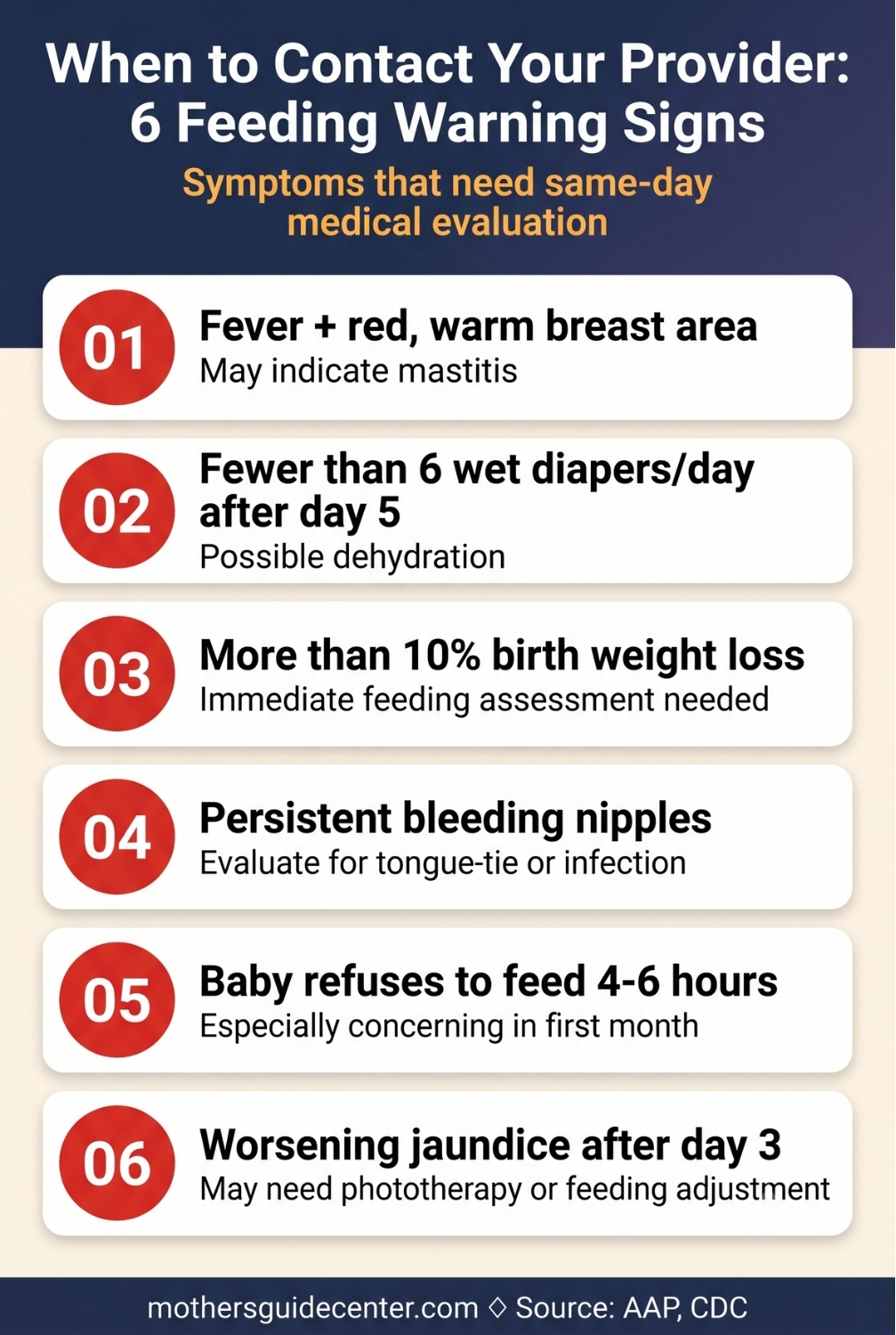
Contact your provider or seek immediate care if you experience:
- ⚠️ Fever over 100.4°F (38°C) with a red, warm, hard area on the breast — may indicate mastitis requiring antibiotics
- ⚠️ Baby not producing at least 6 wet diapers per day after day 5 — may signal dehydration or insufficient intake
- ⚠️ Newborn losing more than 10% of birth weight — requires immediate feeding assessment
- ⚠️ Persistent cracked, bleeding nipples not improving after latch correction — evaluation for tongue-tie or infection needed
- ⚠️ Baby refusing to feed for more than 4 to 6 hours — especially in the first month
- ⚠️ Yellow skin or eyes in your newborn (jaundice) worsening after day 3 — may need feeding adjustment or phototherapy
This article is for educational purposes only and does not replace medical advice from a qualified healthcare provider.
Sources
- Meek, J.Y., Noble, L. & AAP Section on Breastfeeding. (2022). Policy Statement: Breastfeeding and the Use of Human Milk. Pediatrics, 150(1).
- Centers for Disease Control and Prevention. (2026). About Breastfeeding Data. CDC.gov.
- Centers for Disease Control and Prevention. (2026). Breast Milk Storage and Preparation. CDC.gov.
- World Health Organization. (2024). Breastfeeding. WHO.int.
- American Academy of Pediatrics. (2022). Breastfeeding: AAP Policy Explained. HealthyChildren.org.
- AAP Section on Breastfeeding. (2024). Milk Storage Guidelines. AAP.org.
- Mayo Clinic. (2025). Breast milk storage: Do’s and don’ts. MayoClinic.org.
- Cleveland Clinic. (2024). Benefits of Breastfeeding for You & Baby. ClevelandClinic.org.
- National Institutes of Health. (2025). LactMed — Drugs and Lactation Database. NIH.gov.
- La Leche League International. (2024). Breastfeeding Support and Resources. LLLI.org.
- Children’s Hospital of Philadelphia. (2026). New AAP Policy Statement: Breastfeeding and the Use of Human Milk. CHOP.edu.
- Academy of Breastfeeding Medicine. (2022). Clinical Protocols. BFMed.org.
- U.S. Food and Drug Administration. (2024). Infant Formula Requirements Under the Infant Formula Act. FDA.gov.
- WIC Breastfeeding Support. (2025). Breastfeeding Basics. USDA.gov.
- Children’s Hospital of Philadelphia. (2024). Breastfeeding Tips for Beginners. CHOP.edu.