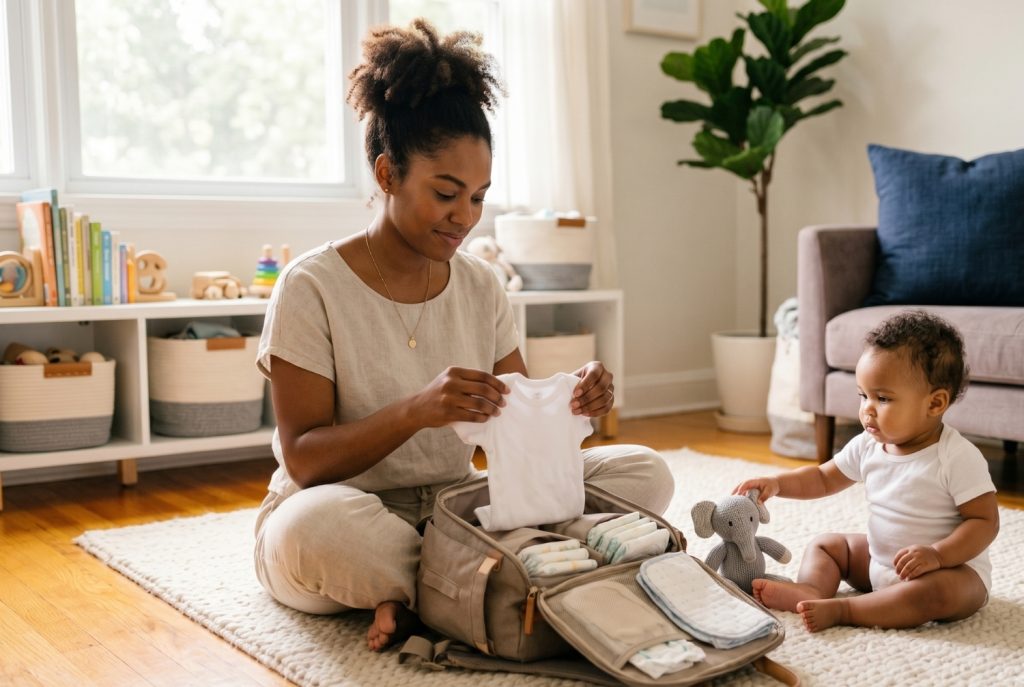
A diaper bag checklist is a parent’s packing guide that ensures every outing has the essentials — diapers, wipes, a changing pad, spare clothes, and feeding supplies — organized and ready to go. According to the American Academy of Pediatrics (AAP), newborns alone can go through 8 to 12 diapers per day, making a well-stocked bag a practical necessity from day one. What goes inside changes significantly as your baby grows from newborn through toddler stage.
Key takeaways
Leaving the house with a baby can feel like preparing for a small expedition. There is the mental checklist running through your head, the last-minute diaper change that delays everything, and the quiet fear that you have forgotten something essential. A well-packed diaper bag does not eliminate the chaos entirely — but it gives you one less thing to worry about. When you know exactly what is inside and where to find it, even a surprise blowout at the grocery store becomes manageable rather than overwhelming.
This diaper bag checklist breaks down exactly what to pack at every stage, from the early newborn weeks through the toddler years. Every recommendation is grounded in guidelines from the American Academy of Pediatrics, the Centers for Disease Control and Prevention, and the Mayo Clinic — no product sponsorships, no affiliate links, just practical information you can trust. Whether you are packing your diaper bag for the very first time or looking to streamline what you already carry, this checklist will help you feel prepared for whatever the day brings.
What’s on a complete diaper bag checklist?
A diaper bag checklist is a categorized packing list that covers the five core areas of baby care during outings: diapering, feeding, clothing, comfort, and parent essentials. Regardless of your baby’s age or where you are going, these five categories form the foundation of every well-packed bag.
Diapering: Diapers (quantity depends on outing length — see next section), a travel pack of wipes, a portable changing pad, diaper rash cream, and disposal bags for dirty diapers. According to the AAP’s HealthyChildren.org, having a dedicated changing setup makes diaper changes faster and more hygienic, especially in public spaces.
Feeding: Bottles with formula or expressed breast milk (in an insulated pocket), nursing cover if breastfeeding, burp cloths, and bibs. For babies six months and older, add age-appropriate snacks and a sippy cup with water.
Clothing: At least one complete change of clothes including socks, plus a reusable wet bag to store soiled items separately. Comfort: A pacifier (with a backup), a small toy or teether, and a lightweight blanket that doubles as a nursing cover, sun shade, or play mat. Parent essentials: Phone, wallet, keys, hand sanitizer, a water bottle, and a snack for yourself.
How many diapers should you pack for an outing?
The number of diapers to pack for an outing is a calculation based on your baby’s age and how long you plan to be away from home. A practical baseline formula is one diaper for every hour you expect to be out, plus two extras for unexpected delays or blowouts.
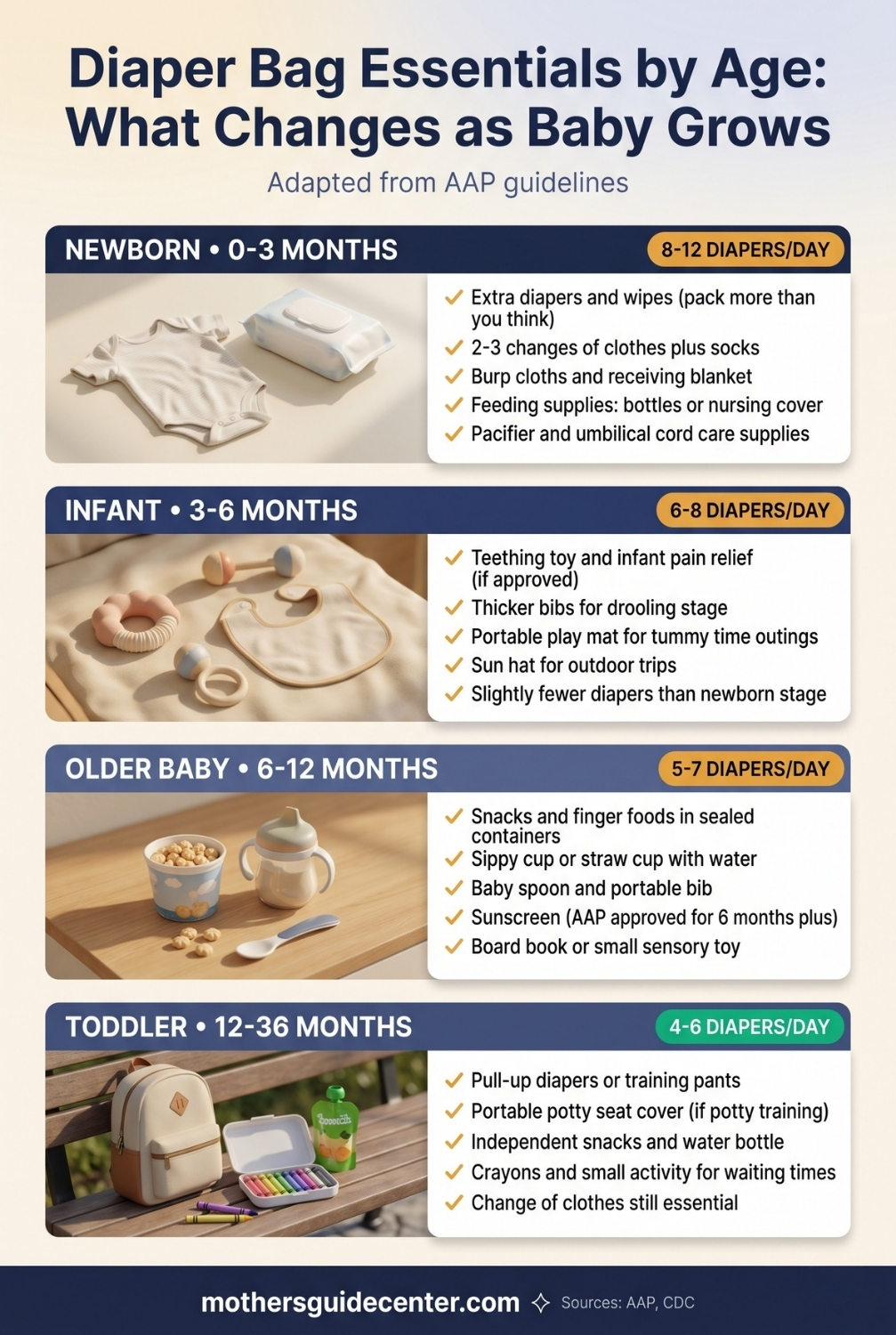
According to the American Academy of Pediatrics, newborns typically go through 8 to 12 diapers per day. That pace slows as babies grow — most infants aged three to six months use around six to eight diapers daily, while toddlers over 12 months may need only four to six. Keep your baby’s individual pattern in mind. Some babies are predictably regular; others are not.
For a quick two-hour errand, four diapers is usually plenty. For a full day out, pack eight to ten for a newborn and five to seven for an older baby. If you are traveling by car, keeping a small backup stash in the trunk can save you from running out during an unexpectedly long outing.
What should a newborn diaper bag include?
A newborn diaper bag checklist is a more loaded version of the standard list because babies in their first three months need more frequent changes, more feeding supplies, and more backup clothing than older infants. Newborn-specific additions include extra diapers (pack more generously than you think you will need), two to three changes of clothes in case of multiple blowouts, and umbilical cord care supplies if the stump has not yet fallen off.
Feeding supplies for newborns vary depending on how you feed your baby. Breastfeeding parents should pack a nursing cover, breast pads, and a small tube of nipple cream. Bottle-feeding parents need pre-measured formula, clean bottles, and a bottle of appropriate water. According to the CDC, prepared formula should be used within two hours of preparation at room temperature. Packing unmixed formula and water separately and combining them just before feeding is the safest approach for longer outings.
A thin receiving blanket is especially useful during the newborn stage because it serves multiple purposes: swaddling, shade cover, nursing cover, and a clean surface for tummy time during outings.
How does your diaper bag change as baby grows?
The contents of your diaper bag are a shifting set of supplies that evolves as your baby reaches new developmental milestones. What you pack for a six-week-old looks very different from what you need for a 14-month-old who is walking, eating solid foods, and exploring everything. The table below outlines the key differences across four stages.
| Category | Newborn (0-3 mo) | Infant (3-12 mo) | Toddler (12-36 mo) |
|---|---|---|---|
| Diapers/hr | 1-2 per hour | 1 per hour | 1 per 1.5-2 hrs |
| Feeding | Bottles/nursing supplies, burp cloths | Add purees, puffs, sippy cup, bib, spoon | Finger foods, water bottle, snack cups |
| Clothing | 2-3 onesies, socks, hat | 1-2 outfits, socks, sun hat | 1 outfit, pull-ups if training |
| Comfort | Pacifier, receiving blanket, soft rattle | Teether, small toy, lovey | Crayons, board book, small activity |
| Unique adds | Cord care, extra burp cloths | Sunscreen (6 mo+), play mat | Portable potty seat, stickers |
What should parents pack for themselves?
Parent essentials in a diaper bag are the personal items that keep you functional and comfortable while managing your baby’s needs on the go. It is easy to forget about your own basics when you are focused on packing for your child, but running out of water or not having your phone charged can make an outing significantly harder.
At minimum, keep your phone, wallet, and keys in an easy-to-reach top pocket. Add a full water bottle and a portable snack — granola bars, trail mix, or crackers — because skipping meals while caring for a baby is a fast track to exhaustion. Hand sanitizer is essential for after diaper changes when soap and water are not available. If you are nursing, tuck in breast pads and a small tube of nipple cream. A spare top for yourself is also worth considering, especially during the spit-up-heavy newborn months.
How should you organize a diaper bag for quick access?
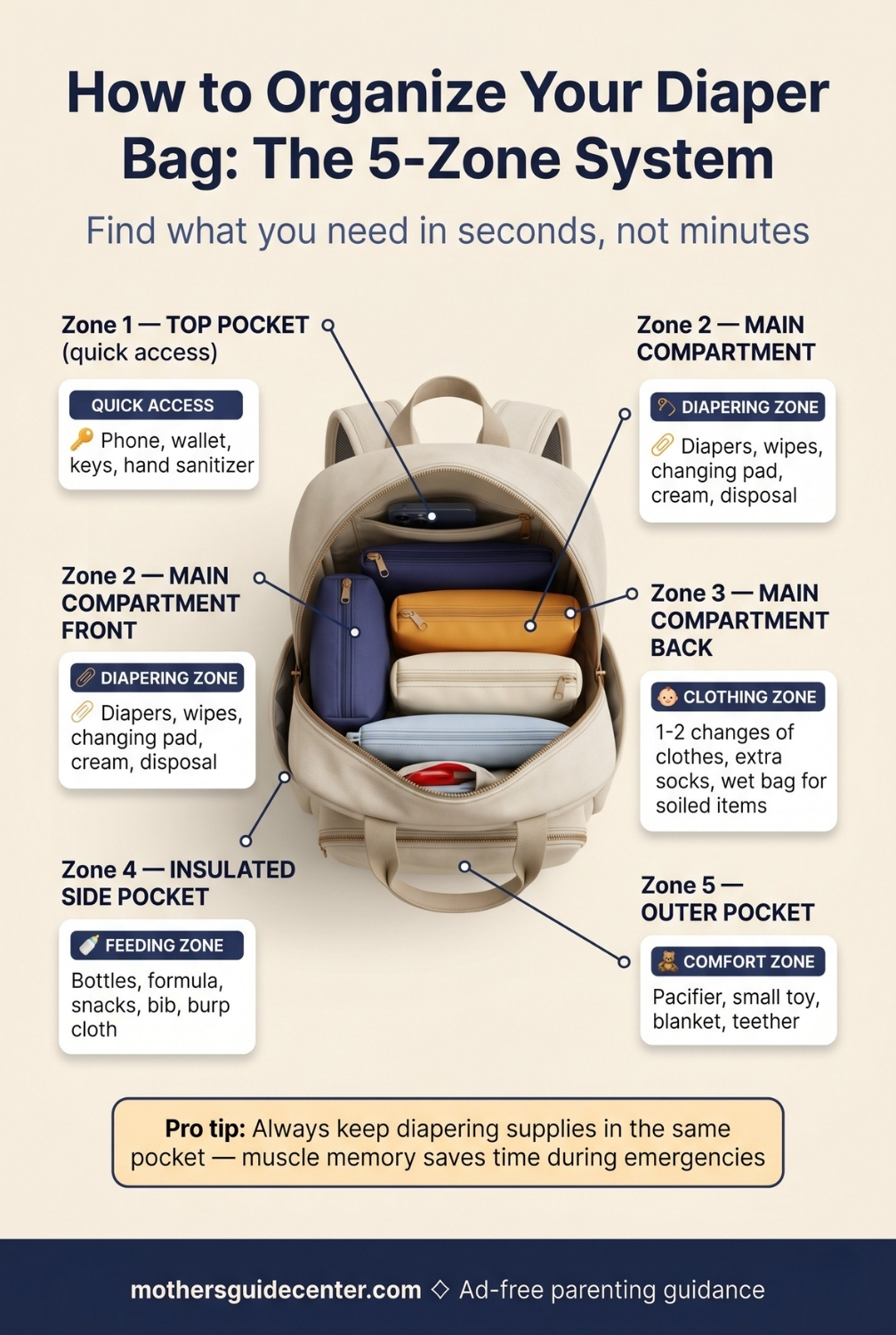
Organizing a diaper bag effectively is a system of assigning every item to a specific zone so you can find what you need by muscle memory, not by searching. The goal is to reach for diapers, wipes, or a bottle without looking — because your other hand is probably holding a squirming baby.
The five-zone approach works well for most bag styles. Designate the top pocket or most accessible compartment for quick-access items you reach for constantly: phone, keys, hand sanitizer. Give diapering supplies their own dedicated section — diapers, wipes, changing pad, cream, and disposal bags together. Keep feeding items in an insulated side pocket if your bag has one, or in a separate small pouch. Place backup clothing and a wet bag in the main compartment where they are accessible but not in the way. Finally, tuck comfort items like pacifiers and teethers into a small outer pocket.
The most important rule is consistency. Once you decide which pocket holds what, use the same arrangement every single time. After a few outings, reaching for a diaper becomes automatic — and that saves valuable seconds during a public meltdown.
What should you add for longer outings or travel?
Packing a diaper bag for a longer outing is an extension of your everyday diaper bag checklist with strategic additions for time, distance, and unpredictability. The shift from a two-hour errand to a full day out or a road trip changes the calculus for nearly every category.
For full-day outings, double your diaper count from the hourly formula and pack a second complete outfit change. Add a larger supply of snacks and an additional bottle or sippy cup. A portable insulated bag or cooler pouch becomes essential for keeping breast milk or prepared formula at a safe temperature. According to the CDC, expressed breast milk is safe at room temperature for up to four hours, but an insulated bag with ice packs extends that window significantly.
For car travel specifically, keep a secondary stash in the trunk: a sleeve of diapers, a backup pack of wipes, an extra outfit, and a plastic bag. This trunk kit serves as insurance for the times you underestimate how long you will be out — and those times will happen.
What seasonal items should go in your diaper bag?
Seasonal additions to your diaper bag checklist are weather-specific items that protect your baby from sun, heat, or cold during outdoor outings. The core checklist stays the same year-round, but layering in a few seasonal extras prevents discomfort and health risks.
Summer: Sunscreen is the most important warm-weather addition, but age matters. According to the AAP, sunscreen is recommended for babies six months and older. For babies under six months, the AAP advises keeping them in the shade and using protective clothing and a wide-brimmed hat rather than applying sunscreen. Pack a lightweight muslin blanket that can serve as a shade cover over the stroller, and bring extra water for yourself and for older babies who are drinking it.
Winter: Add an extra warm layer — a fleece jacket or knit sweater — and a hat that covers the ears. A thicker blanket replaces the lightweight muslin. If you use a car seat, remember that bulky winter coats should not be worn under the harness because they compress in a crash, according to the AAP. Pack the coat separately and cover your baby with a blanket over the buckled harness instead.
What should you NOT put in a diaper bag?
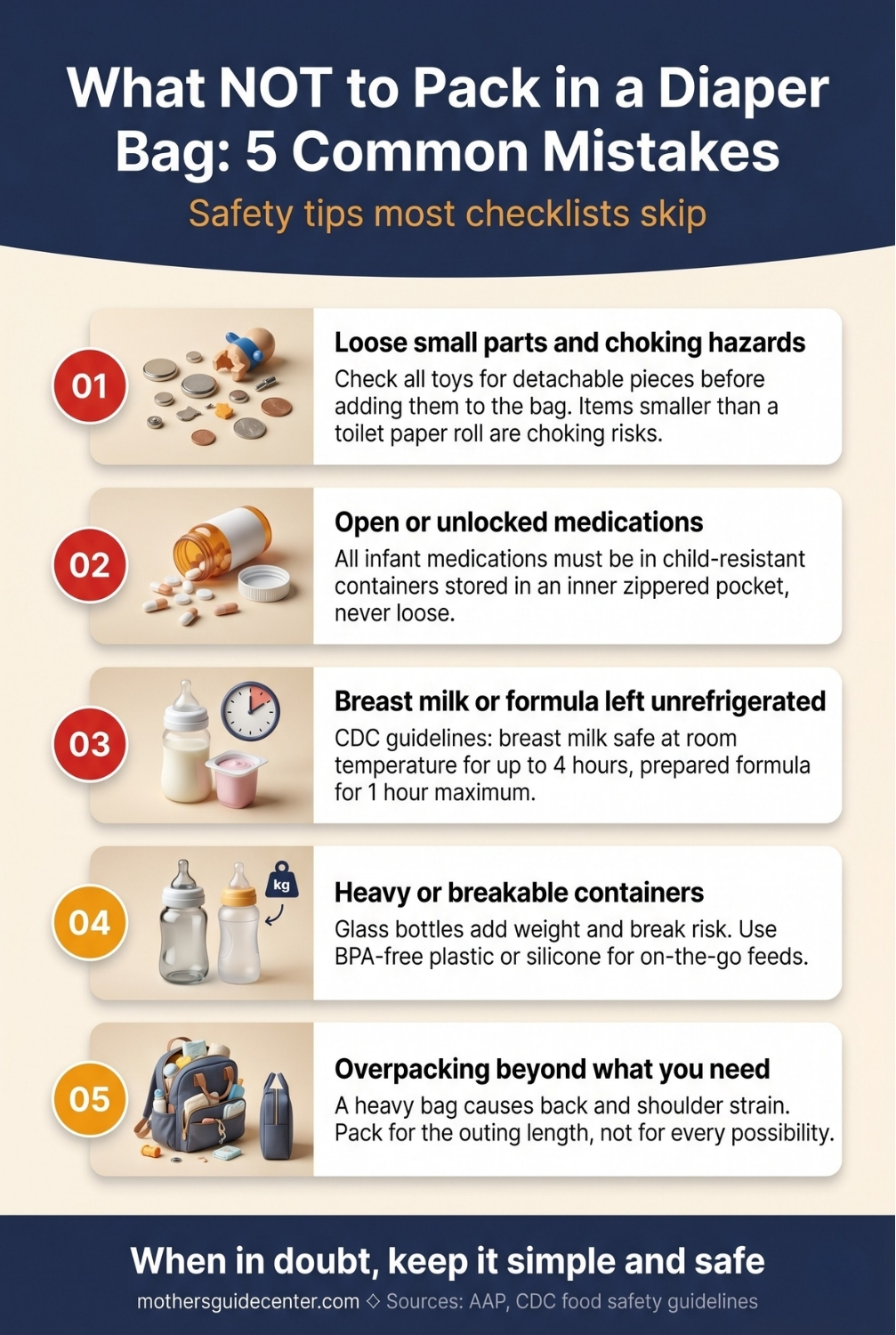
Knowing what not to pack in a diaper bag is a safety consideration that most diaper bag checklists skip entirely. Overpacking adds unnecessary weight and creates clutter that slows you down, but certain items also pose genuine risks if they end up loose inside the bag where curious hands can reach them.
Loose small parts: Button batteries, coins, broken toy pieces, and any item small enough to fit through a toilet paper roll is a choking hazard. Inspect all toys before adding them to the bag. Unsecured medications: Infant pain relievers, gas drops, and vitamin D supplements should always be stored in child-resistant containers inside a zippered inner pocket — never loose. Perishable food left too long: The CDC advises that prepared infant formula should be used within two hours at room temperature. Breast milk lasts up to four hours. Pack these in an insulated pouch and discard anything that has been out beyond these windows.
Heavy glass bottles: Glass adds weight and breakage risk. BPA-free plastic or silicone alternatives are lighter and safer for travel. Overpacking in general: A bag that is too heavy causes back and shoulder strain, making outings less enjoyable. Pack for the outing you are actually taking, not for every scenario imaginable.
Do you actually need a diaper bag or can you use a regular bag?
A diaper bag is any bag you use to carry your baby’s supplies — there is no requirement that it be a product specifically marketed as a diaper bag. A regular backpack, tote, or messenger bag works perfectly well as long as it has enough compartments or you add small pouches for organization.
That said, purpose-built diaper bags do offer a few practical advantages. Most include an insulated bottle pocket, a built-in changing pad, stroller clips, and waterproof lining that makes cleanup easier. Whether these features are worth a dedicated purchase depends on your lifestyle. If you are already comfortable with a backpack you love, adding a small portable changing pad and a few zippered pouches transforms it into a fully functional diaper bag at a fraction of the cost.
The most important factor is not the bag — it is consistency. A well-organized tote bag beats a disorganized designer diaper bag every time. No matter which bag you choose, working from a consistent diaper bag checklist is what keeps you prepared. Choose whatever bag feels comfortable on your body for extended carrying, and commit to the same pocket-assignment system described above.
Frequently asked questions
How often should I restock my diaper bag?
Restocking your diaper bag means checking it after every outing and refilling what you used against your diaper bag checklist. Most parents find it helpful to do a full restock each evening so the bag is ready for the next day. Replace diapers, wipes, snacks, and any soiled clothes immediately, and check expiration dates on sunscreen and diaper cream monthly.
Can I use a regular backpack as a diaper bag?
A regular backpack can absolutely work as a diaper bag. What matters most is internal organization, not the bag itself. Use small zippered pouches or packing cubes to create dedicated zones for diapering, feeding, and clothing. The main advantage of a purpose-built diaper bag is insulated pockets and a built-in changing pad, but these can be added separately to any backpack.
How many changes of clothes should I pack for my baby?
For outings under four hours, one complete change of clothes including socks is usually sufficient. For longer outings or full-day trips, pack two changes. Newborns tend to need more frequent outfit changes due to spit-up and blowouts, so packing an extra onesie during the first three months is a practical precaution.
When should I start packing a diaper bag?
Packing your diaper bag is a good task for the third trimester, ideally around 36 weeks. Having it ready before your due date means it is prepared for your hospital stay and your first outings after coming home. Many parents pack the diaper bag at the same time they pack their hospital bag so both are ready to grab when labor begins.
What is the best type of diaper bag for new parents?
The best diaper bag is one that fits your lifestyle and feels comfortable to carry. Backpack-style bags distribute weight evenly and keep both hands free, making them popular with active parents. Messenger bags offer quick side access, while tote bags provide the most interior space for longer outings. Choose based on how you typically carry things and how long you are usually out.
When can I stop carrying a diaper bag?
Most parents scale down their diaper bag between ages two and three, when children are potty training and eating more independently. At that stage, many parents switch to a smaller bag or a few essentials tucked into a regular purse or backpack. The transition is gradual, and keeping a compact emergency kit with a spare outfit and wipes is practical well into preschool age.
When to contact your healthcare provider
While this article covers practical packing, some situations during outings require medical attention. Contact your provider or seek immediate care if you notice:
This article is for educational purposes only and does not replace medical advice from a qualified healthcare provider.
Sources
- American Academy of Pediatrics. (2024). Diapering Basics. HealthyChildren.org.
- Centers for Disease Control and Prevention. (2024). Infant Formula Preparation and Storage. CDC.gov.
- Centers for Disease Control and Prevention. (2024). Proper Storage and Preparation of Breast Milk. CDC.gov.
- American Academy of Pediatrics. (2024). Sun and Water Safety. AAP.org.
- Mayo Clinic. (2024). Diaper Rash: Symptoms and Causes. MayoClinic.org.
- American Academy of Pediatrics. (2024). Car Seat Safety: Winter Coats and Car Seats. HealthyChildren.org.
- Cleveland Clinic. (2024). Baby Skin Care Basics. ClevelandClinic.org.
- World Health Organization. (2024). Breastfeeding: Safe Handling of Breast Milk. WHO.int.