
Magnesium is generally safe to take while breastfeeding when used at recommended doses. According to the National Institutes of Health, breastfeeding women need 310–320 mg of magnesium daily (ages 31–50), with a supplement upper limit of 350 mg. The NIH’s LactMed database confirms that oral magnesium salts are compatible with breastfeeding and require no special precautions, as infant oral absorption of the mineral is poor.
Key takeaways
- ✓Oral magnesium supplements are compatible with breastfeeding according to the NIH’s LactMed database.
- ✓The recommended daily intake for breastfeeding mothers is 310–360 mg depending on age.
- ✓Magnesium glycinate is generally preferred for its high absorption and low gastrointestinal side effects.
- ✓Breast milk magnesium levels remain relatively stable regardless of maternal intake.
- ✓The supplement upper limit is 350 mg per day — exceeding this increases the risk of diarrhea.
- ✓IV magnesium given during delivery is different from oral supplements and may delay lactation onset.
- ✓Talk to your healthcare provider before starting any magnesium supplement while breastfeeding.
If you are breastfeeding and wondering whether a magnesium supplement is safe for you and your baby, you are not alone. Magnesium is involved in over 300 enzymatic reactions in the body — from muscle recovery and sleep regulation to mood stability — and the postpartum period places extra demands on your stores. According to the NIH Office of Dietary Supplements, many adults already fall short of their daily magnesium needs, and breastfeeding can widen that gap further.
This guide covers everything you need to know about taking magnesium while breastfeeding: which forms are compatible with nursing, how much you actually need, what happens in your breast milk, and when to contact your provider. Every claim is sourced from Tier 1 medical authorities including LactMed, the NIH, and ACOG — no supplement brand marketing, no affiliate links, no product recommendations.
Is magnesium safe to take while breastfeeding?
Magnesium is an essential mineral that is generally considered safe to take as an oral supplement during breastfeeding. The NIH’s LactMed database — the gold standard for medication safety during lactation — states that oral magnesium salts “can be taken during breastfeeding and no special precautions are required.” This applies to the most commonly used supplement forms including citrate, oxide, and hydroxide.
The reason oral magnesium supplement breastfeeding safety is well-established comes down to physiology. Intravenous magnesium sulfate increases milk magnesium concentrations only slightly, and oral absorption of magnesium by the infant through breast milk is poor. This means that even when a mother supplements, very little additional magnesium reaches the baby’s bloodstream.
One important distinction: IV magnesium sulfate — given in hospital settings for preeclampsia — is a high-dose clinical treatment and is not the same as taking an oral supplement at home. According to LactMed’s magnesium sulfate entry, postpartum IV magnesium for 24 hours may delay the onset of lactation compared to shorter durations. Once breastfeeding is established, standard oral supplements pose no known risk.
How much magnesium do you need while breastfeeding?
The recommended daily allowance (RDA) for magnesium during breastfeeding depends on your age, according to the NIH Office of Dietary Supplements. Breastfeeding women aged 19–30 need 310 mg per day. For those aged 31–50, the recommendation is 320 mg per day. Breastfeeding teens (14–18) have a higher requirement at 360 mg per day.
The tolerable upper intake level (UL) for magnesium from supplements only is 350 mg per day for adults. This does not include magnesium from food or water — only from pills, powders, or liquids. The math matters: if you are already getting 200 mg from food (a reasonable estimate for a varied diet), you would only need about 110–160 mg from a supplement to reach your RDA. Taking a 400 mg supplement on top of a magnesium-rich diet could push you past the UL and increase the risk of gastrointestinal side effects.
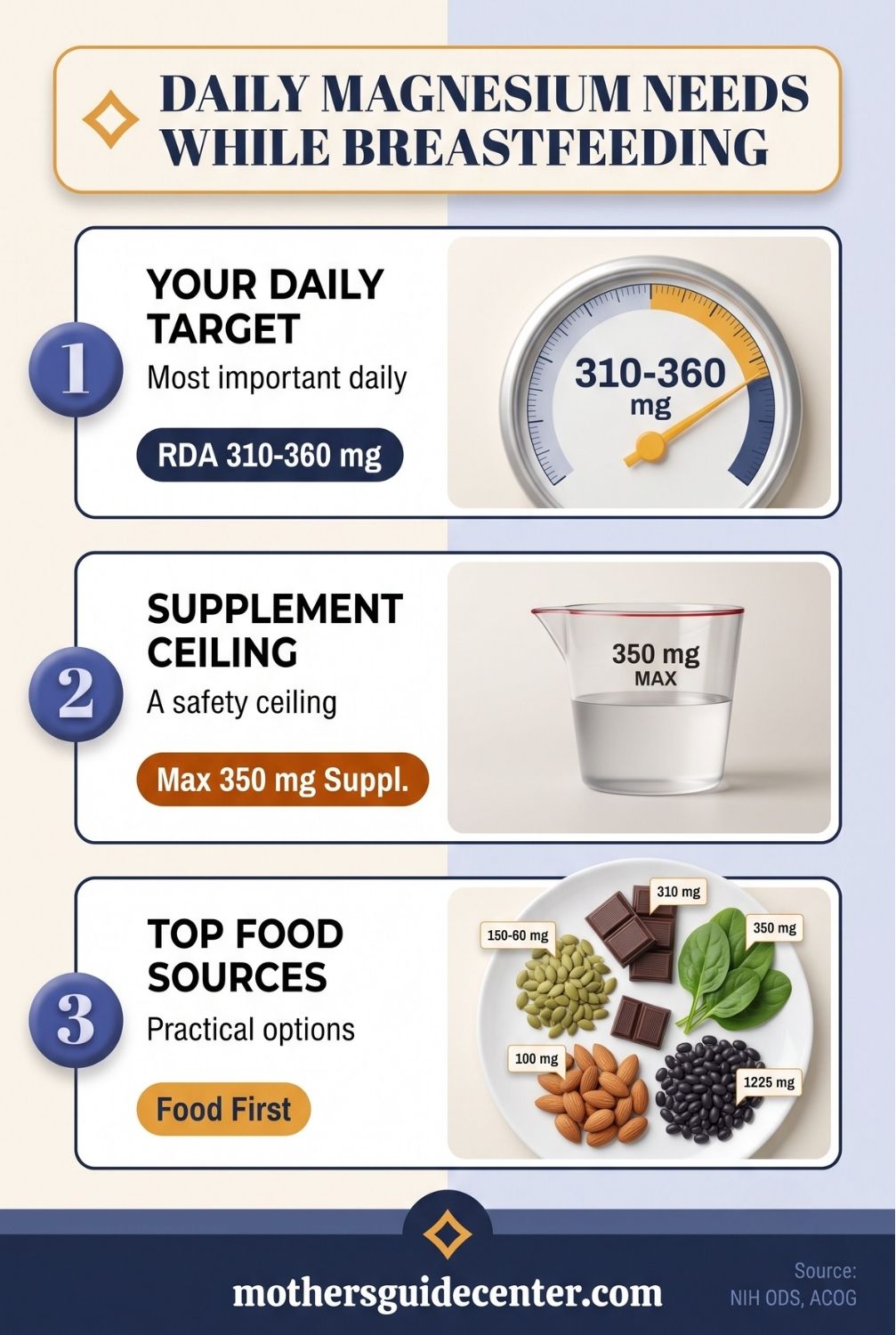
Good dietary sources of magnesium include pumpkin seeds (156 mg per ounce), chia seeds (111 mg per ounce), almonds (80 mg per ounce), spinach (78 mg per half cup cooked), and black beans (60 mg per half cup). A handful of pumpkin seeds as a snack can cover nearly half of your daily target before any supplement enters the equation.
What type of magnesium is best while breastfeeding?
The type of magnesium supplement you choose affects how well your body absorbs it and what side effects you may experience. Not all forms are studied equally in the context of breastfeeding, and some have more clinical data than others. Below is a comparison of the five most common magnesium forms available as supplements.
| Form | Absorption | BF Safety | Best for |
|---|---|---|---|
| Glycinate | High | ✅ Compatible | Sleep, calm, low GI risk |
| Citrate | Medium–High | ✅ Compatible | Constipation, general use |
| Oxide | Low | ✅ Compatible | Budget option (poor absorption) |
| Threonate | Medium | ⚠️ Limited data | Cognitive focus (crosses BBB) |
| Malate | Medium | ⚠️ Limited data | Energy, muscle pain |
Magnesium glycinate breastfeeding compatibility is well-supported. It is a chelated form — magnesium bonded to the amino acid glycine — designed for better gastrointestinal tolerance rather than increased systemic absorption. This makes it less likely to cause diarrhea than citrate or oxide. Many healthcare providers recommend glycinate as a first choice during lactation for mothers seeking help with sleep, muscle tension, or mood support.
Magnesium citrate breastfeeding use is also well-documented. LactMed’s citrate entry specifically states it “can be taken during breastfeeding and no special precautions are required.” Citrate is a good option if you are dealing with postpartum constipation, as it has a mild osmotic laxative effect. However, higher doses can cause diarrhea.
Magnesium threonate and malate have less breastfeeding-specific research. While they are not considered harmful, there is no dedicated LactMed entry or large-scale lactation study for these forms. If you prefer one of these for a specific reason, discuss it with your provider.

Does magnesium pass into breast milk?
Magnesium is a natural component of breast milk, and its concentration is regulated by your body rather than directly mirrored from your diet. According to LactMed, breast milk magnesium levels remain relatively stable even when maternal serum levels are elevated — for example, in studies of women treated with IV magnesium sulfate for preeclampsia, colostrum magnesium was only slightly higher (64 mg/L) compared to untreated controls (48 mg/L).
Breastfed infants typically receive about 30–40 mg of magnesium daily through milk, which aligns with the adequate intake for infants 0–6 months (30 mg/day per NIH). Your body prioritizes your baby’s needs — it will pull magnesium from your own bones and muscle stores to maintain milk quality. This is why maintaining your own levels through diet and supplementation matters: not primarily for the milk, but for your recovery and health. A depleted mother cannot sustain herself over months of breastfeeding without replenishment.
Does magnesium affect breast milk supply?
Magnesium is not classified as a galactagogue — a substance that directly increases milk production. No large-scale clinical trial has demonstrated that magnesium supplementation alone boosts supply. However, magnesium plays an indirect supportive role. Adequate magnesium helps regulate cortisol (a stress hormone that can suppress the let-down reflex), promotes muscle relaxation, and supports sleep quality — all of which create better conditions for your body to produce and release milk efficiently.
On the other hand, excessive magnesium intake (above the 350 mg supplement UL) can cause diarrhea, which leads to dehydration. Since hydration is essential for milk production, overdoing magnesium could paradoxically reduce supply. The takeaway: magnesium supports the conditions for good supply when taken at recommended doses, but it is not a direct fix for low production. If you are concerned about supply, consider consulting a lactation specialist. For more on breastfeeding guidance, see our complete feeding guide.
What are signs of magnesium deficiency while breastfeeding?
Magnesium deficiency during breastfeeding is more common than many mothers realize, particularly because the postpartum period depletes stores built up during pregnancy. According to the NIH, early signs of low magnesium include muscle cramps (especially in the legs at night), persistent fatigue that does not improve with rest, difficulty staying asleep even when the baby is sleeping, increased irritability or anxiety, and tension headaches.
Many of these symptoms overlap with normal postpartum exhaustion, which makes deficiency easy to dismiss. If multiple symptoms persist for more than a couple of weeks, it is worth discussing with your provider. A simple blood test can check your serum magnesium level, though this test captures only about 1% of your body’s total magnesium (most is stored in bones and muscle), so clinical symptoms matter alongside lab values.

Can magnesium help with postpartum sleep and anxiety?
Magnesium plays a role in the regulation of neurotransmitters and hormones that affect sleep and mood. It supports the production of GABA (gamma-aminobutyric acid), a calming neurotransmitter that helps the nervous system shift into rest mode, and helps regulate cortisol, your body’s primary stress hormone. For breastfeeding mothers dealing with fragmented sleep and the stress of new parenthood, these mechanisms can make a noticeable difference in how rested you feel — even if the total hours of sleep remain limited.
Emerging research suggests that maintaining healthy magnesium levels may help stabilize mood during the postpartum period. However, magnesium is not a replacement for professional mental health support. If you are experiencing persistent sadness, hopelessness, intrusive thoughts, or difficulty bonding with your baby, these may be signs of postpartum depression or anxiety that require clinical care. Magnesium can be one piece of a broader postpartum recovery plan, but it is not a standalone treatment for perinatal mood disorders.
Should you take calcium and magnesium together while breastfeeding?
Calcium and magnesium are both critical minerals during breastfeeding, and a calcium magnesium supplement breastfeeding combination is a common question. These two minerals work together for bone health, muscle function, and nerve signaling. Breastfeeding draws calcium from your bones to supply your milk, so maintaining adequate intake of both minerals protects your skeletal health during lactation.
However, taking very high doses of calcium and magnesium at the same time can compete for absorption in the gut. If you are supplementing both, consider taking them at different times of day — for example, calcium with breakfast and magnesium in the evening. If your supplement contains a moderate combined dose (such as a prenatal vitamin with both minerals), this is generally not a concern. Discuss your specific dosing with your provider to ensure you are covering your needs without creating an absorption conflict.
What are the side effects of magnesium while breastfeeding?
The most common side effect of oral magnesium supplementation is gastrointestinal discomfort, including loose stools, diarrhea, nausea, and stomach cramping. This is dose-dependent and form-dependent: magnesium citrate and oxide are more likely to cause GI issues than glycinate. Starting at a low dose (100–200 mg) and gradually increasing over a few days helps your body adjust.
At standard oral doses, magnesium does not cause known side effects in breastfed infants. LactMed confirms that a study of magnesium hydroxide during breastfeeding found no adverse reactions in breastfed infants. However, if you have kidney disease or impaired renal function, magnesium excretion may be compromised, increasing the risk of elevated levels. Always consult your provider before supplementing if you have any kidney-related conditions.
When is the best time to take magnesium while breastfeeding?
The best time to take magnesium depends on the form you are using and the benefit you are seeking. Many breastfeeding mothers find that taking magnesium glycinate one to two hours before bed helps with muscle relaxation and sleep quality — this aligns with its GABA-supporting properties. If you are using magnesium citrate for constipation relief, morning or midday is generally more practical so that the laxative effect does not disrupt nighttime rest.
Taking magnesium with food can improve absorption and reduce the chance of stomach discomfort. If you are also taking calcium, iron, or certain antibiotics, space your magnesium dose at least two hours apart, as these can interfere with each other’s absorption. If you are taking other supplements while breastfeeding, discuss the full list with your provider to avoid interactions.
Frequently asked questions
Can magnesium make my breastfed baby sleepy?
Standard oral magnesium supplements are unlikely to make a breastfed baby sleepy. LactMed confirms that oral magnesium absorption by infants through breast milk is poor, and milk magnesium levels remain relatively stable regardless of maternal intake. Excessive sleepiness or lethargy in a nursing infant warrants a call to your pediatrician, but this is not an expected effect of maternal magnesium supplementation at recommended doses.
Is magnesium glycinate better than magnesium citrate for breastfeeding?
Both forms are compatible with breastfeeding. Magnesium glycinate is often preferred because it has higher bioavailability and is gentler on the digestive system, making loose stools less likely. Magnesium citrate is also well-absorbed but has a stronger laxative effect at higher doses. The best choice depends on your individual needs — glycinate for sleep and muscle relaxation, citrate if constipation is your primary concern.
Can I take magnesium if I had IV magnesium during delivery?
Intravenous magnesium sulfate given during delivery for preeclampsia is a high-dose clinical treatment that differs from oral supplements. LactMed notes that IV magnesium given postpartum for 24 hours may delay lactation onset. However, once breastfeeding is established, standard oral magnesium supplements are compatible with nursing. Discuss the timing of oral supplementation with your provider after IV treatment.
Does magnesium help with breastfeeding aversion?
Breastfeeding aversion is a condition where a mother experiences intense negative feelings during nursing. Some mothers report that magnesium supplementation helps reduce the intensity of aversion episodes, possibly through its effects on the nervous system and stress response. While no large-scale clinical trials have studied this specifically, maintaining adequate magnesium levels supports overall nervous system regulation. Speak with a lactation consultant if you are experiencing aversion.
How long does it take for magnesium to work while breastfeeding?
Most women notice improvements in sleep quality and muscle tension within one to two weeks of consistent supplementation. Constipation relief from magnesium citrate may occur within hours. Building up depleted magnesium stores in the body can take several weeks to months of consistent intake. If you do not notice any improvement after four weeks, consult your provider about checking your magnesium levels.
Can magnesium supplements cause diarrhea in my nursing baby?
Diarrhea in a breastfed infant from maternal magnesium supplementation is very unlikely at recommended doses. LactMed confirms that oral magnesium absorption by infants through breast milk is poor, meaning very little supplemental magnesium reaches the baby’s system. If your infant develops loose stools while you are taking magnesium, other causes are far more likely. Reduce your dose and discuss the symptoms with your pediatrician if you are concerned.
When to contact your healthcare provider
Contact your provider or seek immediate care if you experience:
- ⚠️Persistent diarrhea or vomiting after starting magnesium — dehydration affects milk supply
- ⚠️Irregular heartbeat, dizziness, or low blood pressure — signs of magnesium excess
- ⚠️Unusual sleepiness, lethargy, or poor feeding in your infant after starting supplementation
- ⚠️Muscle cramps, fatigue, or mood symptoms that do not improve after 4 weeks of supplementation
- ⚠️Any known kidney disease — impaired renal function changes magnesium excretion
This article is for educational purposes only and does not replace medical advice from a qualified healthcare provider.
Sources
- National Institute of Child Health and Human Development. (2024). Magnesium Citrate — Drugs and Lactation Database (LactMed). NCBI Bookshelf.
- National Institute of Child Health and Human Development. (2026). Magnesium Sulfate — Drugs and Lactation Database (LactMed). NCBI Bookshelf.
- National Institute of Child Health and Human Development. (2024). Magnesium Oxide — Drugs and Lactation Database (LactMed). NCBI Bookshelf.
- National Institutes of Health — Office of Dietary Supplements. (2025). Magnesium — Fact Sheet for Consumers. NIH.gov.
- National Institutes of Health — Office of Dietary Supplements. (2025). Magnesium — Fact Sheet for Health Professionals. NIH.gov.
- American Academy of Pediatrics. (2001). Transfer of drugs and therapeutics into human breast milk. Pediatrics, 108(3), 776–789.
- American College of Obstetricians and Gynecologists. (2024). Nutrition During Pregnancy. ACOG.org.
- Cruikshank DP, Varner MW, Pitkin RM. (1982). Breast milk magnesium and calcium concentrations following magnesium sulfate treatment. American Journal of Obstetrics and Gynecology, 143(6), 685–688.
- Meier B, Huch R, Zimmermann R, von Mandach U. (2005). Does continuing oral magnesium supplementation until delivery affect labor and puerperium outcome? European Journal of Obstetrics & Gynecology and Reproductive Biology, 123(2), 157–161.
- World Health Organization. (2023). WHO guideline on maternal nutrition. WHO.int.