
Does cramping during ovulation mean pregnancy? No — cramping during ovulation is a common mid-cycle sensation called mittelschmerz that signals egg release, not pregnancy. According to the Cleveland Clinic, up to 40% of women of reproductive age experience ovulation pain. Pregnancy-related cramping from implantation happens 6 to 12 days after ovulation — not during it — so mid-cycle cramps are almost always a normal part of your menstrual cycle.
Key takeaways
If you are trying to conceive and feel a cramp or twinge in the middle of your cycle, you are probably asking does cramping during ovulation mean pregnancy — it is a completely natural question. That hope — or anxiety — drives millions of monthly searches from women carefully tracking every sensation during their fertile window. The short answer, backed by medical evidence, is no: mid-cycle cramping almost always signals ovulation itself, not conception. According to the National Institutes of Health (StatPearls), ovulation-related pelvic pain, known as mittelschmerz, may affect over 40% of women of reproductive age and occurs almost every month in these individuals. Knowing the biology behind this pain, how it compares to implantation cramping, what each type actually feels like, and when it genuinely makes sense to reach for a pregnancy test can save you weeks of unnecessary anxiety and help you make confident, evidence-based decisions throughout your trying-to-conceive journey.
What causes cramping during ovulation?
Ovulation cramping, medically known as mittelschmerz, is a benign lower abdominal pain that occurs when a mature follicle in the ovary ruptures and releases an egg, typically around day 14 of a 28-day menstrual cycle. The term comes from the German words for “middle” and “pain,” reflecting its mid-cycle timing.
The exact mechanism is not fully understood, but the Cleveland Clinic explains that the pain likely results from the follicle stretching the ovary before rupture, or from fluid and a small amount of blood released during the process that irritates the abdominal lining. The pain is usually felt on one side of the lower abdomen — the side where the ovary is releasing the egg that cycle — and the side may alternate month to month as ovaries typically take turns ovulating.
According to NIH’s StatPearls review on mittelschmerz, this pain generally does not begin until a few years after menarche, once true ovulatory cycles are established. It can range from a mild ache to more significant discomfort and typically lasts anywhere from a few minutes to 48 hours.
Does cramping during ovulation mean pregnancy?
Ovulation cramping is a normal physiological response to egg release and is not an indicator of pregnancy. At the moment of ovulation, conception has not yet occurred — the egg has only just been released and must still travel through the fallopian tube, where it may or may not encounter sperm.
According to the American College of Obstetricians and Gynecologists (ACOG), after ovulation the egg is viable for only 12 to 24 hours, while sperm can survive in the reproductive tract for up to 5 days. Even if fertilization does happen, the fertilized egg takes an additional 6 to 12 days to travel to the uterus and implant in the uterine wall. This means pregnancy-related cramping — if it occurs at all — would happen well after ovulation, not during it.
The Cleveland Clinic confirms that ovulation pain does not mean you are more fertile than someone who does not experience it, and it does not affect your chances of getting pregnant that cycle in any way. The pain simply confirms that ovulation is likely occurring.
How can you tell ovulation cramps from implantation cramps?
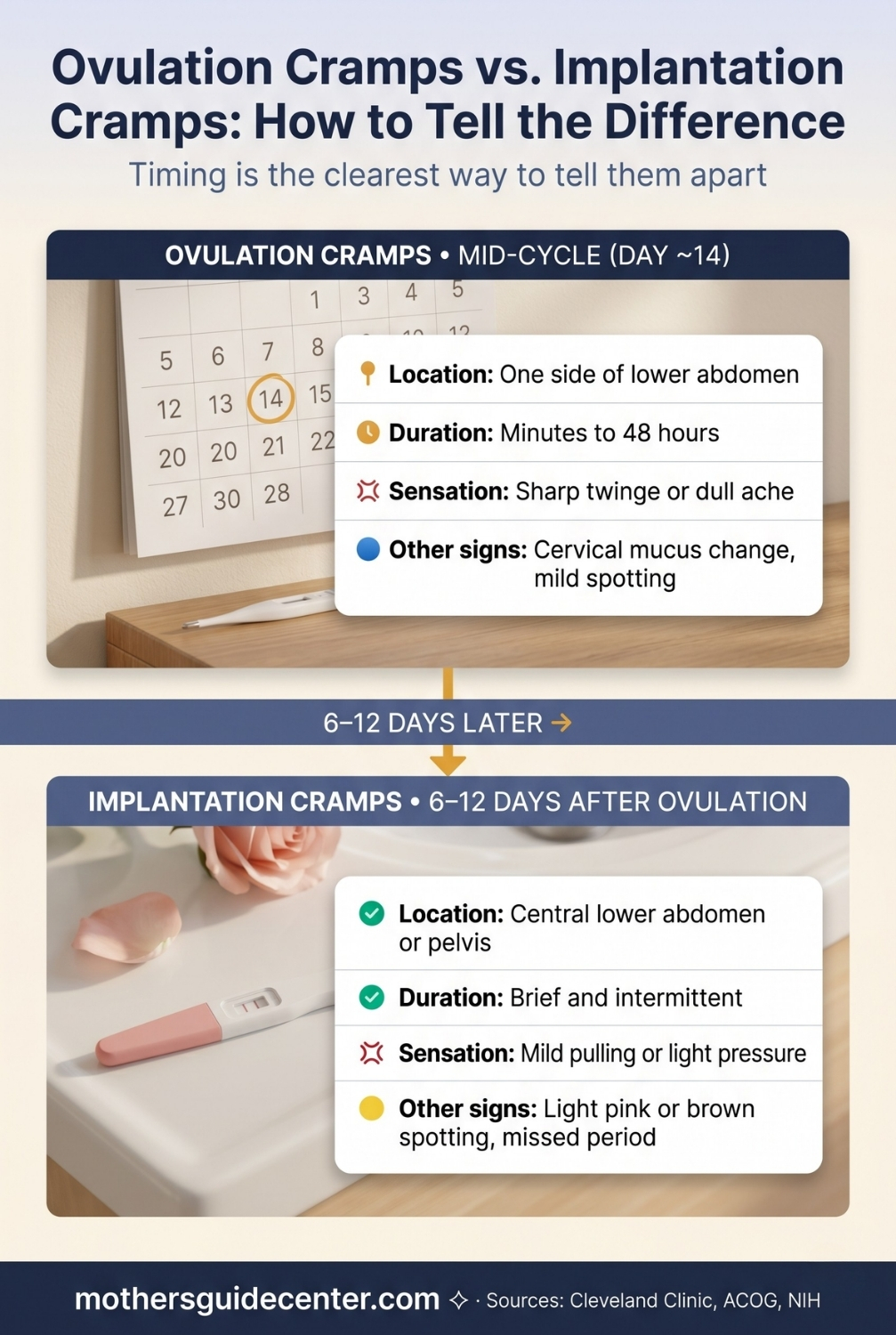
Ovulation cramps and implantation cramps are two distinct sensations that occur at different points in the menstrual cycle, though they can feel similar enough to cause confusion — especially when you are actively trying to conceive. The key differentiator is timing: ovulation cramps happen mid-cycle (around day 14), while implantation cramps, if they occur, happen 6 to 12 days after ovulation, closer to when your period would normally be expected.
| Feature | Ovulation Cramps | Implantation Cramps |
|---|---|---|
| Timing | Mid-cycle, around day 14 | 6–12 days after ovulation |
| Location | One side of the lower abdomen | Central lower abdomen or pelvis |
| Sensation | Sharp twinge or dull ache | Mild pulling, tingling, or light pressure |
| Duration | Minutes to 48 hours | Brief and intermittent |
| Other signs | Cervical mucus changes, mild spotting | Light spotting, missed period, breast tenderness |
According to Penn Medicine, ovulation pain is typically felt on one side — matching the ovary that released the egg — and resolves within a day or two. Implantation cramping, by contrast, tends to be more centrally located and is often described as a very light, intermittent sensation. Not everyone experiences implantation cramps: research suggests only about 25% of pregnant women notice any cramping or spotting around the time of implantation.
What does ovulation pain feel like?
Ovulation pain is a lower abdominal sensation that varies widely from person to person, ranging from a barely noticeable twinge to a cramp sharp enough to cause brief discomfort during daily activities. The Cleveland Clinic describes the sensation as feeling like a mild twinge, a cramp, or a sudden sharp pain — typically on one side of the abdomen.
Common descriptions of ovulation pain include a sharp, poking sensation on one side that lasts seconds to minutes; a dull ache near the ovary that persists for hours; a feeling of bloating or fullness in the lower abdomen; and mild lower back pain on one side. Some women also notice a small amount of vaginal spotting — typically light pink — or an increase in clear, stretchy cervical mucus around the same time.
The side of the pain can switch from month to month depending on which ovary is releasing the egg. According to StatPearls, the pain severity can range from mild to significant discomfort, but it is not considered harmful and typically resolves on its own without treatment.
Can cramping after ovulation be an early sign of pregnancy?
Many women ask does cramping during ovulation mean pregnancy, but cramping that occurs several days after ovulation — specifically 6 to 12 days post-ovulation — can potentially be related to implantation, which is the process of a fertilized egg attaching to the uterine wall and the earliest physiological event of pregnancy. However, cramping immediately during or within 1 to 2 days of ovulation is not a sign of pregnancy; it is simply the tail end of the ovulation process itself.
According to the American Pregnancy Association, implantation typically occurs 6 to 10 days after ovulation. Mayo Clinic notes that not all women experience any sensation during implantation, and the presence or absence of cramping is not a reliable indicator of whether conception has occurred.
If you are tracking your cycle and notice mild cramping around 8 to 10 days past ovulation, it is worth noting — especially if accompanied by light spotting or breast tenderness. However, progesterone levels naturally rise after ovulation regardless of pregnancy, and this hormonal shift alone can cause bloating, mild cramps, and mood changes. Post-ovulation cramps are common even in non-pregnant cycles. The only way to confirm pregnancy is with a test.
When should you take a pregnancy test after ovulation?
A pregnancy test detects human chorionic gonadotropin (hCG), a hormone produced only after a fertilized egg implants in the uterine wall and the placenta begins to form. Because implantation happens 6 to 12 days after ovulation, hCG does not appear in measurable amounts until at least 10 to 14 days post-ovulation — which typically aligns with the first day of a missed period.
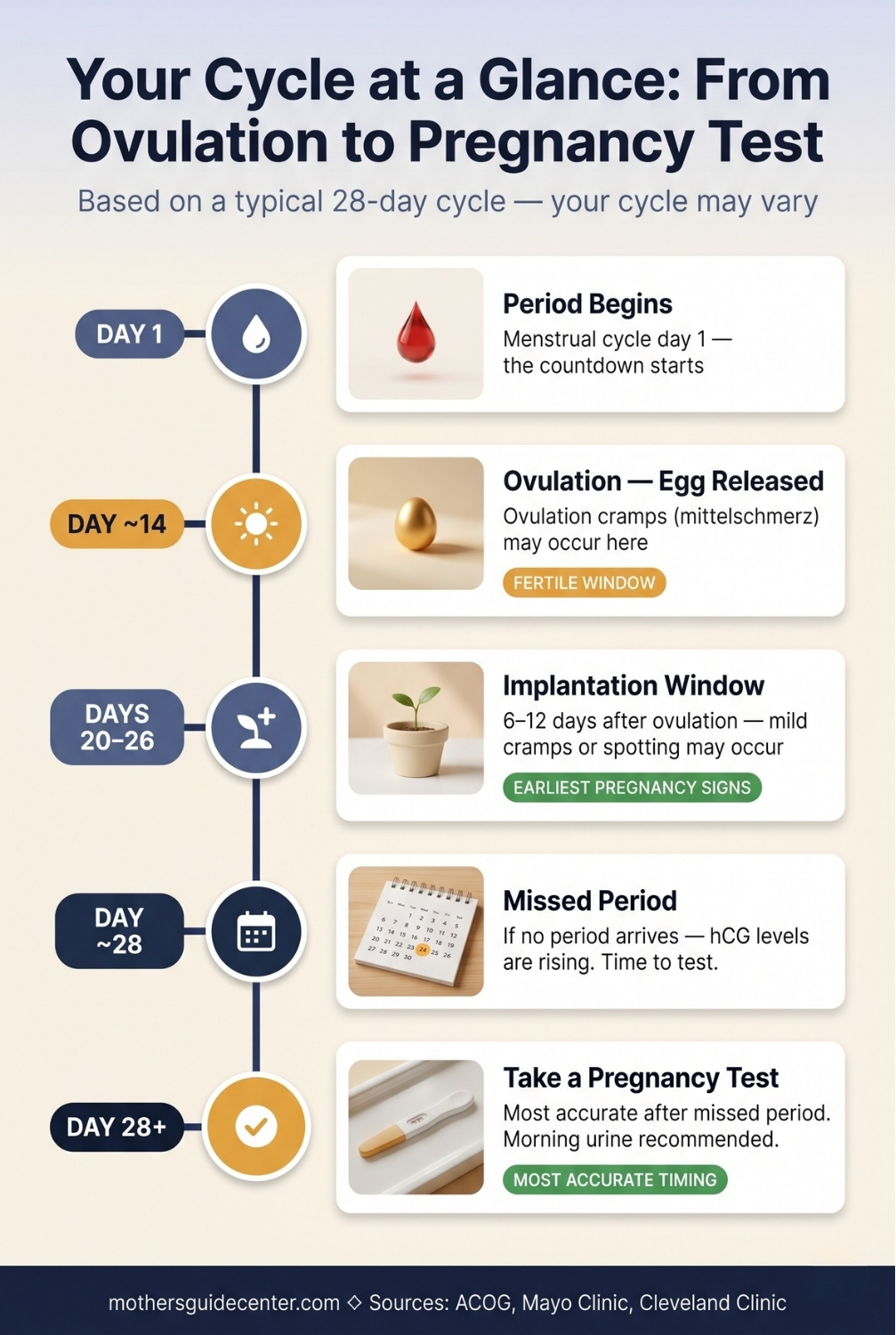
According to ACOG, home pregnancy tests are most accurate when taken on or after the first day of a missed period. Testing earlier — especially before 12 days past ovulation — increases the risk of a false negative because hCG levels may not yet be high enough for detection. If you get a negative result but still suspect pregnancy, ACOG recommends waiting a few days and testing again, or asking your provider for a blood hCG test, which can detect lower levels of the hormone.
For the most reliable result, test first thing in the morning when urine is most concentrated, follow the test instructions exactly, and avoid drinking excessive fluids before testing. If your test is positive, schedule a visit with your healthcare provider to confirm the pregnancy and begin prenatal care. In summary, does cramping during ovulation mean pregnancy — no, but knowing when to test gives you reliable answers.
Frequently asked questions
Is it normal to have cramps during ovulation every month?
Ovulation cramps are a normal recurring phenomenon that affects up to 40% of reproductive-age women. According to the NIH, mittelschmerz occurs almost every month in women who experience it. The pain is not harmful and simply reflects the egg-release process. However, if pain becomes progressively worse over time, consult your provider to rule out conditions like endometriosis or ovarian cysts.
Does more pain during ovulation mean higher fertility?
More intense ovulation pain does not indicate higher fertility or a greater chance of conceiving. The Cleveland Clinic confirms that ovulation pain does not affect your chances of getting pregnant that cycle. Conversely, many women ovulate without feeling any pain at all and are equally fertile. Pain intensity reflects individual variation in nerve sensitivity and follicle size, not reproductive potential.
How long do ovulation cramps usually last?
Ovulation cramps typically last from a few minutes to 48 hours. Most women describe the pain as brief — a sudden sharp twinge that resolves within minutes. In some cases, a dull ache may persist for a day or two. According to Penn Medicine, ovulation pain that lasts longer than usual, becomes severe, or is accompanied by fever or heavy bleeding should be evaluated by a healthcare provider.
Can you have ovulation pain on both sides at the same time?
While ovulation typically occurs from one ovary per cycle, some women do report bilateral pain. In rare cases, both ovaries may release an egg during the same cycle. More commonly, bilateral discomfort reflects referred pain or fluid from the ruptured follicle irritating the peritoneal lining on both sides. If persistent bilateral pelvic pain occurs regularly, discuss it with your provider.
What does implantation cramping feel like compared to period cramps?
Implantation cramping is a mild, intermittent sensation in the lower abdomen that is typically lighter than period cramps. Many women describe it as a gentle pulling or tingling rather than the deep, sustained ache of menstrual cramps. Unlike period pain, implantation cramps may be accompanied by very light spotting that is pink or brown, lasts only one to two days, and does not intensify over time.
When to contact your healthcare provider
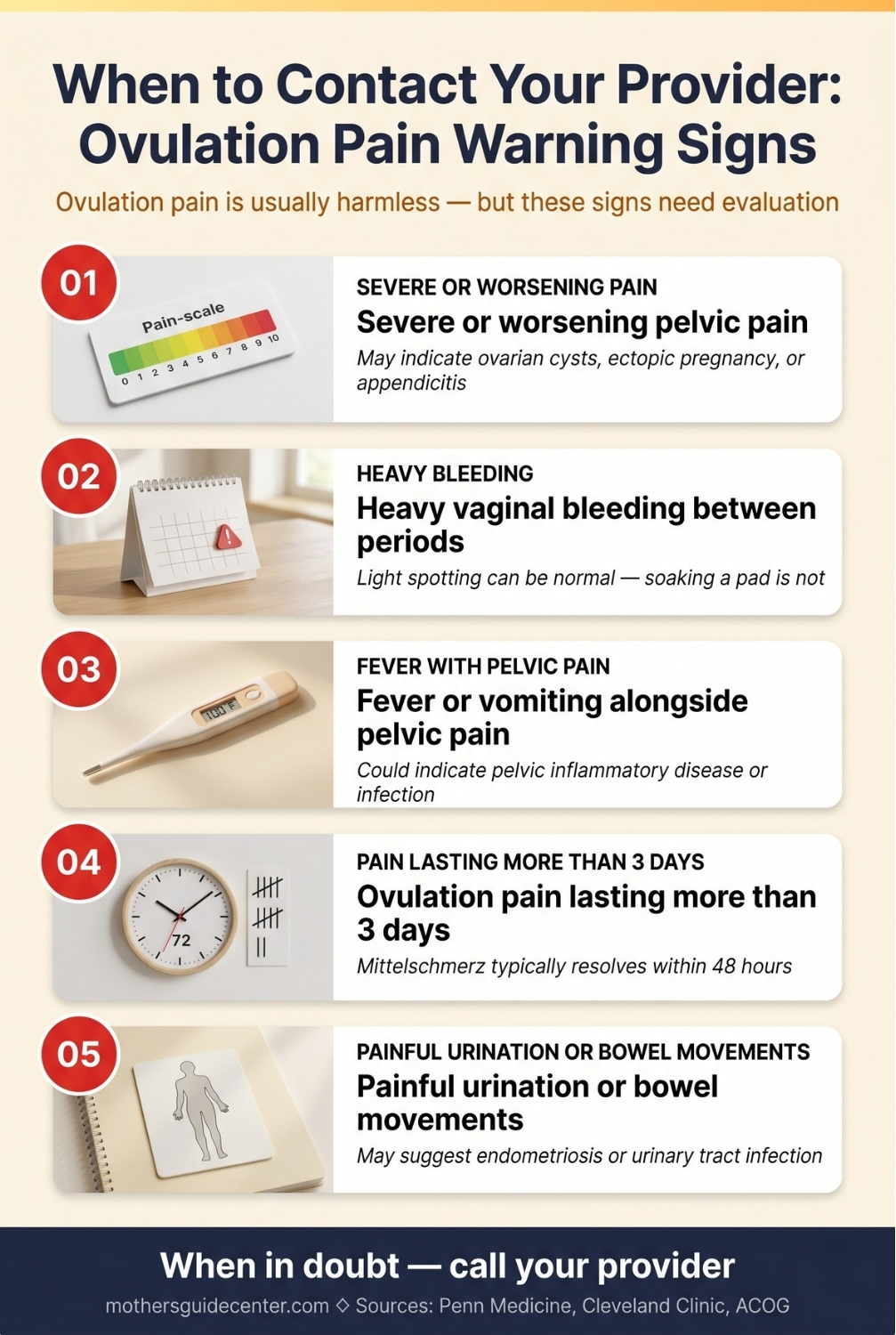
Most ovulation pain is mild and resolves on its own. Contact your provider or seek immediate care if you experience:
- ⚠️ Severe or worsening pelvic pain — may indicate ovarian cysts, ectopic pregnancy, or appendicitis
- ⚠️ Heavy vaginal bleeding between periods — light spotting can be normal, but soaking a pad is not
- ⚠️ Fever or vomiting alongside pelvic pain — could indicate pelvic inflammatory disease or infection
- ⚠️ Ovulation pain lasting more than 3 days — mittelschmerz typically resolves within 48 hours
- ⚠️ Painful urination or bowel movements — may suggest endometriosis or urinary tract infection
This article is for educational purposes only and does not replace medical advice from a qualified healthcare provider.
Sources
- Brott NR, Le JK. (2023). Mittelschmerz. StatPearls [Internet]. National Institutes of Health.
- Cleveland Clinic. (2026). Ovulation Pain (Mittelschmerz): Causes & Treatment. Cleveland Clinic Health Library.
- American College of Obstetricians and Gynecologists. (2025). Trying to Get Pregnant. ACOG.org.
- Mayo Clinic. (2024). How to Get Pregnant. MayoClinic.org.
- Penn Medicine. (2026). Mittelschmerz. Penn Medicine Health Information.
- American Pregnancy Association. (2026). How to Conceive: Medical Tips & Best Practices. AmericanPregnancy.org.
- American College of Obstetricians and Gynecologists. (2024). Pregnancy Tests. ACOG.org.