
Feeling dizzy postpartum is a common but often overlooked part of recovery after childbirth. It is typically caused by a combination of blood pressure changes, iron-deficiency anemia, dehydration, and hormonal shifts. According to the American College of Obstetricians and Gynecologists (ACOG), most postpartum dizziness improves within the first six weeks as your body stabilizes, but persistent or severe episodes warrant prompt medical evaluation.
Key takeaways
You survived delivery, the adrenaline is fading, and now the room occasionally tilts when you stand up to feed the baby at 3 AM. If you have been feeling dizzy postpartum, you are not imagining it — and you are not alone. Dizziness and lightheadedness are among the most underreported symptoms of the postpartum period, partly because exhaustion is so expected that anything else gets lumped under “new mom tired.”
The reality is that your body has just undergone one of the most significant physiological events it will ever experience. Blood volume, blood pressure, hormones, iron stores, and even the fluid balance of your inner ear all shift dramatically after birth. According to the National Institutes of Health (NIH), the postpartum body takes weeks to months to return to its pre-pregnancy baseline. Understanding what is behind your dizziness — and knowing when it crosses the line from normal recovery into something that needs medical attention — is the first step toward feeling steady again.
What causes dizziness after having a baby?
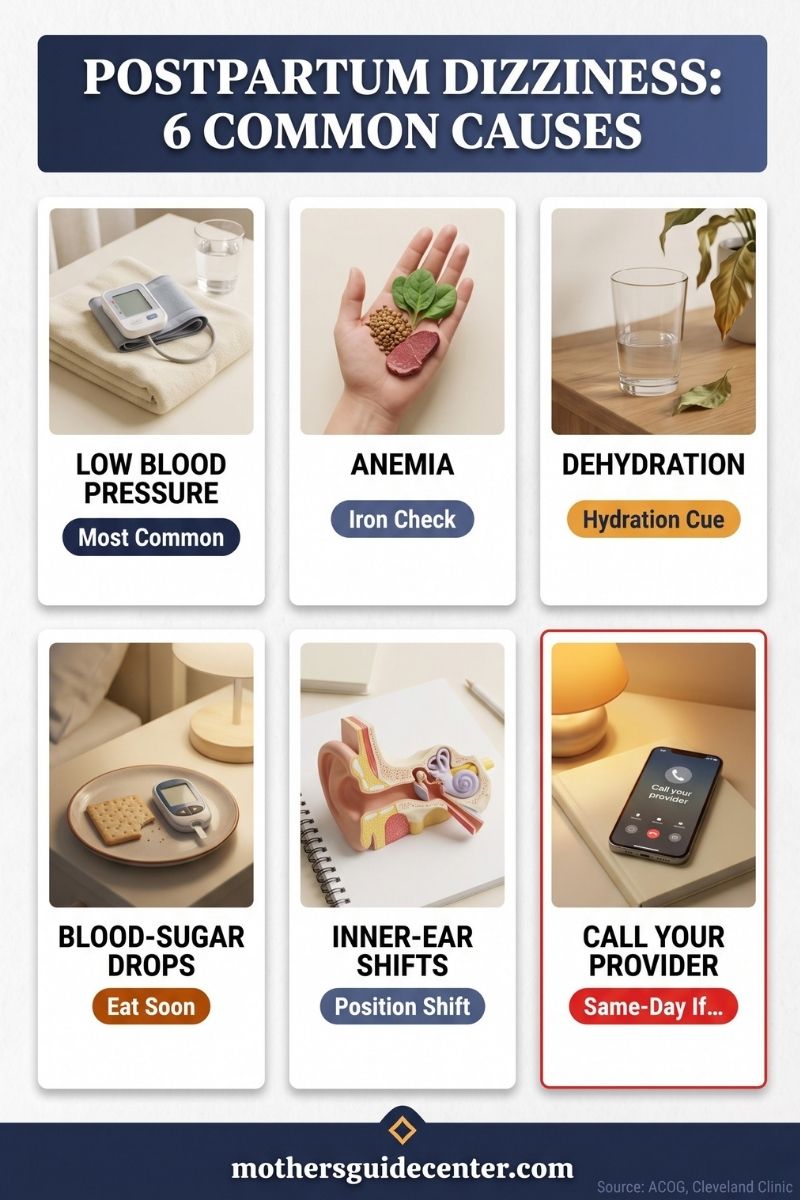
Postpartum dizziness is a sensation of lightheadedness, unsteadiness, or faintness that results from the rapid physiological changes your body undergoes after delivery. There is rarely a single cause — most women experience dizziness because several factors overlap during the same recovery window.
The most common cause is a shift in blood volume and blood pressure. During pregnancy, your blood volume increases by roughly 30 to 50 percent. After delivery — especially if you experienced significant blood loss — that volume drops, and your cardiovascular system takes time to recalibrate. According to the Mayo Clinic, this can trigger orthostatic hypotension, the medical term for a blood pressure drop when you move from lying to sitting or standing.
Iron-deficiency anemia is another leading contributor. The Cleveland Clinic notes that postpartum anemia affects a significant number of new mothers, particularly those who had low iron stores before delivery or experienced heavy bleeding during birth. When your blood cannot carry enough oxygen, you feel lightheaded, fatigued, and short of breath.
Other common causes include dehydration (especially in breastfeeding mothers), blood-sugar fluctuations from irregular eating, hormonal shifts as estrogen and progesterone drop sharply, sleep deprivation, and in some cases, inner-ear disturbances such as benign paroxysmal positional vertigo (BPPV) — a condition where tiny calcium crystals dislodge inside the ear canal and cause spinning sensations when you change head position.
Is postpartum dizziness normal?
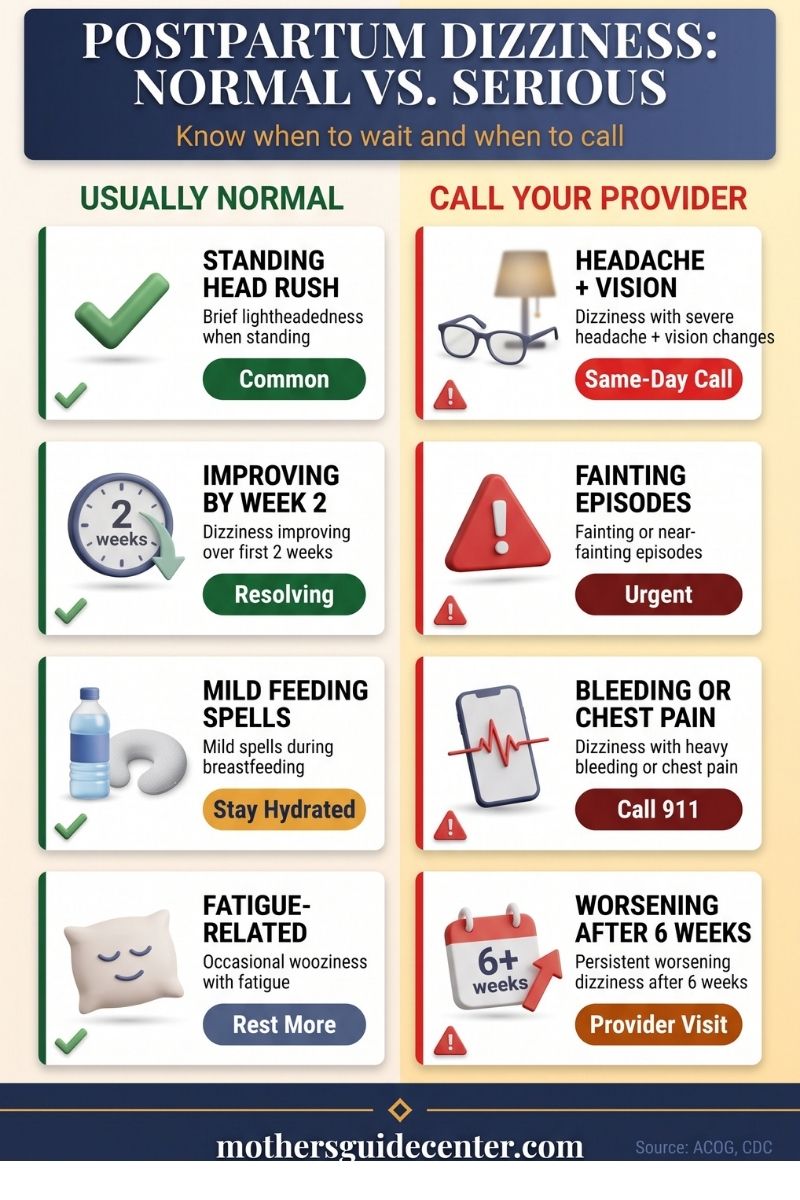
Postpartum dizziness is a normal physiological response to the dramatic changes happening in your body after childbirth. It does not automatically signal a dangerous condition. According to ACOG, your cardiovascular system, blood volume, and hormones all undergo a significant recalibration in the weeks following delivery, and brief episodes of lightheadedness during this window are expected.
That said, “normal” and “harmless” are not the same thing. Mild dizziness that happens occasionally when you stand too quickly, skip a meal, or get up for a night feeding is well within the range of typical recovery. Dizziness that is severe, frequent, worsening over time, or paired with other symptoms — such as a pounding headache, blurred vision, chest pain, or heavy vaginal bleeding — is not normal and requires prompt medical evaluation. The line between the two is the pattern: improving and manageable versus persistent and escalating.
How long does postpartum dizziness last?
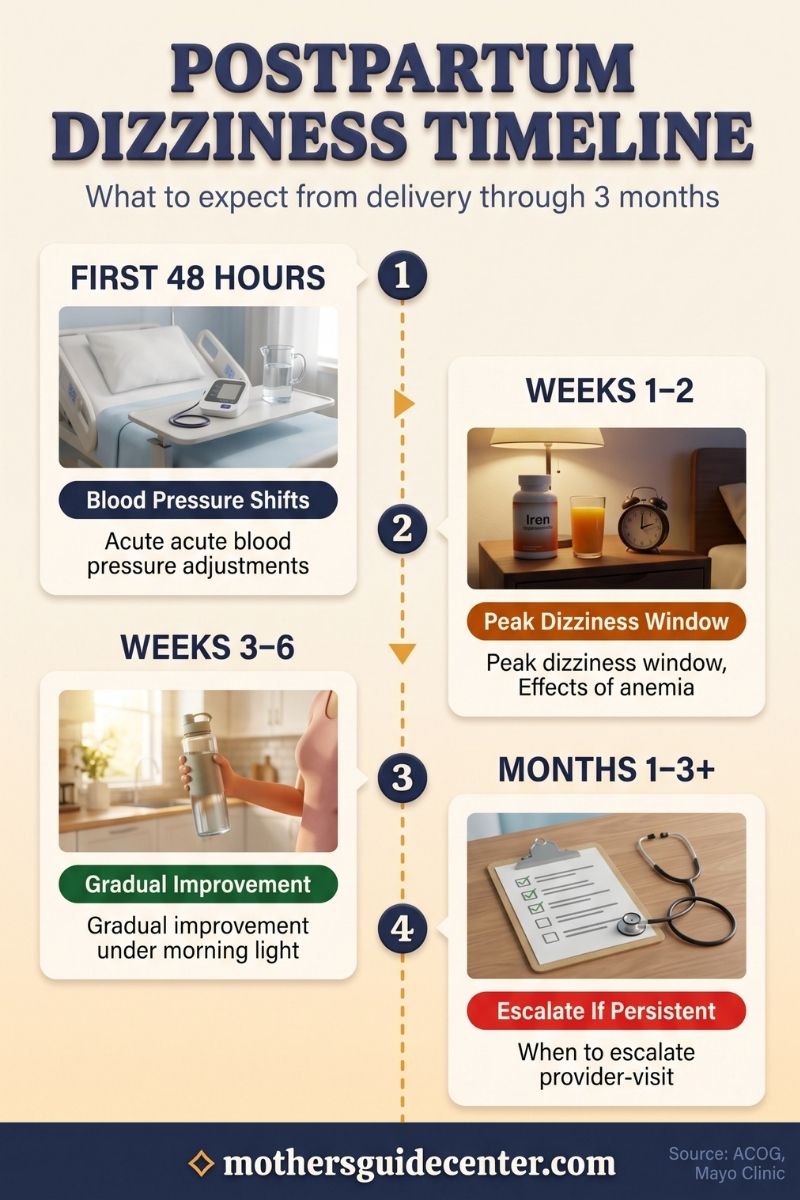
Postpartum dizziness duration depends on its underlying cause, but most cases follow a predictable timeline. For the majority of new mothers, lightheadedness is most noticeable in the first one to two weeks after delivery and gradually improves as blood volume stabilizes and hemoglobin levels recover.
According to the World Health Organization (WHO), the acute postpartum period covers the first six weeks after birth, and most recovery-related symptoms — including dizziness — should be noticeably better by the end of this window. If anemia is the primary cause, the Mayo Clinic notes that iron supplementation can take two to three months to fully restore hemoglobin levels, so anemia-related dizziness may linger longer.
Here is a general timeline: the first 48 hours often involve the sharpest blood pressure adjustments; weeks one and two are typically the peak dizziness window; weeks three through six usually bring gradual improvement; and by months one through three, most causes have resolved. If you are still experiencing dizzy spells postpartum beyond three months and the pattern is not improving, bring this to your provider at your next appointment — or sooner.
Why do you feel dizzy when standing up postpartum?
Feeling dizzy when standing up postpartum is a classic sign of orthostatic hypotension — a temporary drop in blood pressure that occurs when you change positions. The Mayo Clinic defines it as a systolic blood pressure drop of at least 20 mmHg or a diastolic drop of at least 10 mmHg within three minutes of standing.
After delivery, your body is working to reabsorb the extra blood volume it built during pregnancy while simultaneously recovering from blood loss during birth. These competing demands can temporarily impair the reflexes that normally keep blood flowing to your brain when you stand. The result is that head-rush sensation — or, in more pronounced cases, seeing spots, feeling faint, or needing to sit back down.
A practical tip: rise slowly. When getting up from bed for a night feeding, sit on the edge for 10 to 15 seconds before standing. Flex your feet and ankles while seated to encourage blood flow back toward your upper body. Keep a water bottle within reach — dehydration makes orthostatic hypotension worse.
Can breastfeeding make you dizzy?
Feeling dizzy while breastfeeding is a real and documented phenomenon. Breastfeeding increases your body’s demand for fluids by roughly 16 ounces (500 mL) per day, according to the CDC. If you do not keep up with that increased intake, dehydration can lower your blood pressure and trigger lightheadedness — often during or immediately after a feeding session.
There is also a hormonal component. The release of oxytocin during let-down can temporarily cause a mild drop in blood pressure. For some mothers, this is experienced as a brief wave of lightheadedness, warmth, or even mild nausea right as the milk starts to flow. This typically passes within a few seconds and is not dangerous, but it can be startling if you do not expect it.
Blood-sugar drops during breastfeeding also play a role. Producing milk requires significant energy, and if you are not eating consistently — which is common when caring for a newborn around the clock — your blood glucose can dip low enough to cause dizziness. Keeping a snack and a full water bottle at your feeding station is one of the simplest and most effective strategies.
Is dizziness after a C-section different?
Dizziness after a C-section can involve the same causes as dizziness after a vaginal delivery — blood pressure changes, anemia, dehydration — but it often comes with additional contributing factors specific to surgical birth. Spinal or epidural anesthesia, which is standard for cesarean deliveries, can cause blood pressure to drop during and shortly after the procedure. According to the Cleveland Clinic, this anesthesia-related hypotension usually resolves within hours but can make the first day postpartum feel especially unsteady.
Surgical blood loss also tends to be somewhat higher than in uncomplicated vaginal deliveries, which can increase the risk of postpartum anemia. Additionally, the recovery from abdominal surgery means more time spent lying in bed, and the transition back to standing and walking makes orthostatic episodes more noticeable. Pain medications prescribed after a C-section — including opioids — can also contribute to dizziness as a side effect.
If you feel dizzy after a C-section, the same general guidance applies: rise slowly, stay hydrated, eat regularly, and report any severe or worsening symptoms to your provider. Your birth recovery team will monitor your vitals closely in the hospital, but it is important to continue tracking how you feel after discharge.
Can postpartum anxiety or depression cause dizziness?
Postpartum anxiety and postpartum depression can both cause physical symptoms of dizziness, even in the absence of any cardiovascular or blood-related cause. When anxiety triggers hyperventilation — rapid, shallow breathing — carbon dioxide levels in your blood drop, which can produce lightheadedness, tingling in the hands, and a sensation of unreality. Many new mothers do not realize they are hyperventilating because the breathing change is subtle.
The CDC notes that roughly one in eight women experience postpartum depression, and anxiety disorders are at least as common. Sleep deprivation — which amplifies both mood disorders and physical dizziness — creates a feedback loop: you feel anxious because you are dizzy, and you feel dizzy because you are anxious and exhausted.
If you suspect your dizziness has a mental health component, that does not make it less real or less worthy of attention. Mention it to your provider. Treating the underlying anxiety or depression — through therapy, support groups, medication, or a combination — often resolves the physical dizziness as well. You can also explore our postpartum recovery guide for more on identifying and managing perinatal mood changes.
What helps with postpartum dizziness?
Postpartum lightheadedness is most effectively managed by identifying and addressing its underlying cause. While you work with your provider to determine the specific reason, several strategies can provide relief across nearly all common causes of postpartum dizziness.
Hydrate consistently. Aim for at least 12 to 16 cups of water per day, more if you are breastfeeding. Keep a full bottle at every feeding and sleeping station.
Eat frequent small meals. Blood sugar drops are a common dizziness trigger in the postpartum period. Rather than three large meals, aim for five to six smaller meals or snacks spaced throughout the day, including protein and complex carbohydrates.
Rise slowly. Sit on the edge of the bed for 10 to 15 seconds before standing. Flex your ankles and calves to push blood upward. This single habit can prevent most orthostatic dizzy spells.
Ask about iron levels. If your dizziness is accompanied by fatigue, pale skin, or shortness of breath, request a complete blood count (CBC) and ferritin test at your postpartum visit. The Mayo Clinic recommends iron supplementation when levels are low, which can take several weeks to produce noticeable improvement.
Protect sleep when possible. Sleep deprivation compounds every other cause of dizziness. Sharing nighttime feeding duties with a partner, accepting help from family, or aligning your sleep with the baby’s longest stretch can make a measurable difference.
If you experience spinning sensations (vertigo) triggered by specific head positions — such as rolling over in bed or looking up — mention this to your provider. This pattern suggests BPPV, which is treatable with a simple repositioning maneuver called the Epley maneuver, often performed by a physical therapist or your provider in a single visit.
How do you know if postpartum dizziness is serious?
Lightheadedness postpartum becomes serious when it deviates from the expected pattern of gradual improvement — or when it appears alongside symptoms that suggest a more dangerous underlying condition. The CDC’s Hear Her campaign urges new mothers and their support networks to listen to warning signs that are too often dismissed.
Dizziness combined with a severe headache and vision changes (blurred vision, seeing spots, sensitivity to light) can be a sign of postpartum preeclampsia, which can develop up to six weeks after delivery even if your blood pressure was normal during pregnancy. Dizziness with heavy vaginal bleeding — soaking through a pad in an hour — may indicate postpartum hemorrhage. Dizziness with chest pain, shortness of breath, or a racing heartbeat warrants immediate evaluation to rule out a cardiac event or pulmonary embolism.
The general rule: if your dizziness is getting worse rather than better, if it is making you faint or nearly faint, or if it is accompanied by any of the red-flag symptoms listed below, contact your healthcare provider that same day. If you experience sudden severe symptoms, call 911.
Frequently asked questions
Can postpartum hormones cause dizziness?
Postpartum hormonal dizziness is caused by the rapid drop in estrogen and progesterone that occurs after delivery. These hormones influence cardiovascular regulation, fluid balance, and blood vessel tone. As levels plummet in the days following birth, some women experience lightheadedness, hot flashes, or brief episodes of faintness. This hormonal recalibration is temporary and typically stabilizes within the first few weeks.
Can postpartum cause vertigo?
Postpartum vertigo is a spinning sensation that can develop after childbirth, most commonly caused by benign paroxysmal positional vertigo (BPPV). BPPV occurs when small calcium carbonate crystals in the inner ear become dislodged, often triggered by the physical strain of labor or changes in calcium metabolism during pregnancy. Unlike general lightheadedness, vertigo is provoked by specific head movements — such as rolling over in bed — and is highly treatable with repositioning maneuvers performed by a trained clinician.
Is dizziness a symptom of postpartum preeclampsia?
Dizziness can be a symptom of postpartum preeclampsia, a serious condition involving high blood pressure that develops within six weeks after delivery. According to ACOG, key warning signs include severe headache, vision changes, upper abdominal pain, and swelling — often alongside dizziness. If your dizziness is accompanied by any of these symptoms, seek same-day medical evaluation regardless of how far you are from your delivery date.
Can postpartum thyroiditis cause dizziness?
Postpartum thyroiditis is an inflammation of the thyroid gland that can cause dizziness as part of a broader set of symptoms. It affects an estimated 5 to 10 percent of postpartum women, according to the NIH. The condition often begins with a hyperthyroid phase — causing a rapid heartbeat, anxiety, and tremors — followed by a hypothyroid phase that can bring fatigue, brain fog, and lightheadedness. A simple blood test for thyroid-stimulating hormone (TSH) can identify it.
Should I go to the ER for postpartum dizziness?
You should go to the emergency room for postpartum dizziness if you experience fainting, a severe headache with vision changes, heavy vaginal bleeding, chest pain, shortness of breath, or one-sided weakness. These symptoms can indicate postpartum preeclampsia, hemorrhage, pulmonary embolism, or stroke — all of which require immediate medical intervention. For milder dizziness without red-flag symptoms, contact your provider’s office for guidance.
Does postpartum dizziness affect the baby?
Postpartum dizziness does not directly affect your baby’s health, but it can affect your ability to safely care for them. If you feel a dizzy spell coming on while holding your baby, sit down or place the baby in a safe location such as their crib immediately. Untreated causes like severe anemia can reduce your overall energy and capacity, so addressing your dizziness is part of caring for both yourself and your newborn.
When to contact your healthcare provider
Contact your provider or seek immediate care if you experience:
This article is for educational purposes only and does not replace medical advice from a qualified healthcare provider.
Sources
- American College of Obstetricians and Gynecologists. (2024). Your Recovery After Birth. ACOG.org.
- Mayo Clinic. (2024). Orthostatic Hypotension (Postural Hypotension). mayoclinic.org.
- Cleveland Clinic. (2024). Postpartum Anemia. my.clevelandclinic.org.
- National Institutes of Health. (2024). Recovery After Birth. NICHD.
- Mayo Clinic. (2024). Iron Deficiency Anemia: Diagnosis and Treatment. mayoclinic.org.
- Centers for Disease Control and Prevention. (2024). Hear Her: Urgent Maternal Warning Signs. CDC.gov.
- World Health Organization. (2022). WHO Recommendations on Maternal and Newborn Care for a Positive Postnatal Experience. WHO.
- Centers for Disease Control and Prevention. (2024). Maternal Diet During Breastfeeding. CDC.gov.
- Cleveland Clinic. (2024). Epley Maneuver. my.clevelandclinic.org.
- Cleveland Clinic. (2024). Spinal Anesthesia. my.clevelandclinic.org.