
Postpartum snacks are nutrient-dense, easy-to-grab foods that combine protein, healthy fats, and complex carbohydrates to support recovery, energy, and milk production during the weeks after childbirth. According to the Mayo Clinic, breastfeeding mothers need approximately 340 to 400 additional calories per day — and snacks are one of the simplest ways to meet that need without full meal prep.
Key takeaways
The first weeks with a newborn are beautiful and exhausting in equal measure. Between nursing sessions, diaper changes, and trying to sleep when the baby sleeps, sitting down for a full meal can feel impossible. Yet your body is doing some of its most demanding work right now — healing from birth, producing milk, and adjusting to massive hormonal shifts. According to the CDC, breastfeeding mothers need additional calories and nutrients to support both their own recovery and their baby’s growth. That is where thoughtful postpartum snacks become more than just convenient — they become essential.
This guide walks through evidence-based snack options designed for real postpartum life: foods you can eat with one hand while nursing, quick-prep combinations that stabilize your energy, and a clear look at which ingredients actually support lactation — and which claims are overhyped. Every recommendation is backed by Tier 1 medical sources, and not a single brand name appears on this page. If you are navigating the broader challenges of this period, our postpartum recovery guide covers the full picture.
What makes a good postpartum snack?
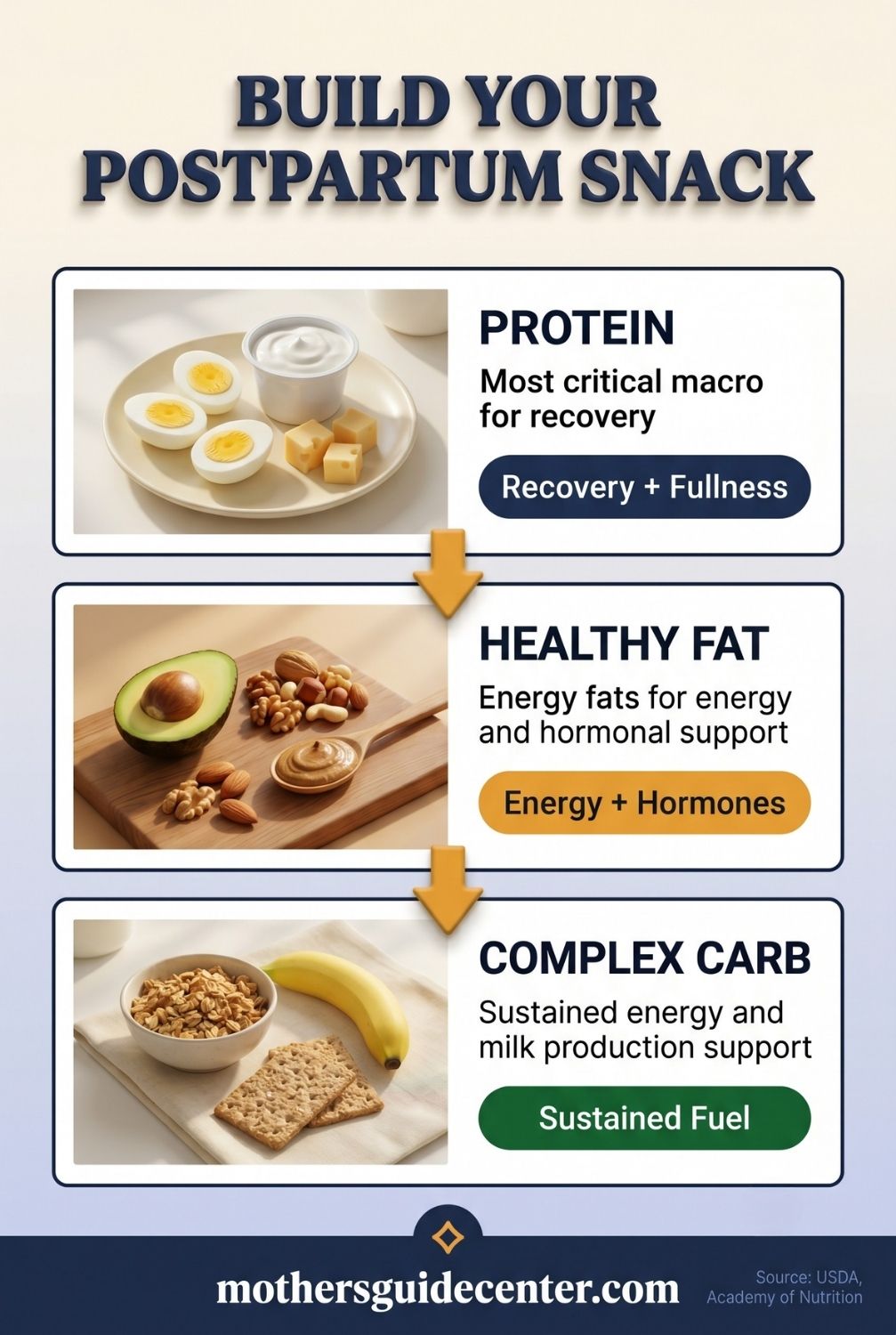
A good postpartum snack is a balanced combination of protein, healthy fat, and complex carbohydrates that provides sustained energy without requiring significant preparation time. This three-part framework is not a trend — it reflects the nutritional science behind blood sugar stability, tissue repair, and milk production that the USDA Dietary Guidelines for Americans (2020–2025) recommends for lactating individuals.
Protein helps with postpartum tissue repair and keeps you feeling full longer. Healthy fats support hormone production and your baby’s brain development. Complex carbohydrates provide the steady glucose your body needs to produce milk and maintain energy through sleep-deprived days. When these three work together, they prevent the blood sugar crashes that worsen fatigue, mood swings, and cravings — all of which are already heightened during the postpartum period.
The Academy of Nutrition and Dietetics recommends eating every three to four hours during the postpartum period to maintain optimal blood sugar levels. For most new mothers, this means three meals plus one to three snacks daily. If you or your baby has a known food allergy — particularly to tree nuts, peanuts, or dairy — substitute with safe alternatives and consult your provider or a registered dietitian.
What are the best one-handed snacks for new moms?
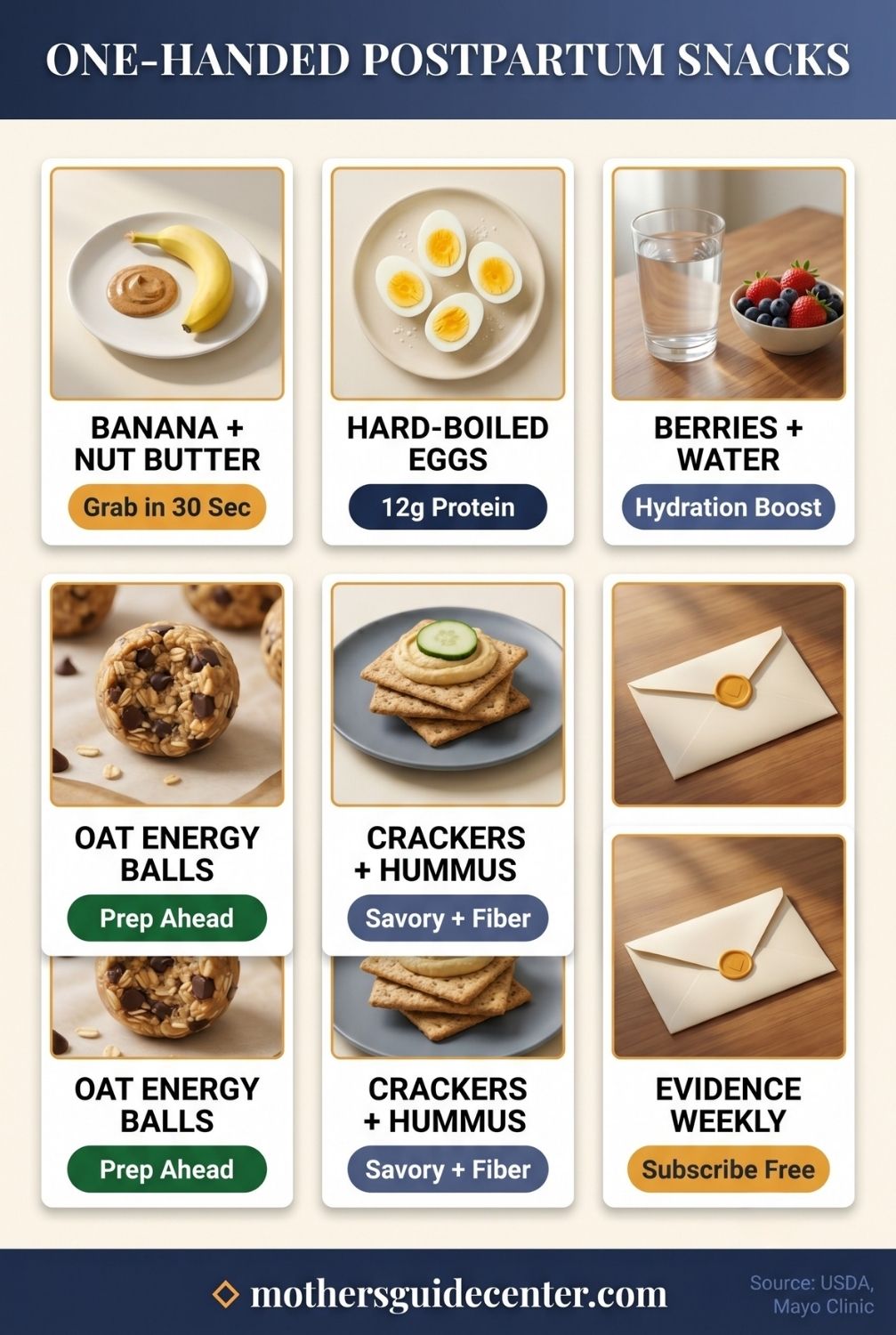
One-handed postpartum snacks are foods that can be eaten without utensils, held in a single hand, and consumed without crumbs falling on a sleeping baby. This is not a novelty category — for many new mothers, one-handed eating is the only realistic option during the early weeks when nursing, rocking, or holding an infant takes up both the other arm and most of your attention.
The best one-handed options meet the protein-fat-carb framework while requiring minimal assembly. A banana with a pre-portioned squeeze packet of nut butter takes under thirty seconds. Hard-boiled eggs prepared in advance deliver roughly twelve grams of protein per two eggs, plus choline — a nutrient the NIH identifies as critical for infant brain development during breastfeeding. Whole-grain crackers topped with hummus offer fiber and plant protein in a format that stays put on a plate beside your nursing chair.
Other strong one-handed choices include trail mix (nuts, seeds, and dried fruit without added sugar), string cheese paired with an apple, energy balls made from oats and nut butter, and single-serve cups of Greek yogurt. The pattern is the same: pre-portioned, shelf-stable or fridge-ready, no heating required, and nutrient-dense enough to count as fuel rather than empty calories.
Which snacks support breastfeeding and milk supply?
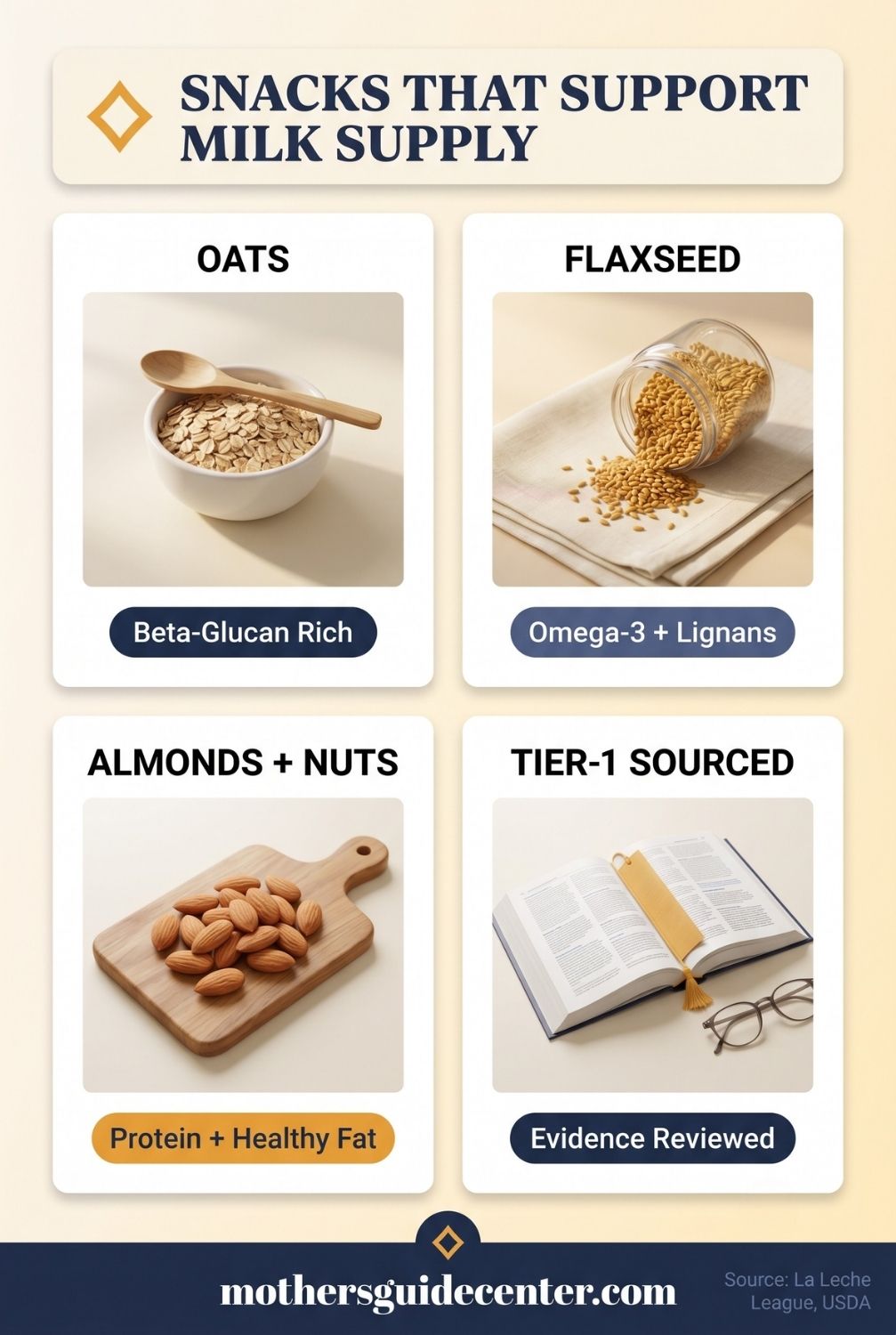
Breastfeeding snacks that support milk supply are foods containing galactagogues — substances that may promote lactation by stimulating the hormone prolactin or by providing nutrients that support the milk-production process. According to La Leche League International, the most commonly recommended galactagogue foods include oats, flaxseed, brewer’s yeast, fenugreek, almonds, dark leafy greens, and chickpeas.
Oats stand out as the ingredient with the most supportive evidence. They are rich in beta-glucan, a type of soluble fiber that has been associated with increased prolactin levels in nursing mothers. Incorporating oats into snacks is straightforward: overnight oats prepared the night before, no-bake oat energy balls with nut butter and a tablespoon of ground flaxseed, or a bowl of oatmeal topped with berries and walnuts. Flaxseed adds omega-3 fatty acids and lignans — plant compounds that may further support hormonal balance during lactation.
Beyond specific ingredients, the Mayo Clinic emphasizes that consistent, adequate calorie and fluid intake is the most reliable way to support milk production. Eating a variety of nutrient-dense foods, staying well-hydrated, and nursing or pumping frequently all matter more than any single “superfood.” For a deeper look at the feeding journey, see our breastfeeding tips guide.
Do lactation snacks actually work?
Lactation snacks are commercially marketed and homemade foods — typically cookies, bars, or energy balls — that contain galactagogue ingredients like oats, brewer’s yeast, flaxseed, and fenugreek with the claim of boosting milk supply. The evidence supporting them is real but limited, and the framing matters. Harvard Health states plainly that no single food magically increases milk supply, and that a well-balanced diet rich in protein, whole grains, fruits, and vegetables — combined with adequate fluids — is what reliably supports lactation.
That said, foods like oats do have a plausible mechanism. Beta-glucan fiber in oats has been linked to prolactin stimulation in small studies, and oats also provide iron — a mineral that supports energy and oxygen transport during a period when many mothers are recovering from blood loss. The issue is not that these foods are unhelpful, but that they work best as part of an overall nutrition pattern, not as standalone solutions. Eating a handful of lactation cookies while skipping meals and not drinking enough water is unlikely to move the needle.
The practical takeaway: include oats, flaxseed, and nuts in your snack rotation because they are genuinely nutritious. Do not rely on any branded “lactation booster” product as a substitute for balanced eating, adequate hydration, and regular nursing or pumping — which remain the strongest evidence-based drivers of milk production.
What high-protein postpartum snacks keep you full longest?
High-protein postpartum snacks are combinations that deliver at least ten grams of protein per serving, helping to stabilize blood sugar and extend satiety between meals. Protein needs are elevated during the postpartum period because your body is actively repairing tissue from childbirth while also synthesizing breast milk — a process that draws heavily on amino acids. The USDA recommends that breastfeeding individuals prioritize lean protein sources at every meal and snack.
Greek yogurt leads this category: a single six-ounce serving delivers roughly fifteen grams of protein along with probiotics that support digestive health — particularly helpful if you are taking postpartum antibiotics. Pair it with a handful of granola and fresh berries for a complete snack. Hard-boiled eggs are another high-yield option at about six grams of protein each, plus choline and healthy fats. Cottage cheese with sliced fruit, a small portion of leftover chicken with whole-grain crackers, or a smoothie blended with yogurt, spinach, and a tablespoon of nut butter all exceed the ten-gram threshold comfortably.
| Protein | Healthy Fat | Complex Carb | Ready In |
|---|---|---|---|
| Greek yogurt | Almond butter drizzle | Oat granola + berries | 2 min |
| Hard-boiled eggs (2) | Avocado slices | Whole-grain toast | 3 min |
| String cheese | Walnuts (small handful) | Apple slices | 1 min |
| Cottage cheese | Chia seeds (1 tbsp) | Mixed berries | 2 min |
| Hummus (4 tbsp) | Olive oil drizzle | Whole-grain crackers | 1 min |
What are the best snacks for middle-of-the-night feedings?
The best snacks for middle-of-the-night feedings are shelf-stable, pre-portioned foods that you can eat in the dark without preparation, cleanup, or crumbs. Nighttime nursing sessions often trigger intense hunger — a response driven by oxytocin release during let-down and the metabolic demands of milk production. Having the right snacks within arm’s reach turns a 3 AM feeding from a hunger-fueled struggle into a manageable routine.
Keep a small container of trail mix (unsalted nuts, pumpkin seeds, dried apricots) on your nightstand along with a refillable water bottle. Individual nut butter packets paired with a banana work well because neither requires refrigeration overnight. Oat-based energy balls prepped during the day can sit in a sealed container beside your bed. Dates stuffed with almond butter are another strong option — naturally sweet, fiber-rich, and iron-containing, which matters since the NIH notes that postpartum iron needs remain elevated due to blood loss during delivery.
Avoid reaching for sugary snacks at night. A candy bar or sweetened granola bar may feel satisfying initially, but the rapid blood sugar spike and subsequent crash can make it harder to fall back asleep after the feeding. The protein-fat-carb framework applies especially here — stable blood sugar supports both better sleep and steadier milk production.
How many extra calories do you need postpartum?
Extra calorie needs during the postpartum period depend primarily on whether you are breastfeeding, how often, and your individual activity level. The Mayo Clinic recommends approximately 340 to 400 additional calories per day for exclusively breastfeeding mothers. The ACOG and CDC cite a similar range of 300 to 500 additional calories depending on individual factors.
To put that in practical terms, 400 extra calories looks like a slice of whole-grain toast with two tablespoons of peanut butter, a medium banana, and a cup of yogurt — roughly one well-constructed snack plus a slightly larger portion at one meal. The Cleveland Clinic warns that consuming fewer than 1,500 to 1,800 calories per day may impact milk supply and slow postpartum recovery. This is not the time to restrict calories — your body needs fuel to heal. If you are concerned about postpartum weight, focus on nutrient density rather than calorie reduction, and discuss any weight goals with your provider.
How can you set up a postpartum snack station?
A postpartum snack station is a designated spot — typically beside your nursing chair or on your nightstand — stocked with ready-to-eat foods and a water bottle so you never have to choose between feeding yourself and feeding your baby. Setting one up before your due date or in the first days home is one of the most practical things a partner, family member, or friend can do to support a new mother.
A well-stocked daytime station includes a refillable water bottle (hydration is critical — breast milk is about 87 percent water), a sealed container of trail mix or mixed nuts, individual nut butter packets, pre-washed fruit like bananas and grapes, and a few energy balls or whole-grain crackers. A nightstand station should be simpler: trail mix, dates, a nut butter packet, and water. Rotate items every one to two days to keep options fresh and appealing.
If you are planning ahead, our upcoming postpartum meal prep guide covers batch cooking and freezer-friendly recipes that complement a snack station — giving you full meals ready to reheat alongside grab-and-go snacks. If you are dealing with physical challenges during recovery, articles on postpartum carpal tunnel or joint pain after pregnancy may also help you navigate daily tasks with less discomfort.
Frequently asked questions
What foods should you avoid while breastfeeding?
Most foods are safe during breastfeeding. The CDC recommends limiting caffeine to about 300 milligrams per day and avoiding alcohol or waiting at least two hours after a single drink before nursing. Highly processed foods low in nutrients can displace more nourishing options. If your baby shows signs of fussiness or a rash after you eat a specific food, discuss possible sensitivities with your pediatrician.
How often should you eat or snack while breastfeeding?
Eating every three to four hours helps maintain stable blood sugar and consistent energy during the postpartum period. The Academy of Nutrition and Dietetics recommends three balanced meals plus one to three snacks daily for breastfeeding mothers. Listening to hunger cues is more important than strict timing — if you feel hungry, your body needs fuel.
What is the 5-5-5 postpartum rule?
The 5-5-5 rule is a rest-based recovery framework suggesting five days in bed, five days on the bed, and five days around the bed after giving birth. During these first fifteen days, easy grab-and-go snacks like trail mix, energy balls, and pre-cut fruit help meet nutrition needs without requiring full meal preparation.
Lactation cookies contain beneficial ingredients like oats and flaxseed, but they are still calorie-dense treats. Eating them as part of a balanced diet — typically one to three per day — provides nutritional benefits without excessive sugar or calorie intake. They work best when combined with regular nursing or pumping, adequate hydration, and overall balanced nutrition.
How soon can you eat solid foods after giving birth?
Most women can eat solid foods within a few hours after an uncomplicated vaginal delivery. After a cesarean birth, your care team will guide the transition from clear liquids to solid foods, which typically happens within twelve to twenty-four hours. Start with easy-to-digest options and progress to regular meals as you feel comfortable.
Do you need to drink more water while breastfeeding?
Yes. Breast milk is approximately 87 percent water, so hydration needs increase during lactation. The CDC and Mayo Clinic recommend drinking to satisfy thirst, which typically amounts to about eight to twelve glasses of water per day. Many mothers notice intense thirst during let-down — keeping a water bottle at every nursing station helps maintain adequate intake.
When to contact your healthcare provider
Contact your provider if you experience any of the following during the postpartum period:
This article is for educational purposes only and does not replace medical advice from a qualified healthcare provider.
Sources
- U.S. Department of Agriculture and U.S. Department of Health and Human Services. (2020). Dietary Guidelines for Americans, 2020–2025. dietaryguidelines.gov.
- Mayo Clinic. (2024). Breastfeeding nutrition: Tips for moms. mayoclinic.org.
- Centers for Disease Control and Prevention. (2024). Maternal Diet. cdc.gov.
- American College of Obstetricians and Gynecologists. (2024). Nutrition During Pregnancy. acog.org.
- Academy of Nutrition and Dietetics. (2024). Eating Right During Breastfeeding. eatright.org.
- La Leche League International. (2024). Nutrition for Breastfeeding Mothers. llli.org.
- National Institutes of Health Office of Dietary Supplements. (2024). Choline — Health Professional Fact Sheet. ods.od.nih.gov.
- National Institutes of Health Office of Dietary Supplements. (2024). Iron — Health Professional Fact Sheet. ods.od.nih.gov.
- Cleveland Clinic. (2024). Postpartum Nutrition. clevelandclinic.org.
- Harvard Health Publishing. (2024). What foods or snacks are best for increasing breast milk supply?. health.harvard.edu.