
Does Breastfeeding Make You Tired? What’s Really Causing It
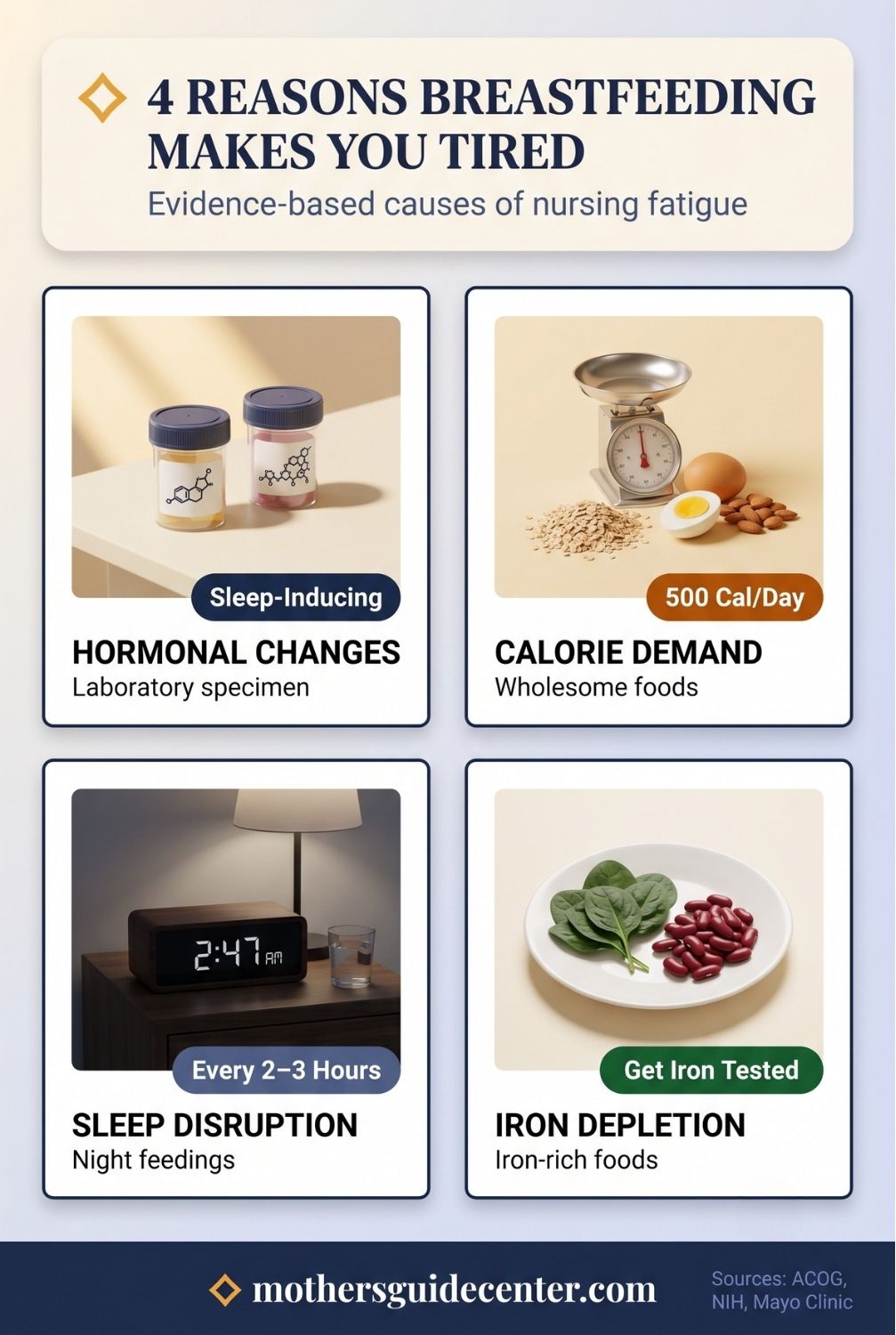
Yes, breastfeeding does make you tired — but not only because of sleep deprivation. According to the American College of Obstetricians and Gynecologists (ACOG), breastfeeding is a physiologically demanding process that burns 450–500 extra calories per day, triggers sedative hormones during nursing sessions, and can deplete iron stores already reduced by childbirth.
Key takeaways
For millions of nursing mothers, breastfeeding fatigue is the shadow that follows every feeding. You knew a newborn would mean less sleep — but the heavy, dragging exhaustion that settles in while you are actually nursing, or the bone-deep tired that doesn’t lift even after a nap, can feel like something more. It is. Breastfeeding activates a cascade of physiological demands that go far beyond interrupted nights, and understanding them changes how you approach your energy, your nutrition, and your self-advocacy with your healthcare provider.
This guide covers the evidence-based causes of breastfeeding fatigue — from the hormones released during nursing to the caloric demand of milk production to the physical conditions that can make tiredness severe. You will also find practical, sourced strategies to reclaim energy while continuing to breastfeed, and a clear picture of when fatigue signals something that needs medical attention.
Why does breastfeeding make you tired?
Breastfeeding makes you tired because it simultaneously activates sedative hormones, drains significant calories, and compounds the sleep fragmentation already inherent to newborn care.
Prolactin is the primary hormone responsible for milk production. It surges after birth and spikes again every time your baby feeds. Prolactin has a documented calming, sleep-promoting effect — it binds to receptors in the brain that reduce neurological arousal.
Oxytocin, the hormone that triggers milk letdown, simultaneously lowers cortisol and reduces heart rate. According to the Mayo Clinic, this parasympathetic shift is why many mothers feel a wave of drowsiness within minutes of their baby latching.
Milk production is metabolically expensive. Your body synthesizes nutrients, proteins, and fats from your blood and stored tissues to build every ounce of milk. That metabolic cost — approximately 450 to 500 extra calories daily — amplifies any sleep debt you are already carrying.
How much energy does breastfeeding actually use?
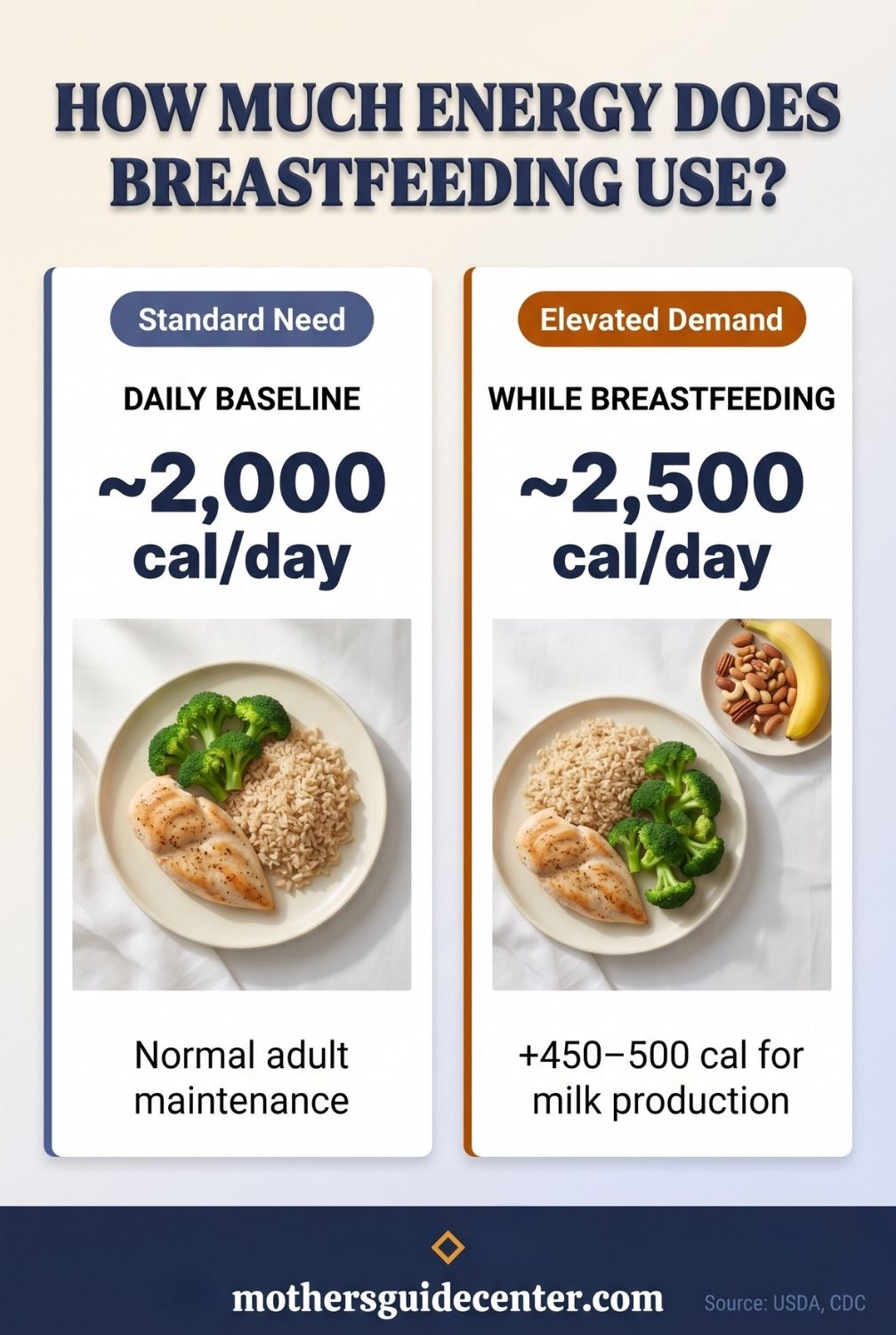
Breastfeeding increases your daily caloric needs by 450 to 500 calories above your pre-pregnancy baseline, according to the USDA Dietary Guidelines for Americans 2020–2025. That is approximately the caloric equivalent of running 4 to 5 miles — every day, for as long as you continue breastfeeding.
Your body sources these extra calories from what you eat and what you have stored. If your dietary intake consistently falls short, your body draws from stored fat and lean tissue. This deficit is a direct pathway to fatigue, reduced milk supply, and micronutrient depletion, particularly iron, B12, and folate.
The Centers for Disease Control and Prevention (CDC) notes that lactating mothers should prioritize nutrient-dense foods — lean proteins, whole grains, leafy greens, and healthy fats — rather than simply eating more volume.
Why does breastfeeding make you sleepy during sessions?
The drowsiness that settles in while your baby nurses is an acute hormonal event. Breastfeeding makes you sleepy during sessions because prolactin and oxytocin surge simultaneously at the onset of feeding, while a third compound called cholecystokinin (CCK) is released from your gastrointestinal tract in response to milk letdown. CCK is a well-documented sleep-promoting hormone.
This drowsiness is most intense in the early weeks and tends to moderate as hormone levels stabilize after 6 to 8 weeks postpartum. The American Academy of Pediatrics (AAP) recommends having a safe sleep plan before night feeds and positioning yourself in a chair or recliner.
Does breastfeeding make you more tired than bottle feeding?
Research suggests no. A landmark study published in the Journal of Human Lactation (Scott et al., 2006) followed 253 postpartum women and found no significant differences in perceived fatigue between breastfeeding and bottle-feeding mothers at 2–4 days, 6 weeks, and 12 weeks postpartum.
A 2024 longitudinal study in BMC Pregnancy and Childbirth confirmed that breastfeeding is not associated with increased postpartum fatigue or insomnia compared to bottle feeding. Most postpartum fatigue is driven by recovery from childbirth and newborn caregiving — shared by all new mothers regardless of feeding method.
What physical factors make breastfeeding fatigue worse?
Iron-deficiency anemia is one of the most common and underdiagnosed causes of severe postpartum fatigue. According to Cleveland Clinic, symptoms include extreme fatigue, pale skin, shortness of breath on minimal exertion, and a racing heartbeat. A CBC at your first postpartum visit can confirm or rule this out.
Postpartum thyroiditis affects approximately 5 to 10% of postpartum women, according to the American Thyroid Association. A hyperthyroid phase (months 1–4) followed by a hypothyroid phase (months 3–8) causes fatigue, weight gain, cold intolerance, and hair loss. A TSH blood test identifies this promptly.
Dehydration is a direct cause. Your body loses approximately 25 to 30 ounces of fluid per day through breast milk. The Institute of Medicine recommends approximately 13 cups (3.1 liters) of total fluid daily for lactating women.
How long does breastfeeding fatigue last?
0–3 months: Most demanding. Feeds every 2–3 hours around the clock, prolactin at peak, body recovering from childbirth. Total sleep often under 6 hours in fragmented blocks.
3–6 months: Hormones stabilize. Many babies sleep longer stretches. Feeding sessions shorten. Most mothers notice measurable energy improvement.
6 months and beyond: Fatigue typically normalizes. According to ACOG, fatigue that worsens after 3 months, does not improve with rest, or arrives suddenly warrants evaluation for anemia, thyroid dysfunction, or postpartum depression.
How can you get more energy while breastfeeding?
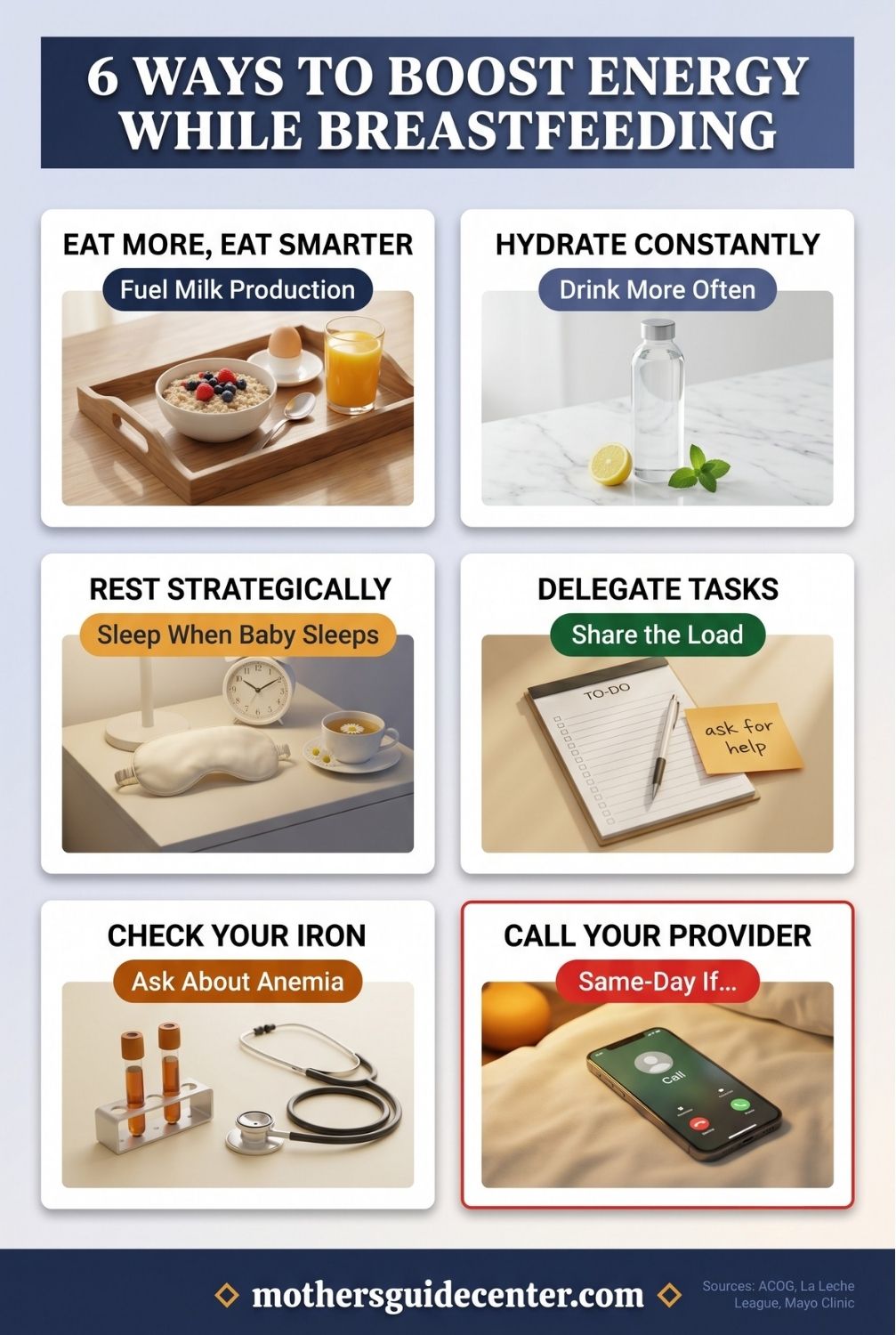
Eat more, and eat deliberately. La Leche League International recommends prioritizing iron-rich foods (lean red meat, lentils, dark leafy greens), protein at every meal, and complex carbohydrates. Keep snacks accessible at your nursing station.
Hydrate constantly. Drink before thirst sets in. Aim for pale yellow urine throughout the day as your hydration gauge.
Rest strategically. Even 20-minute rest windows have measurable restorative effects on cortisol regulation. Side-lying nursing positions allow some rest during longer sessions.
Delegate non-nursing tasks. Offloading even 1 to 2 hours of household tasks per day compounds meaningfully over time.
Ask your provider to check your iron and thyroid. A CBC and TSH at your 6-week postpartum visit is a reasonable proactive request. Do not assume extreme fatigue is simply part of nursing without ruling these out.
When is breastfeeding fatigue a sign of something more serious?
Breastfeeding fatigue that requires medical attention is distinguished by its accompanying symptoms and its pattern over time.
| Feature | Normal BF Fatigue | Needs Medical Attention |
|---|---|---|
| Onset | Gradual, from early postpartum | Sudden, or worsening after initial improvement |
| Response to rest | Improves with sleep or short naps | Does not improve even after adequate rest |
| Mood | Tired but able to find moments of well-being | Persistent low mood, tearfulness, or numbness |
| Timeline | Gradually improves months 3–6 | No improvement by month 3, or sudden worsening |
| Possible cause | Normal postpartum physiology | Anemia, postpartum thyroiditis, PPD, or mastitis |
Postpartum depression (PPD) affects up to 1 in 7 mothers and encompasses persistent sadness, difficulty bonding, and overwhelming fatigue that does not respond to rest. The postpartum recovery period carries significant mental health risk. For cognitive symptoms that accompany fatigue, see our guide on postpartum brain fog.
Frequently asked questions
Does breastfeeding make you sleepy while nursing?
Yes. During active nursing, your body releases prolactin and oxytocin, both of which have sedative properties. Oxytocin triggers milk letdown while simultaneously lowering cortisol and heart rate, producing drowsiness within minutes of latching. Cholecystokinin (CCK) released during feeding adds a documented sleep-promoting effect — making in-session drowsiness a predictable physiological response, not just tiredness.
How long does breastfeeding fatigue last?
Breastfeeding fatigue is most intense in the first 0 to 3 months when feeds occur every 2 to 3 hours and prolactin is at peak levels. Most mothers notice significant improvement between 3 and 6 months. By 6 months, fatigue typically normalizes. Fatigue that worsens after 3 months or never improves with rest warrants evaluation for anemia, thyroiditis, or postpartum depression.
How many calories does breastfeeding burn per day?
Breastfeeding burns approximately 450 to 500 additional calories per day, according to the USDA Dietary Guidelines 2020–2025. This energy goes directly into milk production. Mothers who do not compensate with additional food are at higher risk for fatigue, reduced milk supply, and deficiencies in iron, B12, and folate.
What vitamins help with breastfeeding fatigue?
Iron, B12, and folate are the nutrients most directly linked to breastfeeding fatigue when deficient. Vitamin D deficiency can also contribute to fatigue and low mood. Before adding any supplement, ask your provider for a blood panel — iron supplementation without confirmed deficiency is not recommended. Continuing your prenatal vitamin provides a baseline of coverage.
Does breastfeeding make you more tired than bottle feeding?
Research suggests no. A 2006 study in the Journal of Human Lactation (Scott et al.) found no significant difference in perceived fatigue between breastfeeding and bottle-feeding mothers at 2–4 days, 6 weeks, and 12 weeks postpartum. A 2024 study in BMC Pregnancy and Childbirth confirmed breastfeeding is not associated with increased fatigue or insomnia compared to bottle feeding.
Can breastfeeding cause anemia?
Breastfeeding itself does not cause anemia, but delivery blood loss elevates the risk of postpartum iron-deficiency anemia. Breastfeeding can suppress menstruation, delaying recognition of iron deficit. Symptoms include extreme fatigue, pale skin, breathlessness, and palpitations. A CBC at your postpartum visit can confirm or rule this out.
When to contact your healthcare provider
Contact your provider or seek same-day evaluation if you experience:
This article is for educational purposes only and does not replace medical advice from a qualified healthcare provider.
Sources
- American College of Obstetricians and Gynecologists. (2023). Breastfeeding Your Baby. ACOG.org.
- U.S. Department of Agriculture. (2020). Dietary Guidelines for Americans, 2020–2025. DietaryGuidelines.gov.
- Centers for Disease Control and Prevention. (2024). Maternal Diet During Breastfeeding. CDC.gov.
- Scott, J. A., et al. (2006). Fatigue and breastfeeding: an inevitable partnership? Journal of Human Lactation, 22(2), 182–187.
- Mariman, A., et al. (2024). Sleep and fatigue by feeding method in postpartum women. BMC Pregnancy and Childbirth. PMC11321152.
- Cleveland Clinic. (2024). Postpartum Anemia. ClevelandClinic.org.
- American Thyroid Association. (2022). Postpartum Thyroiditis. Thyroid.org.
- La Leche League International. (2023). Nutrition and Breastfeeding. LLLI.org.
- American Academy of Pediatrics. (2022). Breastfeeding Resources for Parents. HealthyChildren.org.
- Mayo Clinic. (2024). Breastfeeding nutrition: Tips for moms. MayoClinic.org.