
Dizziness after childbirth is a common postpartum symptom caused by rapid shifts in blood volume, hormones, and hydration levels following delivery. According to the American College of Obstetricians and Gynecologists (ACOG), the postpartum body undergoes significant cardiovascular and hormonal readjustment in the weeks after birth. Most cases resolve within one to two weeks with proper hydration, nutrition, and rest — but persistent or severe dizziness warrants medical evaluation.
Key takeaways
You stand up to check on your baby and the room tilts. A wave of lightheadedness sweeps through you, and you grip the edge of the crib until it passes. If this experience feels familiar, you are not alone. Feeling dizzy postpartum is one of the most common — and most undertalked-about — symptoms of the postpartum recovery period. Your body has just completed an extraordinary physical event, and the weeks that follow involve rapid changes in blood volume, hormone levels, and energy demands that can leave you feeling unsteady on your feet.
This guide covers why dizziness happens after childbirth, how long it typically lasts, what makes it worse (including breastfeeding and C-section recovery), and the specific warning signs that mean you should contact your provider right away. Every claim is sourced from Tier 1 medical authorities — no guesswork, no product pitches, just the information you need to feel confident in your recovery.
What causes dizziness after childbirth?
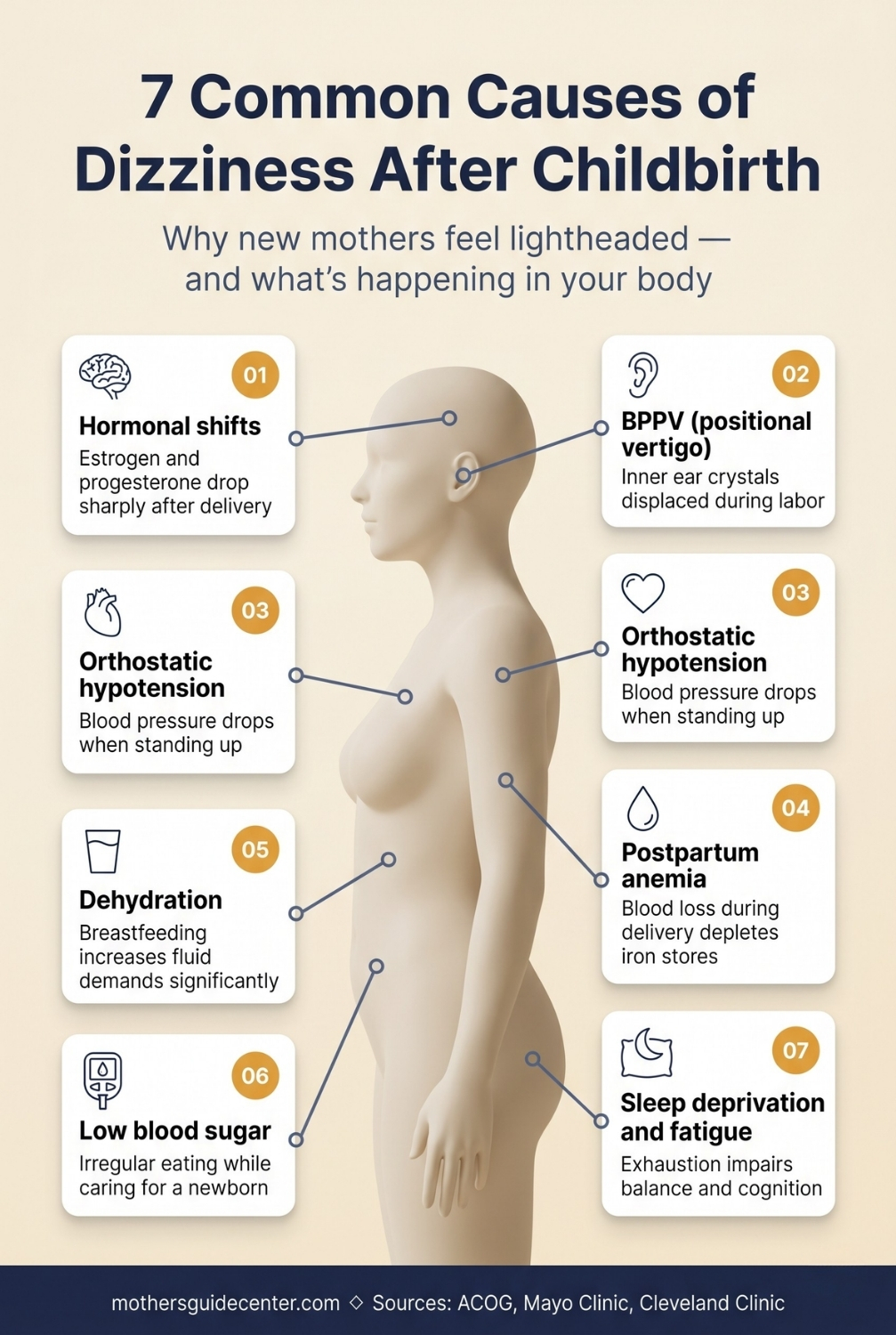
Dizziness after childbirth is a multifactorial symptom driven by the rapid physiological changes your body undergoes following delivery. During pregnancy, your blood volume increases by approximately 50 percent to support the growing baby. After birth, this volume drops sharply — and if you experienced significant bleeding during delivery, the drop is even more pronounced. According to the Cleveland Clinic, postpartum blood loss can contribute to anemia, reducing the oxygen-carrying capacity of your blood and triggering lightheadedness.
The most common causes include postpartum anemia (iron deficiency from blood loss), dehydration (especially in breastfeeding mothers), hormonal shifts (the sudden drop in estrogen and progesterone), orthostatic hypotension (blood pressure dropping when you stand), low blood sugar from irregular eating, benign paroxysmal positional vertigo (BPPV), and simple exhaustion from sleep deprivation. In most cases, more than one of these factors is at work simultaneously.
How long does postpartum dizziness usually last?
Postpartum dizziness typically follows a predictable timeline that mirrors your body’s recovery arc. The most intense episodes usually occur in the first few days after delivery, when blood volume is shifting most dramatically and anesthesia (if used) is still wearing off. For most women, lightheadedness improves significantly within one to two weeks as fluid balance and hormone levels begin to stabilize.
By weeks three through six, dizziness related to dehydration or breastfeeding demands may still occur, but orthostatic episodes should become less frequent. According to the ACOG, the comprehensive postpartum period extends to 12 weeks, and symptoms that persist beyond six weeks deserve clinical evaluation. If you are still experiencing regular dizzy spells at three months or beyond, your provider may want to check for untreated anemia, thyroid dysfunction, or vestibular conditions like BPPV.

Why does breastfeeding make you dizzy?
Breastfeeding-related dizziness is a specific form of postpartum lightheadedness caused by the increased metabolic demands of milk production. Producing breast milk requires approximately 450 to 500 additional calories per day and draws significantly on your fluid reserves. When you are not eating or drinking enough to keep up with these demands — which is common during the early weeks when feeding schedules are unpredictable and sleep is scarce — blood sugar drops and dehydration sets in, both of which trigger dizziness.
Additionally, the hormone oxytocin, which is released during breastfeeding to trigger the let-down reflex, can temporarily lower blood pressure in some women, contributing to a brief dizzy feeling during or immediately after nursing. If you notice consistent lightheadedness while breastfeeding, try keeping a water bottle and a high-protein snack within reach during every feeding session. For a broader look at nutrition during this period, see our feeding guide.
Is dizziness after a C-section different?
Dizziness after a cesarean delivery shares many of the same causes as dizziness following vaginal birth — anemia, hormonal shifts, and dehydration all apply. However, C-section recovery adds two unique factors. First, spinal or epidural anesthesia can cause a post-dural puncture headache accompanied by dizziness that typically worsens when sitting or standing and improves when lying flat. This usually resolves within a few days but may occasionally require a blood patch procedure. Second, the prolonged bed rest required after abdominal surgery increases the likelihood of orthostatic hypotension when you first begin mobilizing.
General anesthesia (used in emergency C-sections) may also cause residual dizziness and nausea for three to four days post-surgery. If dizziness persists beyond the first week after a C-section, particularly with a positional headache, let your provider know. For more on recovering from delivery, visit our birth guide.
Can postpartum anemia cause dizziness?
Postpartum anemia is one of the most common and treatable causes of dizziness after childbirth. Iron deficiency anemia occurs when your body does not have enough iron to produce adequate red blood cells, reducing the amount of oxygen delivered to your brain and other tissues. According to the Mayo Clinic, symptoms include dizziness, fatigue, weakness, pale skin, shortness of breath, and cold hands and feet.
During pregnancy, your iron requirements increase to approximately 27 milligrams per day (compared to 18 milligrams when not pregnant). If these increased needs were not fully met during pregnancy, or if you experienced significant blood loss during delivery, you may enter the postpartum period already iron-depleted. The World Health Organization estimates that anemia affects a substantial proportion of postpartum women globally. A simple blood test can confirm whether anemia is contributing to your dizziness, and iron supplementation combined with vitamin C-rich foods to enhance absorption is typically the first-line treatment.
What is postpartum orthostatic hypotension?
Postpartum orthostatic hypotension is a temporary drop in blood pressure that occurs when you change position — typically when you stand up from sitting or lying down. This brief decrease reduces blood flow to the brain, causing a sudden feeling of lightheadedness, unsteadiness, or near-fainting. According to the Cleveland Clinic, orthostatic hypotension is diagnosed when systolic blood pressure drops by at least 20 mmHg or diastolic by at least 10 mmHg within three minutes of standing.
New mothers are particularly susceptible because postpartum blood volume is still normalizing, dehydration is common, and extended periods of rest (especially after a C-section) reduce the body’s ability to adjust to position changes quickly. The simplest prevention strategy is to rise slowly — sit on the edge of the bed for 30 seconds before standing, and hold onto something stable during the transition. Staying well-hydrated and avoiding long periods of lying flat also helps. If you experience another common postpartum body symptom like joint pain after pregnancy, the same gradual-movement approach applies.
Why am I still dizzy months after giving birth?
Persistent dizziness beyond six weeks postpartum is not typical and may indicate an underlying condition that requires evaluation. While most causes of postpartum dizziness resolve as your body stabilizes, some conditions can sustain symptoms for months. Untreated iron deficiency anemia is the most common culprit — without supplementation, iron stores may take months to rebuild, keeping dizziness and fatigue as constant companions.
Other causes of prolonged dizziness include postpartum thyroid dysfunction (both hyperthyroidism and hypothyroidism can cause lightheadedness), unresolved BPPV, and vestibular migraine — a condition where migraine episodes present as vertigo rather than headache. According to the National Institute of Neurological Disorders and Stroke (NIH), vestibular conditions are treatable but require proper diagnosis. If you are still experiencing dizzy spells at three months, six months, or beyond, request a thorough evaluation that includes bloodwork (complete blood count, ferritin, thyroid panel) and, if needed, a referral to an ENT specialist or neurologist.
How can you relieve postpartum dizziness at home?
Home management of postpartum dizziness focuses on addressing the most common underlying triggers — dehydration, low blood sugar, anemia, and positional blood pressure drops. These strategies are most effective when the dizziness is mild to moderate and has been evaluated by your provider to rule out serious causes.
Hydration: Aim for at least 10 to 12 cups of water daily, and more if you are breastfeeding. Keep a filled water bottle at every feeding station. Nutrition: Eat small, frequent meals rich in iron (lean red meat, spinach, lentils, fortified cereals) and pair them with vitamin C sources to boost absorption. Movement: Rise slowly from any resting position — sit on the edge of the bed for 30 seconds before standing. Rest: Sleep when your baby sleeps, even if it means leaving chores undone. Iron supplementation: If your provider confirms anemia, take your prescribed iron supplement consistently. Blood sugar stability: Avoid skipping meals; keep granola bars, nuts, or fruit within arm’s reach.
If your dizziness persists despite these measures, or if it worsens over time rather than improving, do not try to manage it on your own — contact your provider for further evaluation. Other postpartum recovery challenges like postpartum carpal tunnel similarly benefit from early intervention rather than waiting.
Can dizziness be a sign of postpartum preeclampsia?
Postpartum preeclampsia is a serious blood pressure condition that can develop in the days to weeks following delivery — including in women who had normal blood pressure throughout their pregnancy. According to the ACOG, preeclampsia can affect all the organs in a woman’s body and can come on suddenly and worsen quickly without prompt treatment.
Dizziness alone is not diagnostic of preeclampsia, but dizziness accompanied by certain other symptoms is a red flag that requires immediate medical attention. The CDC’s Hear Her campaign identifies key urgent maternal warning signs including severe headache that does not go away, changes in vision, dizziness or fainting, and swelling of the face or hands. If your dizziness occurs alongside any of these symptoms — particularly a persistent headache, visual disturbances, or upper abdominal pain on the right side — call your provider immediately or go to the emergency room. Postpartum preeclampsia is treatable, but early recognition is essential.
What is the difference between dizziness and vertigo after childbirth?
Dizziness and vertigo are related but distinct sensations that involve different mechanisms. Dizziness is a broad term describing lightheadedness, unsteadiness, or a feeling of faintness — as though you might pass out. Vertigo, by contrast, is a specific sensation of the room spinning around you or of your body spinning in space. Vertigo often involves the vestibular system (the balance organs in your inner ear), while general dizziness is more commonly linked to cardiovascular factors like blood pressure, blood volume, or blood sugar levels.
In the postpartum period, the most common cause of true vertigo is benign paroxysmal positional vertigo (BPPV). BPPV occurs when tiny calcium carbonate crystals in the inner ear become dislodged and migrate into the semicircular canals, triggering brief but intense spinning sensations with specific head movements. According to the Cleveland Clinic, BPPV is highly treatable — the Epley maneuver, a series of guided head movements performed by a healthcare provider or physical therapist, repositions the displaced crystals and resolves symptoms in most cases. If you experience spinning sensations triggered by turning your head, rolling over in bed, or looking up, mention BPPV specifically to your provider.
Frequently asked questions
Is postpartum dizziness normal?
Postpartum dizziness is a normal and common symptom experienced by many new mothers during the first weeks after delivery. It is most often caused by the rapid drop in blood volume, shifting hormone levels, dehydration, or iron deficiency anemia following childbirth. While usually temporary and manageable, persistent or severe dizziness should be evaluated by a healthcare provider to rule out more serious conditions.
Can dehydration cause postpartum dizziness?
Dehydration is one of the most common and preventable causes of dizziness after childbirth. New mothers lose fluids through delivery recovery, perspiration, and especially through breastfeeding, which requires significant additional fluid intake. When fluid levels drop, blood volume decreases, blood pressure may fall, and dizziness results. Drinking at least 10 to 12 cups of water daily — and more if nursing — is the primary prevention strategy.
Can postpartum depression cause dizziness?
Postpartum depression (PPD) can include physical symptoms such as dizziness, headaches, and fatigue alongside the more commonly recognized emotional symptoms like persistent sadness, anxiety, and difficulty bonding with the baby. If your dizziness is accompanied by mood changes lasting longer than two to three weeks after delivery, speak with your provider about screening for PPD. Effective treatments are available.
Is dizziness after a C-section normal?
Dizziness after a cesarean delivery is normal and expected, particularly in the first few days. Spinal or epidural anesthesia can cause a post-dural puncture headache with associated dizziness, and the extended bed rest required after surgery increases the risk of orthostatic hypotension when you first start moving. Most C-section-related dizziness resolves within the first week. If a positional headache and dizziness persist beyond that, contact your provider.
When should I see a doctor for dizziness after giving birth?
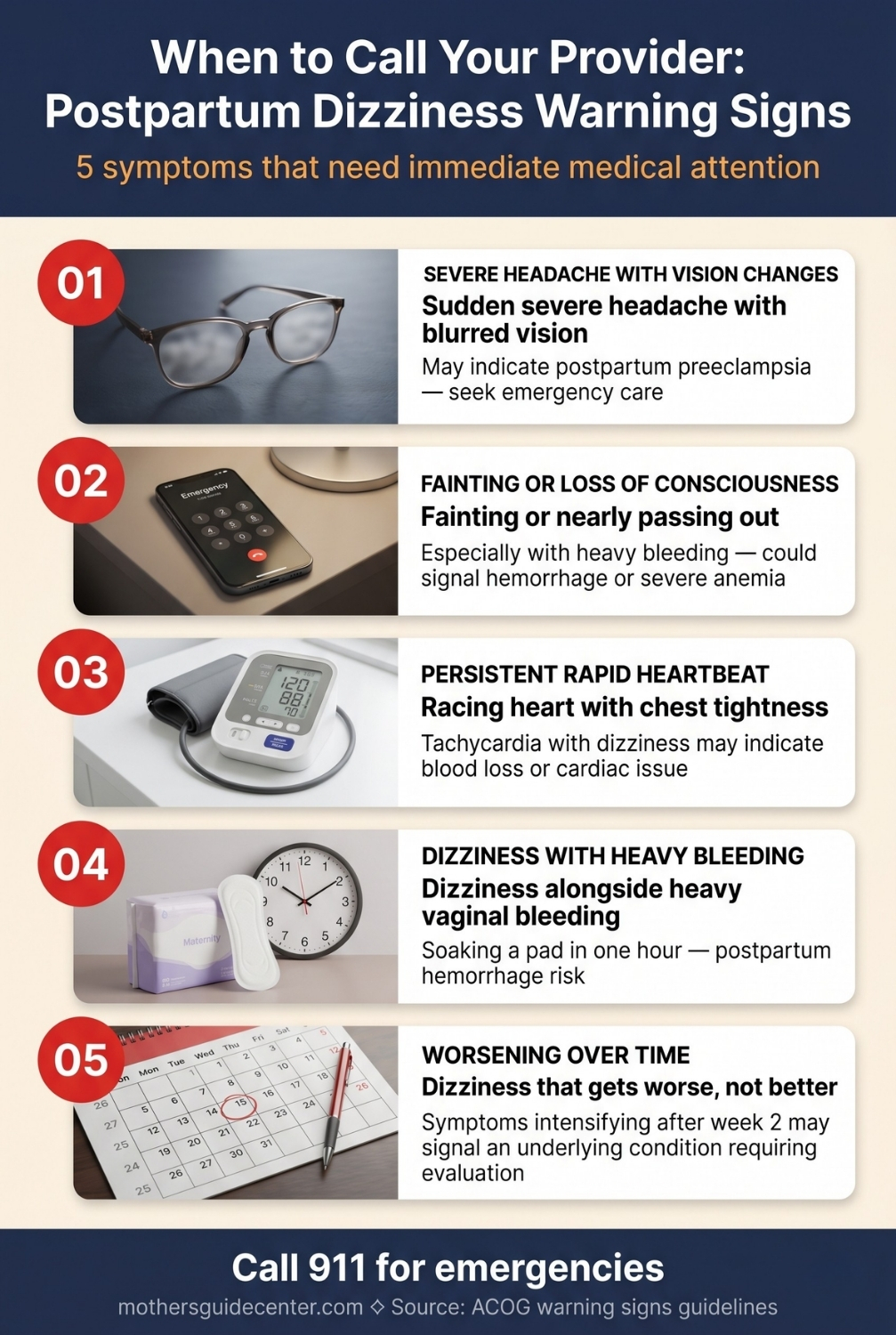
Contact your healthcare provider promptly if your dizziness is accompanied by severe headache, blurred vision, fainting, heavy vaginal bleeding, rapid heartbeat, or chest pain. You should also seek evaluation if dizziness persists beyond six weeks postpartum, worsens rather than improves over time, or prevents you from safely caring for yourself or your baby. These symptoms could indicate conditions like postpartum preeclampsia, hemorrhage, or severe anemia that require treatment.
What is the difference between feeling lightheaded and having vertigo?
Lightheadedness is a feeling of faintness or unsteadiness, often related to blood pressure, blood sugar, or hydration levels. Vertigo is a specific spinning sensation — either the room spinning around you or your body spinning in space — typically caused by a vestibular (inner ear) issue. In the postpartum period, lightheadedness from anemia or dehydration is more common, while vertigo is more likely related to BPPV (benign paroxysmal positional vertigo). Both are treatable, but they require different approaches.
When to contact your healthcare provider
Contact your provider or seek immediate care if you experience dizziness along with any of the following:
This article is for educational purposes only and does not replace medical advice from a qualified healthcare provider.
Sources
- American College of Obstetricians and Gynecologists. (2018). Optimizing Postpartum Care. ACOG Committee Opinion No. 736.
- American College of Obstetricians and Gynecologists. (2024). 3 Conditions to Watch for After Childbirth. ACOG.org.
- Centers for Disease Control and Prevention. (2026). Urgent Maternal Warning Signs and Symptoms. CDC Hear Her Campaign.
- Cleveland Clinic. (2024). Postpartum Hemorrhage (PPH): Causes, Risks and Treatment. ClevelandClinic.org.
- Cleveland Clinic. (2024). Orthostatic Hypotension. ClevelandClinic.org.
- Cleveland Clinic. (2024). Benign Paroxysmal Positional Vertigo (BPPV). ClevelandClinic.org.
- Mayo Clinic. (2024). Iron Deficiency Anemia: Symptoms and Causes. MayoClinic.org.
- National Institute of Neurological Disorders and Stroke. (2024). Vestibular Disorders. NIH/NINDS.
- World Health Organization. (2023). Anaemia. WHO Nutrition Landscape Information System.
- Mucci, V., et al. (2021). Influence of Sex Hormones on Vestibular Disorders. Current Opinion in Neurology, 35(1), 135–141. DOI: 10.1097/WCO.0000000000001019.