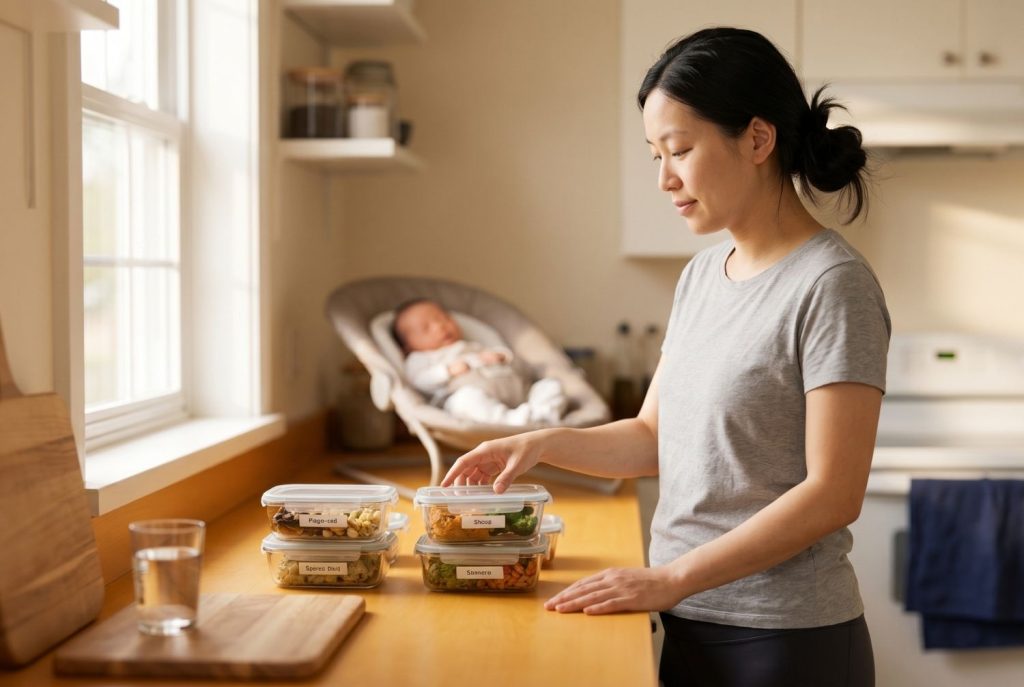
Postpartum meal prep is the practice of preparing and freezing nutrient-dense meals before or shortly after birth to support a new mother’s recovery. According to the Dietary Guidelines for Americans 2020–2025, breastfeeding mothers need approximately 450 to 500 additional calories daily. Having ready-to-eat freezer meals reduces stress, ensures consistent nourishment, and helps the body heal during the physically demanding weeks after delivery.
Key takeaways
The first weeks after bringing your baby home are some of the most physically demanding of your life. Your body is healing from delivery, your hormones are shifting, sleep is fragmented, and a tiny human needs you constantly. In the middle of all that, feeding yourself well often falls to the bottom of the list. According to the American College of Obstetricians and Gynecologists (ACOG), adequate nutrition after childbirth is essential for tissue repair, energy maintenance, and — if you are breastfeeding — milk production.
That is where postpartum meal prep comes in. By stocking your freezer with nourishing, easy-to-reheat meals before baby arrives, you give your future self one less decision to make each day. This guide covers the nutrients your body needs, how many meals to prepare, the best freezer-friendly recipes, pantry essentials, safe storage practices, and foods to be mindful of — all backed by Tier 1 medical sources. Whether you are prepping solo, enlisting help from a partner, or organizing a meal train, this is your evidence-based roadmap for the postpartum recovery kitchen.
Why does postpartum meal prep matter for recovery?
Postpartum meal prep is the practice of preparing, portioning, and storing meals in advance so that a new mother has ready-to-eat nourishment available during the weeks after birth. Whether you delivered vaginally or by cesarean section, your body is engaged in significant tissue repair, hormonal recalibration, and — for many mothers — the calorie-intensive work of producing breast milk. The Mayo Clinic notes that recovery from childbirth involves physical healing, emotional adjustment, and substantial nutritional demands that can last months.
In many cultures around the world, families have traditionally prepared food for new mothers in the first 30 to 40 days after birth. Modern meal prep follows the same wisdom: when you remove the daily burden of cooking, you free up energy for rest, bonding, and healing. Sleep deprivation alone makes it harder to plan balanced meals on the fly. Having a freezer stocked with soups, casseroles, and grab-and-go breakfasts means the difference between skipping meals entirely and actually nourishing yourself.
What nutrients does your body need after giving birth?
Postpartum nutritional needs are the specific vitamins, minerals, and macronutrients your body requires to heal from delivery, maintain energy, and support your baby’s growth. According to the Dietary Guidelines for Americans 2020–2025, the postpartum period — especially during breastfeeding — represents one of the most nutritionally demanding phases of adult life.
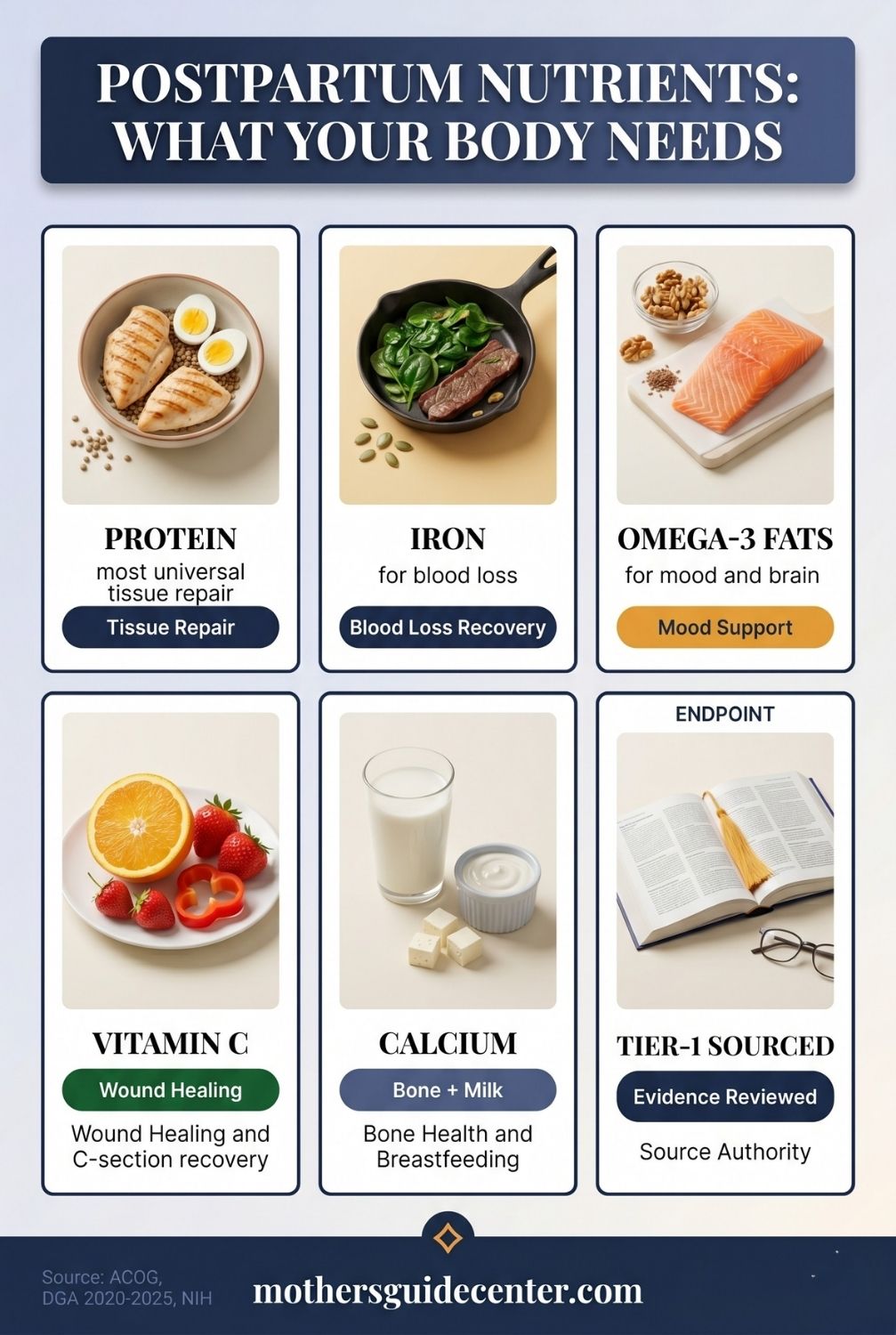
Protein is the foundation of postpartum recovery. It supports tissue repair, muscle recovery, and immune function. The DGA recommends approximately 71 grams of protein daily for breastfeeding mothers. Good sources include eggs, poultry, fish, lentils, beans, and Greek yogurt. Iron is equally critical because many mothers lose significant blood during delivery. The NIH Office of Dietary Supplements recommends 9 to 10 milligrams daily for breastfeeding women, though those with postpartum anemia may need more. Iron-rich foods include lean red meat, spinach, lentils, and fortified cereals.
Omega-3 fatty acids — particularly DHA — support brain health and mood regulation. Some research suggests adequate omega-3 intake may help reduce the risk of postpartum depression, though evidence is still evolving. Salmon, walnuts, chia seeds, and flaxseed are excellent sources. Vitamin C accelerates wound healing, which is especially important after a C-section. The NIH recommends 120 milligrams daily during breastfeeding. Citrus fruits, bell peppers, and strawberries deliver this efficiently. Finally, calcium supports bone density and milk production — aim for 1,000 milligrams daily through dairy, fortified plant milks, or leafy greens.
How many extra calories do you need during postpartum?
Postpartum calorie requirements are the daily energy needs your body has to fuel recovery, daily activities, and — if applicable — breast milk production. The Dietary Guidelines for Americans recommend that exclusively breastfeeding mothers consume approximately 450 to 500 additional calories per day beyond their pre-pregnancy baseline. For a mother who needed roughly 2,000 calories before pregnancy, that means aiming for approximately 2,450 to 2,500 calories daily while breastfeeding.
Even if you are not breastfeeding, your body still needs adequate fuel for tissue repair, hormone regulation, and simply keeping up with the demands of caring for a newborn. ACOG advises against restrictive dieting in the early postpartum period. Rapid weight loss — more than about one to two pounds per week after the initial postpartum fluid loss — can reduce energy levels, affect mood, and for breastfeeding mothers, may compromise milk supply. Focus on nutrient-dense postpartum food rather than calorie counting, and let your body recover at its own pace.
When should you start prepping freezer meals before baby?
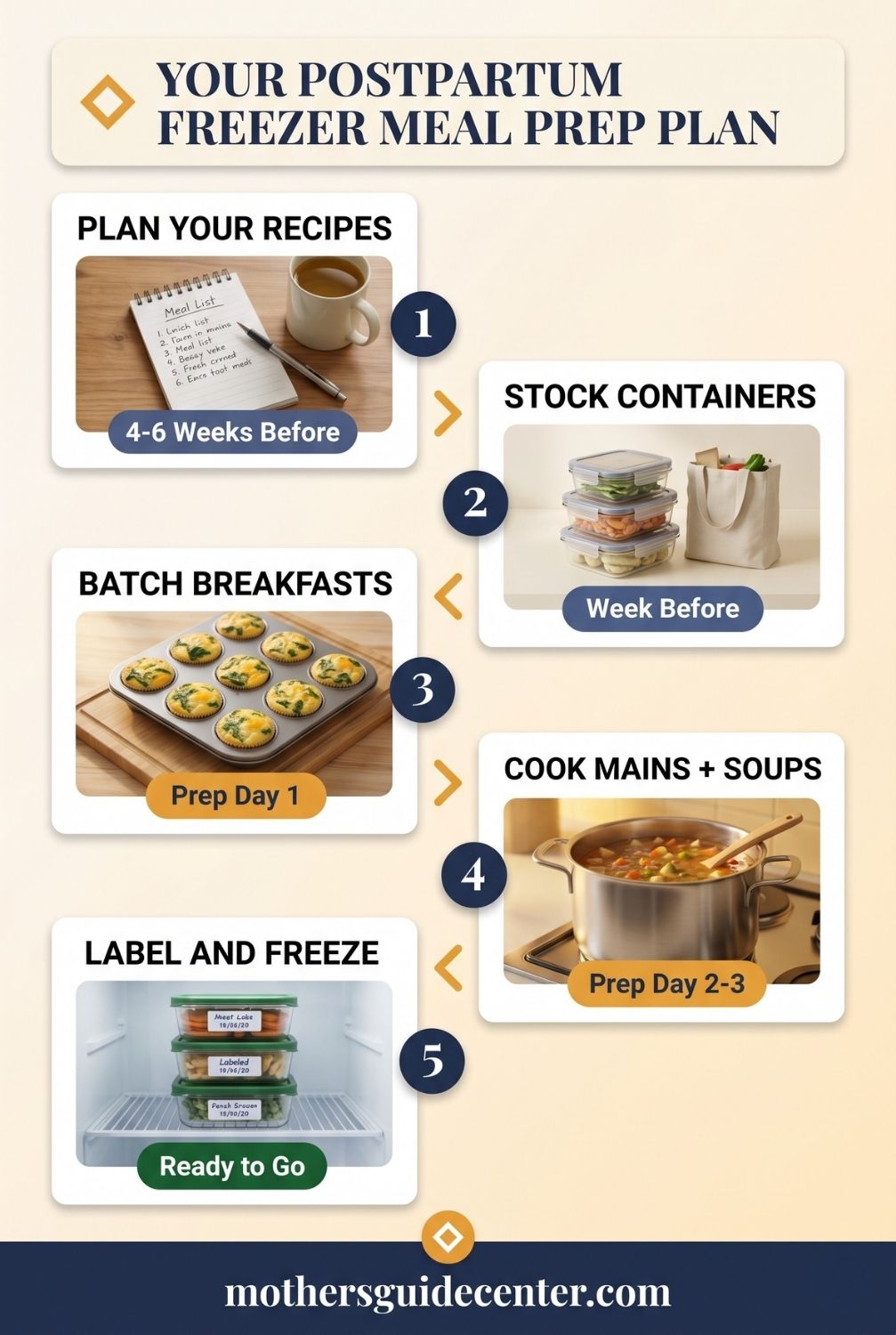
The ideal time to begin postpartum freezer meal prep is four to six weeks before your due date. Starting earlier gives you time to spread the work across several weekends rather than trying to cook everything in a single exhausting marathon. By the third trimester, energy levels fluctuate, so batching two to three recipes per weekend session keeps the process manageable.
Enlist help wherever you can. A partner, parent, sibling, or friend can handle chopping and packaging while you direct the recipes. Some families organize a “freezer meal party” — gathering a few people to batch-cook together. If friends or family ask how they can help before the baby arrives, a home-cooked freezer meal is one of the most practical gifts a new parent can receive. Just be sure your freezer has enough space before you start: clear out old items, invest in stackable glass containers or freezer-safe bags, and label everything with the meal name and date.
How many freezer meals should you prep for postpartum?
A realistic minimum target is 14 to 21 freezer meals, which covers roughly two weeks of lunches and dinners. If you can go further — 30 or more — you will have a cushion that extends into the second month postpartum, when energy is still limited but meal trains from friends have usually tapered off.
Aim for variety across meal types: include breakfast options (egg muffins, oatmeal cups, burritos), hearty mains (soups, casseroles, slow-cooker proteins), and snacks (energy bites, muffins). If you have older children, factor in their portions too. One practical approach is to double or triple every recipe you already cook in your regular rotation during the final weeks of pregnancy, freezing the extra portions. You do not need to learn entirely new recipes — familiar meals you already enjoy will be the ones you actually want to eat at 2 AM while nursing.
What are the best postpartum freezer meals to make ahead?
Postpartum freezer meals are make-ahead dishes designed to be prepared in bulk, frozen in individual or family-sized portions, and reheated quickly when time and energy are scarce. The best ones share three qualities: they are nutrient-dense, they freeze and reheat well without losing flavor or texture, and they require minimal effort to serve. Here are the categories that work best.
Breakfast. Egg muffins with spinach and cheese freeze beautifully — bake a batch in a muffin tin, cool completely, and store in a freezer bag. Reheat in the microwave for 60 to 90 seconds. Baked oatmeal cups with blueberries and flaxseed are another winner: high in fiber and easy to eat one-handed while holding baby. Breakfast burritos with scrambled eggs, black beans, and diced peppers can be wrapped individually in foil and reheated in the oven or microwave.
Soups and stews. Chicken soup is one of the most traditional postpartum recovery meals across cultures. Slow-simmered chicken provides protein, collagen from the bones, and amino acids that support tissue repair. Lentil stew delivers iron and plant-based protein in a high-fiber, warming format. Beef chili supplies iron, zinc, and protein — nutrients many new mothers need after pregnancy-related blood loss. All three freeze well in individual portions and reheat in minutes.
Casseroles. Chicken enchiladas, vegetable lasagna, and chicken-and-rice casserole are hearty, filling, and easy to portion. Assemble them in foil pans, freeze unbaked, and bake directly from frozen when ready (add 15 to 20 extra minutes to the cook time). These are also excellent options for a meal train — easy for others to prepare and deliver.
Slow-cooker and bone broth. Shredded chicken or pork cooked in a slow cooker is incredibly versatile — serve it over rice, in tacos, in soup, or on its own. Bone broth is rich in collagen, glycine, and minerals that support gut health and tissue repair. Freeze it in one-cup portions and sip it warm from a mug or use it as a base for quick soups.
Snacks. Energy bites made with oats, nut butter, honey, and mix-ins like chia seeds or dark chocolate chips store well in the freezer and thaw in minutes. Lactation muffins with oats and brewer’s yeast are popular among breastfeeding mothers, though evidence for specific galactagogue ingredients remains limited. The caloric and nutritional value of these snacks matters more than any single ingredient.
What pantry staples should you keep stocked postpartum?
Beyond your freezer stash, a well-stocked pantry lets you assemble fresh meals with minimal cooking even on the hardest days. Keep these categories covered:
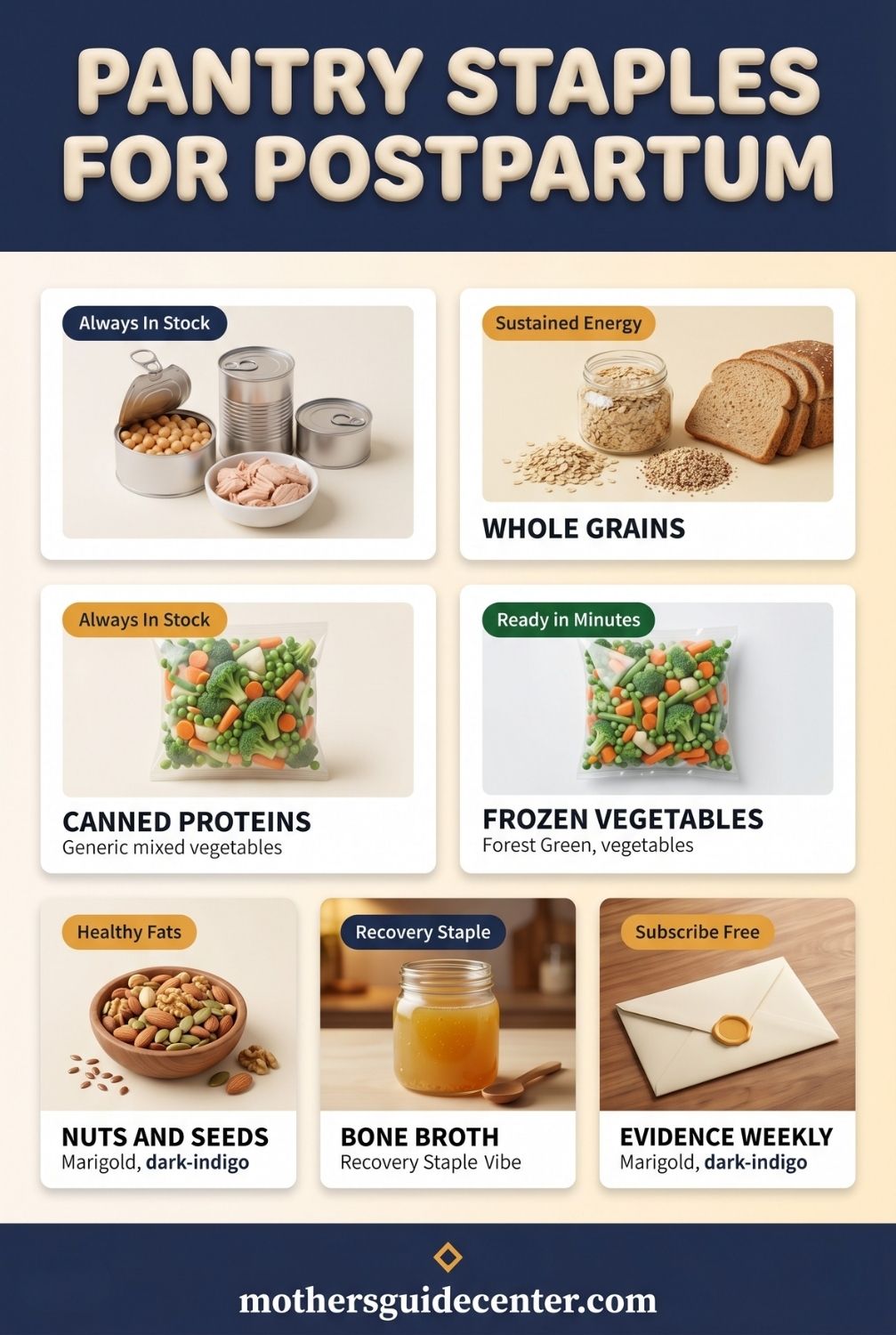
Canned proteins: chickpeas, black beans, lentils, and low-mercury canned tuna or salmon. These require zero cooking and can be added to salads, grain bowls, or eaten straight from the can with some seasoning. Whole grains: rolled oats, quinoa, brown rice, and whole wheat bread or pasta provide sustained energy from complex carbohydrates. Frozen vegetables: broccoli, peas, spinach, and mixed stir-fry blends are nutritionally comparable to fresh and can be microwaved in minutes.
Nuts and seeds: almonds, walnuts, pumpkin seeds, and ground flaxseed deliver healthy fats and protein in small handfuls. Keep them pre-portioned in small bags for easy grabbing. Bone broth: store-bought or homemade, shelf-stable or frozen — having broth on hand means a warm, nourishing drink is always minutes away. One-handed snacks: granola bars, nut butter packets, dried fruit, cheese sticks, and pre-cut vegetables with hummus. If you can eat it without a plate or utensil, it is a postpartum pantry essential.
How do you store and reheat freezer meals safely?
According to the USDA, food stored at 0°F (−18°C) or below remains safe indefinitely, but quality is best within two to three months for most cooked meals. After that, texture and flavor may decline even though the food is still safe to eat. Label every container with the meal name and the date it was frozen so you can use the oldest meals first.
The USDA recommends three safe thawing methods: in the refrigerator overnight (the safest and most hands-off approach), under cold running water in a sealed bag, or in the microwave if you plan to eat the food immediately. Never thaw meals at room temperature — bacteria grow rapidly between 40°F and 140°F. When reheating, bring food to an internal temperature of at least 165°F (74°C) to ensure safety. Use glass containers with airtight lids for storage when possible, and leave a half-inch of headspace to allow for expansion during freezing.
What foods should you limit or avoid postpartum?
Postpartum dietary limits are specific foods and beverages worth reducing — not necessarily eliminating — to support your recovery and your baby’s health if you are breastfeeding. The goal is awareness, not fear.
High-mercury fish. The FDA and EPA advise breastfeeding mothers to avoid shark, swordfish, king mackerel, and tilefish due to their high mercury content. Low-mercury options like salmon, sardines, shrimp, and canned light tuna are excellent alternatives that deliver omega-3 fats without the risk. Excess caffeine. The CDC notes that moderate caffeine intake — around 300 milligrams per day, roughly two to three cups of coffee — is generally considered compatible with breastfeeding. Higher amounts may cause irritability or sleep disruption in some infants.
Alcohol. The CDC recommends waiting at least two hours after a single drink before breastfeeding. Alcohol does pass into breast milk at approximately the same concentration as blood alcohol. Ultra-processed foods. Items high in sodium, added sugars, and unhealthy fats offer little nutritional return when your body needs quality fuel for recovery. This does not mean you can never eat a cookie — it means your baseline meals should be built around whole, nutrient-dense ingredients. Some mothers notice certain foods — garlic, onions, cruciferous vegetables — seem to make their baby fussier. This varies widely between infants. Monitor patterns rather than eliminating food groups preemptively.
Can what you eat affect your breast milk supply?
The most evidence-supported factor in maintaining milk supply is adequate hydration and total calorie intake, not any single food or supplement. According to the CDC, breastfeeding mothers should drink to thirst — typically 8 to 12 cups of water daily — and eat enough calories to meet their body’s increased energy demands. Restrictive dieting during breastfeeding and lactation can reduce milk production and leave you feeling depleted.
Galactagogues — foods traditionally believed to boost milk supply, including oats, fenugreek, brewer’s yeast, and fennel — are common in many cultures, but scientific evidence for their effectiveness remains limited. They are generally safe to include in your diet, and many mothers find them helpful as part of a balanced eating pattern. The takeaway: consistent, adequate nutrition does far more for your milk supply than any individual “superfood.” If you are concerned about low supply, consult a lactation consultant or your healthcare provider before making significant dietary changes.
Frequently asked questions
How many freezer meals should I prep before baby arrives?
A minimum of 14 to 21 meals is a practical target for most families, covering approximately two weeks of lunches and dinners. If freezer space allows and you have help with cooking, 30 to 50 meals provides a more comfortable buffer that extends well into the second month postpartum. Include a mix of breakfasts, mains, and snacks for variety.
Can I meal prep if I had a C-section?
Yes, and nutrition is especially important after a cesarean delivery because your body is healing from major abdominal surgery. Focus on foods high in protein, zinc, and vitamin C to support wound healing. Avoid heavy lifting during prep — ask your partner, family, or friends to handle the physical cooking and portioning while you direct the recipes and rest.
What foods help with postpartum healing?
Foods rich in protein, iron, omega-3 fatty acids, and vitamin C are the most supportive of postpartum recovery. Lean meats, eggs, salmon, leafy greens, lentils, citrus fruits, and bone broth provide the building blocks your body needs for tissue repair, blood replenishment, and energy. The Dietary Guidelines for Americans recommend a varied diet rather than relying on any single food.
How long do postpartum freezer meals last?
According to the USDA, cooked meals stored at 0°F or below remain safe to eat indefinitely, but quality — including texture and flavor — is best within two to three months of freezing. Label all containers with the meal name and freeze date, and use the oldest meals first. Soups, stews, and casseroles tend to maintain quality longer than dishes with dairy-heavy sauces.
Should I eat warm or cold foods postpartum?
Many traditional postpartum practices — including Ayurveda and Traditional Chinese Medicine — emphasize warm, cooked foods during the early recovery period because they are generally easier to digest than raw or cold meals. While modern clinical guidelines do not restrict cold foods, warm soups, stews, and broths are a gentle starting point, especially in the first week or two after delivery when digestion may be sluggish.
Do I need to eat more if I am breastfeeding?
Yes. The Dietary Guidelines for Americans 2020–2025 recommend that exclusively breastfeeding mothers consume approximately 450 to 500 additional calories per day beyond their pre-pregnancy needs. This supports milk production while maintaining your own energy and nutrient stores. Focus on nutrient-dense foods rather than calorie counting, and avoid restrictive diets during this period.
When to contact your healthcare provider
While most postpartum nutrition adjustments are straightforward, some signs warrant professional attention. Contact your provider if you experience:
This article is for educational purposes only and does not replace medical advice from a qualified healthcare provider.
Sources
- American College of Obstetricians and Gynecologists. (2024). Nutrition During Pregnancy. ACOG.org.
- U.S. Department of Agriculture and U.S. Department of Health and Human Services. (2020). Dietary Guidelines for Americans 2020–2025. DietaryGuidelines.gov.
- Centers for Disease Control and Prevention. (2024). Maternal Diet and Breastfeeding. CDC.gov.
- National Institutes of Health Office of Dietary Supplements. (2024). Iron — Health Professional Fact Sheet. NIH.gov.
- National Institutes of Health Office of Dietary Supplements. (2024). Vitamin C — Health Professional Fact Sheet. NIH.gov.
- National Institutes of Health Office of Dietary Supplements. (2024). Omega-3 Fatty Acids — Health Professional Fact Sheet. NIH.gov.
- U.S. Department of Agriculture. (2024). Cold Food Storage Charts. FoodSafety.gov.
- U.S. Food and Drug Administration and Environmental Protection Agency. (2024). Advice About Eating Fish. FDA.gov.
- Mayo Clinic. (2024). Postpartum Care: What to Expect After a Vaginal Delivery. MayoClinic.org.
- Cleveland Clinic. (2024). Postpartum Diet: Nutrition After Pregnancy. ClevelandClinic.org.