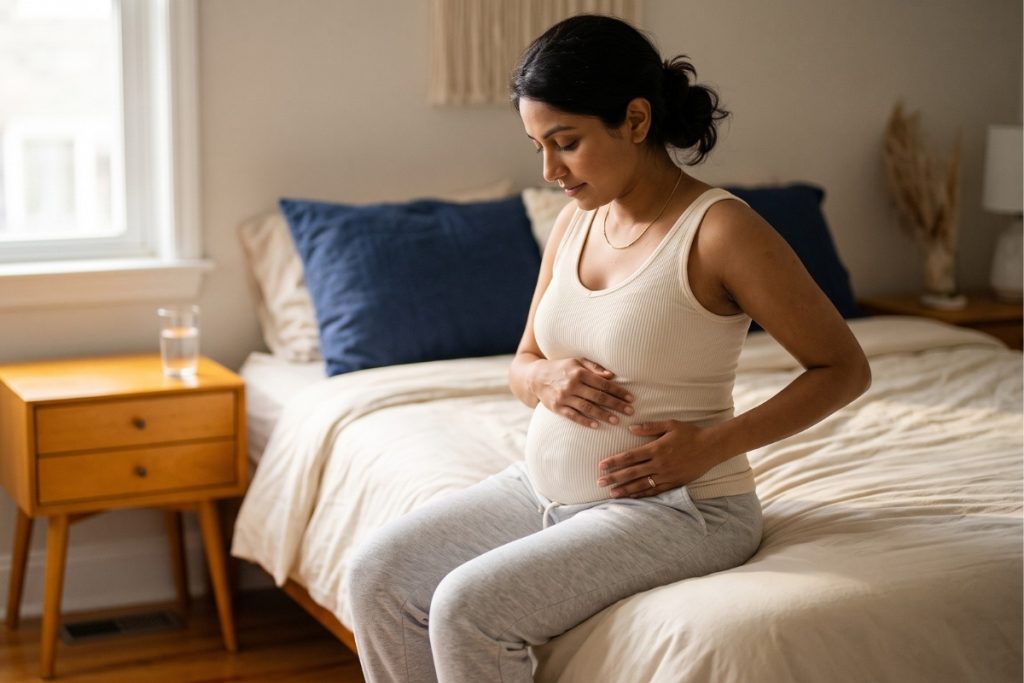
Round ligament pain in pregnancy is a common, harmless symptom caused by the stretching of the ligaments that support your growing uterus. It typically feels like a sharp, brief pain in your lower abdomen or groin, most often during the second trimester. According to Banner Health, an estimated 10 to 30 percent of pregnant women experience round ligament pain. Rest, gentle stretching, and slow position changes usually provide relief.
Key takeaways
If you have ever felt a sudden, sharp jab in your lower belly while rolling over in bed or getting up from the couch, you are not alone. Round ligament pain during pregnancy is one of the most common discomforts expectant mothers face — and for first-time mothers, it can be alarming. That sudden pull or ache is almost always your body doing exactly what it is supposed to do: making room for your growing baby.
This guide covers everything you need to know about round ligament pain in pregnancy — what it feels like, when it starts, what triggers it, how it differs from more serious conditions, and the most effective evidence-based relief techniques. Every claim is sourced from Tier 1 medical authorities so you can trust the information and share it with your provider.
What is round ligament pain in pregnancy?
Round ligament pain is a sharp or aching discomfort in the lower abdomen, hips, or groin that occurs when the ligaments supporting the uterus stretch during pregnancy. According to the Cleveland Clinic, the round ligaments are two rope-like bands of tissue on each side of your uterus, each approximately 10 to 12 centimeters long. They connect the upper part of your uterus to your lower abdominal wall, running through the groin.
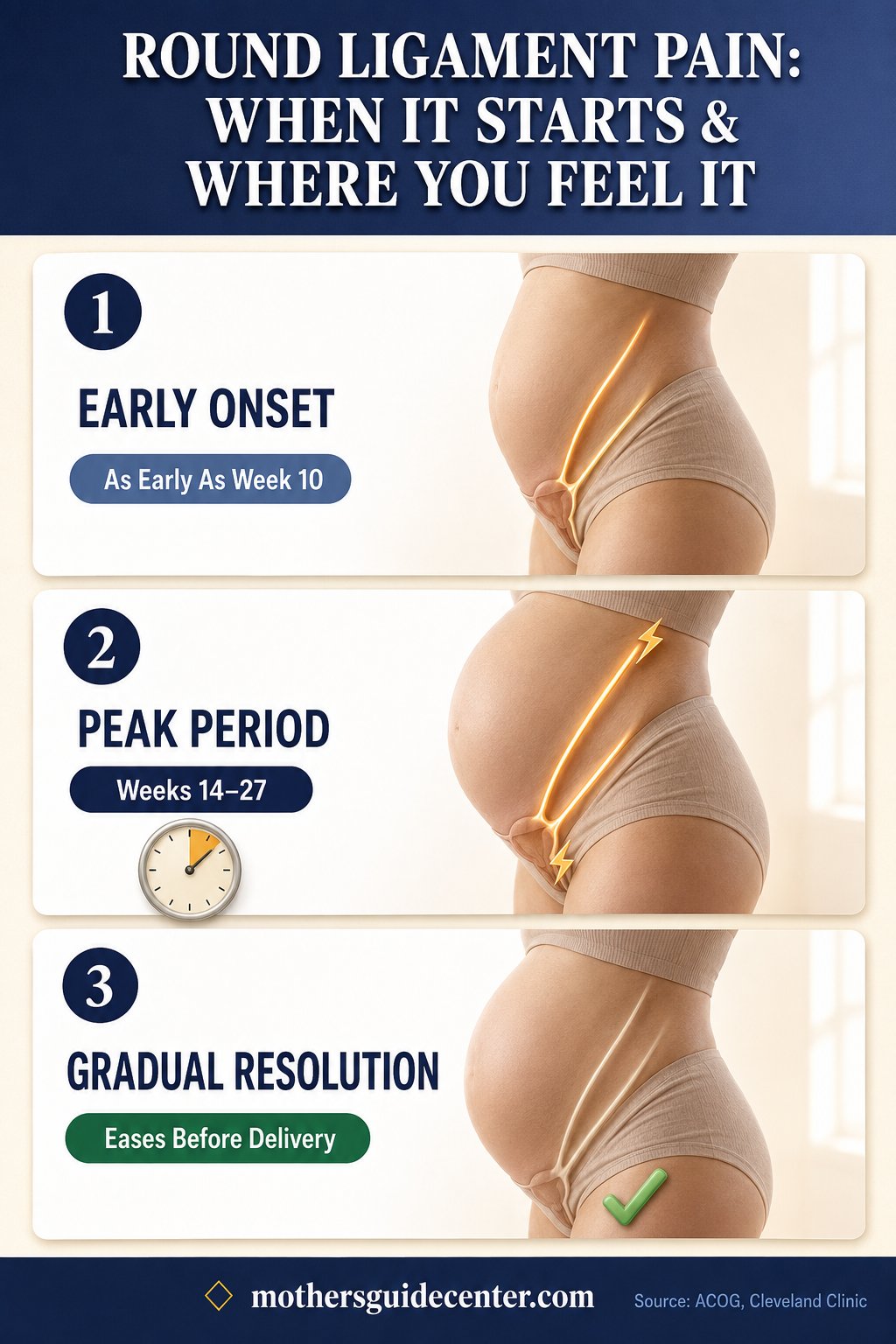
Understanding the round ligament pain location helps you distinguish it from other types of abdominal discomfort. As Marshfield Clinic describes, if you were to trace the pain on your skin, it would follow the path of a bikini line in a very high-cut bathing suit — starting deep in the groin and moving upward and outward toward the hips. The pain is internal and most commonly felt on the right side, because the uterus tends to tilt slightly to the right during pregnancy.
What does round ligament pain feel like?
Round ligament pain is a sudden, sharp, stabbing or pulling sensation that most women feel in the lower part of the pelvis or groin area. The Cleveland Clinic notes that it can occur on one side or both sides simultaneously. Many women describe it as feeling like a quick jab, a rubber-band snap, or a deep pulling in the lower belly.
The pain typically lasts only a few seconds to a few minutes and resolves on its own with rest or a change of position. After a particularly active day — walking a lot, standing for extended periods, or doing physical activity — you might also feel a longer-lasting dull ache rather than a sharp jab. Both patterns are considered normal. What does round ligament pain feel like in everyday terms? Think of a sharp twinge that stops you mid-movement and then fades within moments.
When does round ligament pain start and how long does it last?
Round ligament pain most commonly begins during the second trimester of pregnancy, between weeks 14 and 27, when the uterus is growing rapidly. According to the Cleveland Clinic, this is the period when the ligaments are placed under the most tension as they stretch to accommodate your expanding uterus. However, some women experience round ligament pain early pregnancy — as early as 10 to 12 weeks — especially in second or subsequent pregnancies when the uterus begins to grow sooner.
When does round ligament pain start to ease? Many women report that the pain subsides by the third trimester as the ligaments finish stretching and the rate of uterine growth slows. Others do not experience complete relief until after delivery, when hormone levels normalize and the uterus returns to its pre-pregnancy size.
What causes round ligament pain during pregnancy?
Round ligament pain is caused by the mechanical stress placed on the ligaments as the uterus grows during pregnancy. Before pregnancy, the round ligaments are short, thick, and flexible — they contract and relax slowly. As the uterus expands, these ligaments become longer and taut, similar to an overstretched rubber band. When you make a sudden movement, the ligaments tighten rapidly, pulling on nearby nerve fibers and triggering that sharp, sudden pain.
According to the National Institutes of Health (NIH), hormonal changes also play a role. Relaxin, a hormone produced during pregnancy to soften connective tissue and prepare the body for childbirth, can make the ligaments more elastic and vulnerable to spasm. The combination of rapid uterine growth and hormonally softened ligaments explains why the pain is most common during the second trimester — the period of fastest proportional uterine expansion.
What triggers round ligament pain?
Round ligament pain is triggered by any movement that forces the ligaments to tighten quickly rather than gradually. The Cleveland Clinic and Essentia Health identify the most common triggers as:
- Changing positions quickly — standing up too fast, rolling over in bed, or getting out of a chair
- Sneezing, coughing, or laughing — these create sudden abdominal pressure that tugs the ligaments
- Exercise or physical activity — walking briskly, climbing stairs, or workout routines
- Prolonged standing — being on your feet for long periods increases ligament strain
- Getting out of bed or the bathtub — movements that engage the core and pelvis simultaneously
Understanding your personal triggers is one of the most effective ways to reduce how often you experience the pain. Most triggers share a common thread: the ligament is forced to react faster than it can comfortably stretch.
How do you know if it is round ligament pain or something serious?
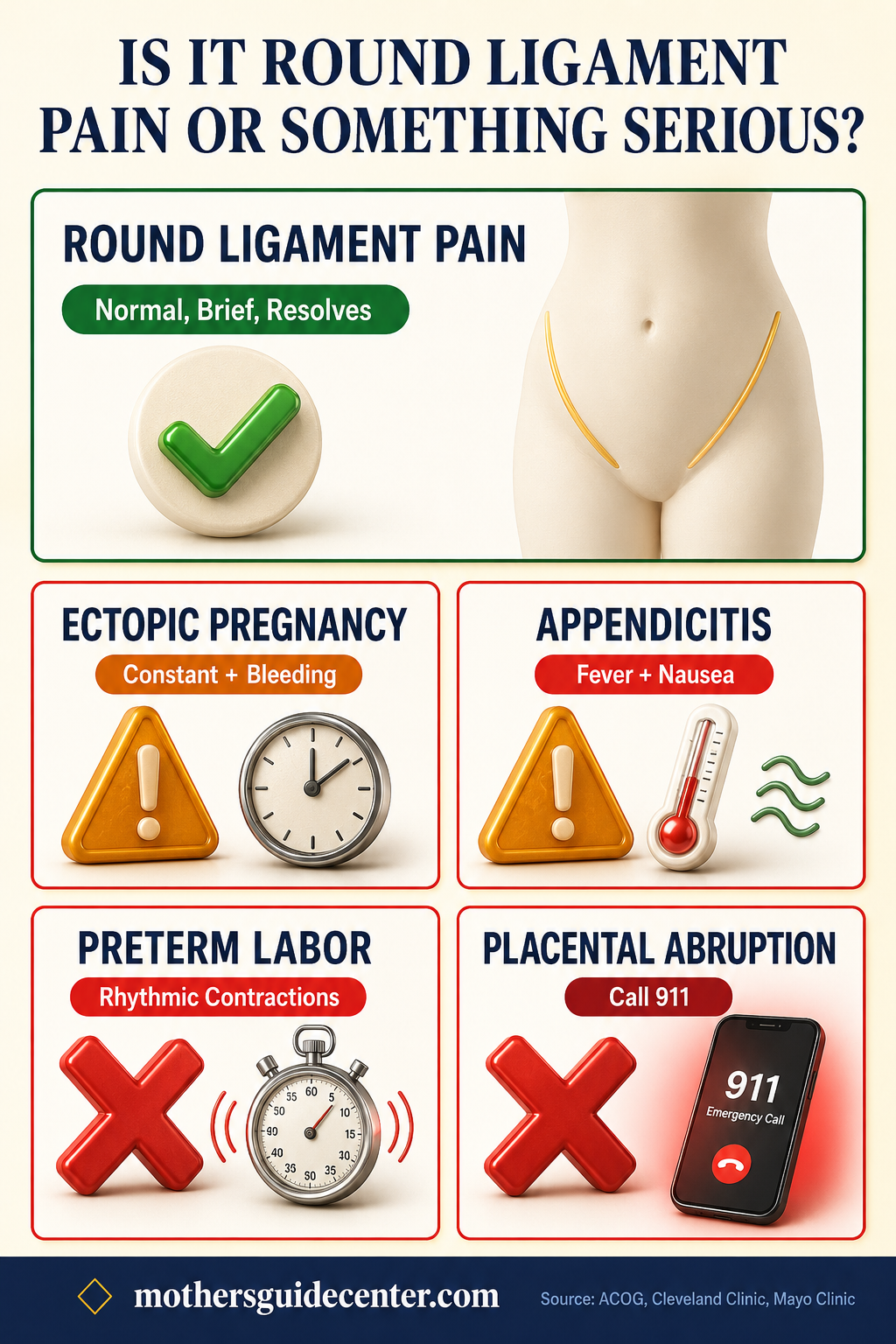
Round ligament pain is brief, triggered by movement, and resolves with rest — that is the most reliable distinguishing feature. If your abdominal pain is constant, worsening, or accompanied by other symptoms, it may indicate a more serious condition. According to the Cleveland Clinic and ACOG, these are the conditions that can mimic round ligament pain and require immediate medical evaluation:
Ectopic pregnancy — Persistent, one-sided abdominal or pelvic pain that does not come and go, often accompanied by vaginal bleeding, dizziness, or shoulder pain. Ectopic pregnancy is most common in the first trimester and is a medical emergency.
Appendicitis — Pain that starts near the navel and migrates to the lower right abdomen, often accompanied by fever, nausea, vomiting, and loss of appetite. According to the Mayo Clinic, appendicitis during pregnancy can be confused with round ligament pain because both commonly cause right-sided abdominal discomfort.
Preterm labor — Regular, rhythmic contractions (tightening that comes and goes at predictable intervals), lower back pain, pelvic pressure, and changes in vaginal discharge. ACOG emphasizes that true contractions feel fundamentally different from the sharp, isolated jabs of round ligament pain.
Placental abruption — Constant, severe abdominal pain that does not resolve, often accompanied by vaginal bleeding and a rigid, tender abdomen. This is a medical emergency requiring immediate care.
How to relieve round ligament pain
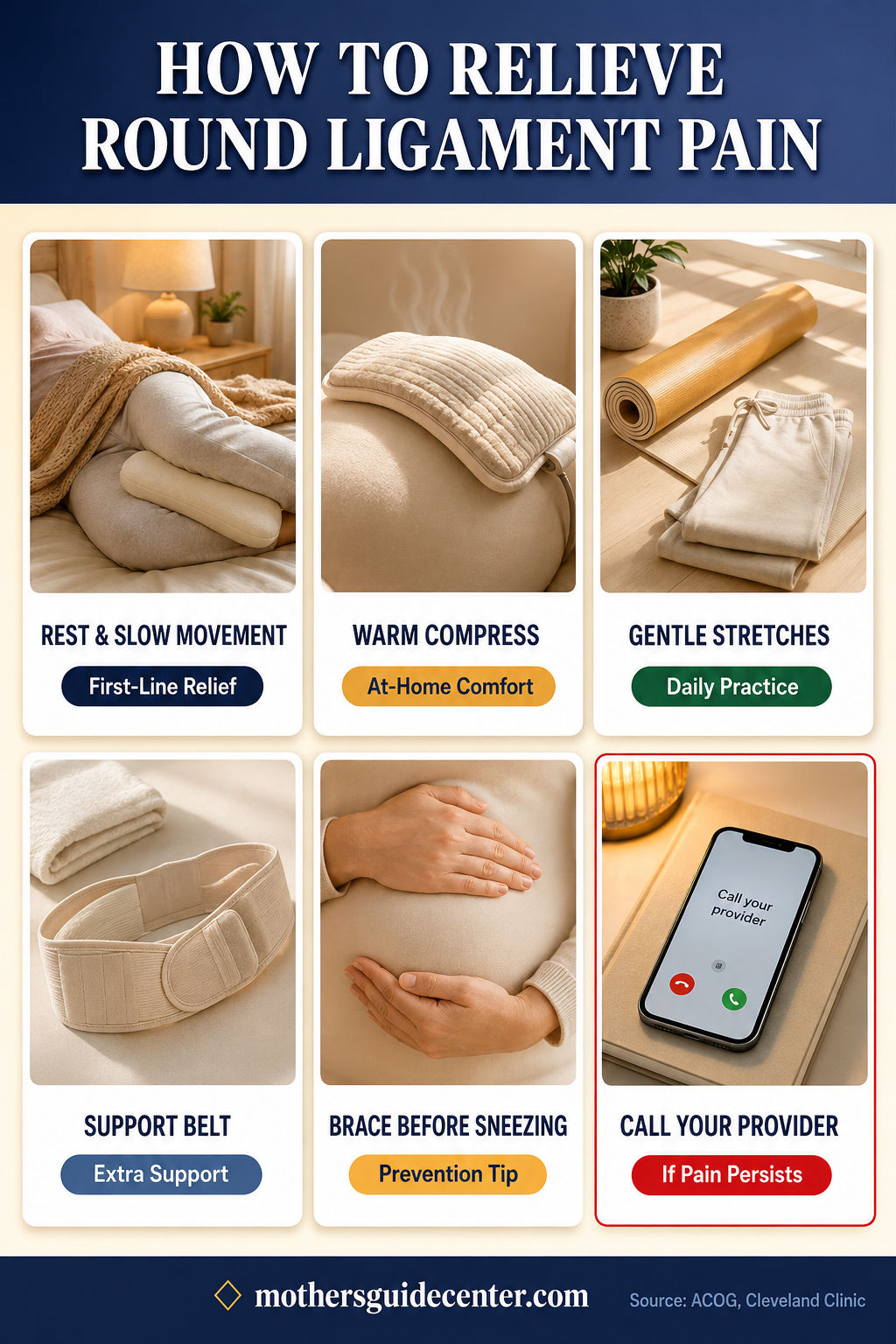
Round ligament pain usually does not require medical treatment. Knowing how to relieve round ligament pain comes down to a combination of movement modifications, at-home comfort measures, and gentle physical support. The Cleveland Clinic, Mayo Clinic, and Essentia Health recommend these evidence-based strategies:
Rest and slow movement — When pain strikes, lying down on your side with your knees bent is the most effective first-line response. Change positions slowly and deliberately — roll onto your side before sitting up from lying down, and pause before standing from a chair.
Warm compress or warm bath — Applying a warm (not hot) compress to the painful area relaxes the ligaments and surrounding muscles. A warm bath offers similar relief for the entire lower abdomen and pelvis. Avoid hot baths, especially in the first trimester.
Brace before you sneeze — Dr. John M. Balintona, OB/GYN at Essentia Health, recommends holding your lower abdomen when preparing to laugh, cough, or sneeze. Flexing your hips before the involuntary movement reduces the sudden pull on the ligaments.
Prenatal support belt — An elastic maternity belly band distributes the weight of your growing uterus more evenly and reduces the strain on the round ligaments. The Cleveland Clinic lists this as one of the primary relief measures.
Acetaminophen (with provider approval) — The Mayo Clinic notes that acetaminophen (Tylenol) may help when other measures are insufficient. Always consult your healthcare provider before taking any medication during pregnancy.
What stretches help with round ligament pain?
Gentle, daily stretching is one of the most effective ways to prevent round ligament pain from recurring. Stretches for round ligament pain focus on lengthening the hip flexors, inner thighs, and lower abdominal muscles — the areas that connect to or influence the round ligaments. The Cleveland Clinic recommends prenatal yoga and targeted stretches to gently reduce ligament tension. These are the most commonly recommended exercises:
Pelvic tilt — Stand with your back against a wall, feet shoulder-width apart. Gently press the small of your back into the wall by tilting your pelvis forward. Hold for five seconds and release. Repeat ten times.
Cat-cow stretch — Get on your hands and knees. Inhale as you drop your belly toward the floor and lift your head (cow). Exhale as you round your back toward the ceiling and tuck your chin (cat). Move slowly through five to ten cycles.
Hip flexor stretch — Kneel on one knee with the other foot in front, knee bent at 90 degrees. Gently shift your weight forward until you feel a mild stretch in the front of the kneeling hip. Hold for 20 to 30 seconds per side.
Child’s pose — Kneel on the floor, sit back on your heels, and extend your arms forward on the ground with your forehead resting down. Spread your knees wide enough to accommodate your belly. Hold for 30 seconds. This stretch gently lengthens the lower back and pelvic ligaments.
Stop any stretch immediately if it causes pain, and consult your healthcare provider before starting a new exercise routine during pregnancy.
Is round ligament pain worse at night?
Round ligament pain can feel more noticeable at night because rolling over in bed and shifting sleeping positions are among the most common triggers. According to Marshfield Clinic, you may feel a short jabbing sensation when you roll over, get up to use the bathroom, or change from one sleeping position to another. The stillness of nighttime also makes you more aware of physical sensations that might go unnoticed during a busy day.
To reduce nighttime round ligament pain, try sleeping on your side with a pillow between your knees and another supporting your belly. Move slowly and deliberately when rolling over — roll your entire body as a unit rather than twisting at the waist. A pregnancy pillow that supports both your belly and your lower back can significantly reduce the sudden movements that trigger nighttime pain.
Frequently asked questions
Can you have round ligament pain in the first trimester?
Round ligament pain in the first trimester is possible but less common than during the second trimester. The Cleveland Clinic states that round ligament pain can appear earlier or later than the typical 14-to-27-week window. First-trimester round ligament pain is more frequently reported in women who have been pregnant before, as the uterus may begin to expand earlier in subsequent pregnancies.
Does round ligament pain mean the baby is growing?
Round ligament pain is directly linked to the growth of the uterus, so in that sense, yes — it is a sign that your body is making room for your developing baby. However, the absence of round ligament pain does not mean your baby is not growing. Many women go through their entire pregnancy without experiencing noticeable round ligament pain.
How long does round ligament pain last?
Each episode of round ligament pain typically lasts only a few seconds to a few minutes and resolves on its own. If the ligaments have been overworked — for example, after a long day on your feet — you may feel a dull ache that persists for several hours. Pain that is constant, severe, or lasts more than a few minutes without improvement warrants a call to your provider.
Can round ligament pain be on one side only?
Round ligament pain on one side is very common and does not indicate a problem. According to the NIH, the uterus tends to be oriented slightly toward the right side of the body, which is why many women experience round ligament pain primarily on the right. However, pain can also occur on the left side or on both sides simultaneously.
Is round ligament pain worse with a second pregnancy?
Many women report that round ligament pain starts earlier and feels more intense during second and subsequent pregnancies. This is likely because the uterus and ligaments have been stretched before and may respond to growth more quickly. The pattern is consistent with the general clinical observation that pregnancy symptoms can appear sooner in later pregnancies.
Is it safe to take Tylenol for round ligament pain?
Acetaminophen (Tylenol) is generally considered safe during pregnancy and is the most commonly recommended over-the-counter pain reliever for round ligament pain, according to the Mayo Clinic. However, you should always check with your healthcare provider before taking any medication during pregnancy, and use the lowest effective dose for the shortest time necessary.
When to contact your healthcare provider
Round ligament pain is almost always harmless. However, contact your provider or seek immediate care if you experience any of the following alongside abdominal pain:
This article is for educational purposes only and does not replace medical advice from a qualified healthcare provider.
Sources
- Cleveland Clinic. (2024). Round Ligament Pain: Causes, Treatment & Prevention. clevelandclinic.org. Retrieved August 2026.
- Mayo Foundation for Medical Education and Research. (2026). Pregnancy Week by Week — Second Trimester Discomforts. mayoclinic.org. Retrieved August 2026.
- American College of Obstetricians and Gynecologists. (2024). Ectopic Pregnancy FAQ. ACOG.org. Retrieved August 2026.
- Aguilera, P.A. (2024). Round Ligament Pain — StatPearls. National Library of Medicine. Retrieved August 2026.
- Banner Health. (2024). Round Ligament Pain in Pregnancy. bannerhealth.com. Retrieved August 2026.
- Marshfield Clinic. (2026). Round Ligament Pain. marshfieldclinic.org. Retrieved August 2026.
- Essentia Health. (2024). How to Relieve Round Ligament Pain & Braxton-Hicks Contractions. essentiahealth.org. Retrieved August 2026.
- American College of Obstetricians and Gynecologists. (2024). Chronic Pelvic Pain. ACOG.org. Retrieved August 2026.
- American Pregnancy Association. (2026). Round Ligament Pain: Causes and Treatment. americanpregnancy.org. Retrieved August 2026.