
Trying to conceive (TTC) is the active process of timing intercourse around ovulation to achieve pregnancy. According to the American Society for Reproductive Medicine (ASRM), approximately 85 percent of couples conceive within 12 months of regular unprotected intercourse. Understanding your fertile window, maintaining preconception health, and knowing when to seek specialist help are the three pillars of an evidence-based approach to getting pregnant.
Key takeaways
- ✓ Your fertile window is approximately six days per cycle — the five days before ovulation plus ovulation day itself.
- ✓ About 85 percent of couples conceive within one year of regular unprotected intercourse.
- ✓ Folic acid supplementation should begin at least one month before conception to reduce neural tube defect risk.
- ✓ Age is the single most significant factor affecting natural fertility — particularly after age 35.
- ✓ Both partners’ health matters — male factor contributes to approximately one-third of infertility cases.
- ✓ Lifestyle factors including weight, caffeine, alcohol, and smoking directly affect conception odds.
- ✓ Schedule a preconception visit with your provider before you start trying — not after.
If you have decided you are ready to have a baby, you probably have questions — a lot of them. When is the best time to try? How long should it take? What should you eat, take, or change? The amount of advice online can feel overwhelming, especially when some of it contradicts what your provider tells you. This guide exists to cut through the noise with information sourced exclusively from Tier 1 medical authorities.
According to the Centers for Disease Control and Prevention (CDC), planning for pregnancy — sometimes called preconception care — is one of the most impactful steps you can take for your future baby’s health. Whether you just stopped contraception or have been trying for a few months, this evidence-based guide covers everything from the biology of conception to the emotional realities of the TTC journey.
What does trying to conceive mean?
Trying to conceive — commonly abbreviated as TTC — is the intentional process of pursuing pregnancy by timing sexual intercourse around ovulation while optimizing health factors that affect fertility. It is not simply “not preventing” pregnancy; TTC implies active awareness of your menstrual cycle, your fertile window, and the lifestyle choices that support conception.
The term has become widely used in online communities, support groups, and fertility forums where women share their experiences, track their cycles, and support each other through a journey that can be straightforward for some and deeply challenging for others. According to the Office on Women’s Health, understanding how your reproductive system works is the foundation of any successful conception plan.
For most couples, the TTC process involves three core actions: learning to identify ovulation, having well-timed intercourse during the fertile window, and creating the healthiest possible conditions for both egg and sperm. The sections below walk you through each of these in detail.
How does conception actually work?
Conception is the biological event in which a sperm cell fertilizes an egg cell, creating a single-celled embryo called a zygote that then implants in the uterine lining to begin pregnancy. According to the Cleveland Clinic, conception can occur within 12 to 24 hours after ovulation — a narrow window that makes cycle tracking critically important.
Here is how the process unfolds in a typical cycle. Each month, one of your ovaries releases a mature egg during ovulation — usually around day 14 of a 28-day cycle, though this varies significantly between women and even between cycles. The egg travels down the fallopian tube, where fertilization can occur if sperm are present. Sperm can survive inside the female reproductive tract for up to five days, which is why intercourse in the days before ovulation is just as important as intercourse on ovulation day itself.
If the egg is fertilized, the resulting embryo takes approximately six to twelve days to travel to the uterus and implant in the endometrial lining. Once implantation is complete, the body begins producing human chorionic gonadotropin (hCG) — the hormone detected by pregnancy tests. Not every fertilized egg successfully implants; the Cleveland Clinic notes that conception results in pregnancy only about 25 percent of the time per cycle, even when timing is optimal.
What is your fertile window and how do you find it?
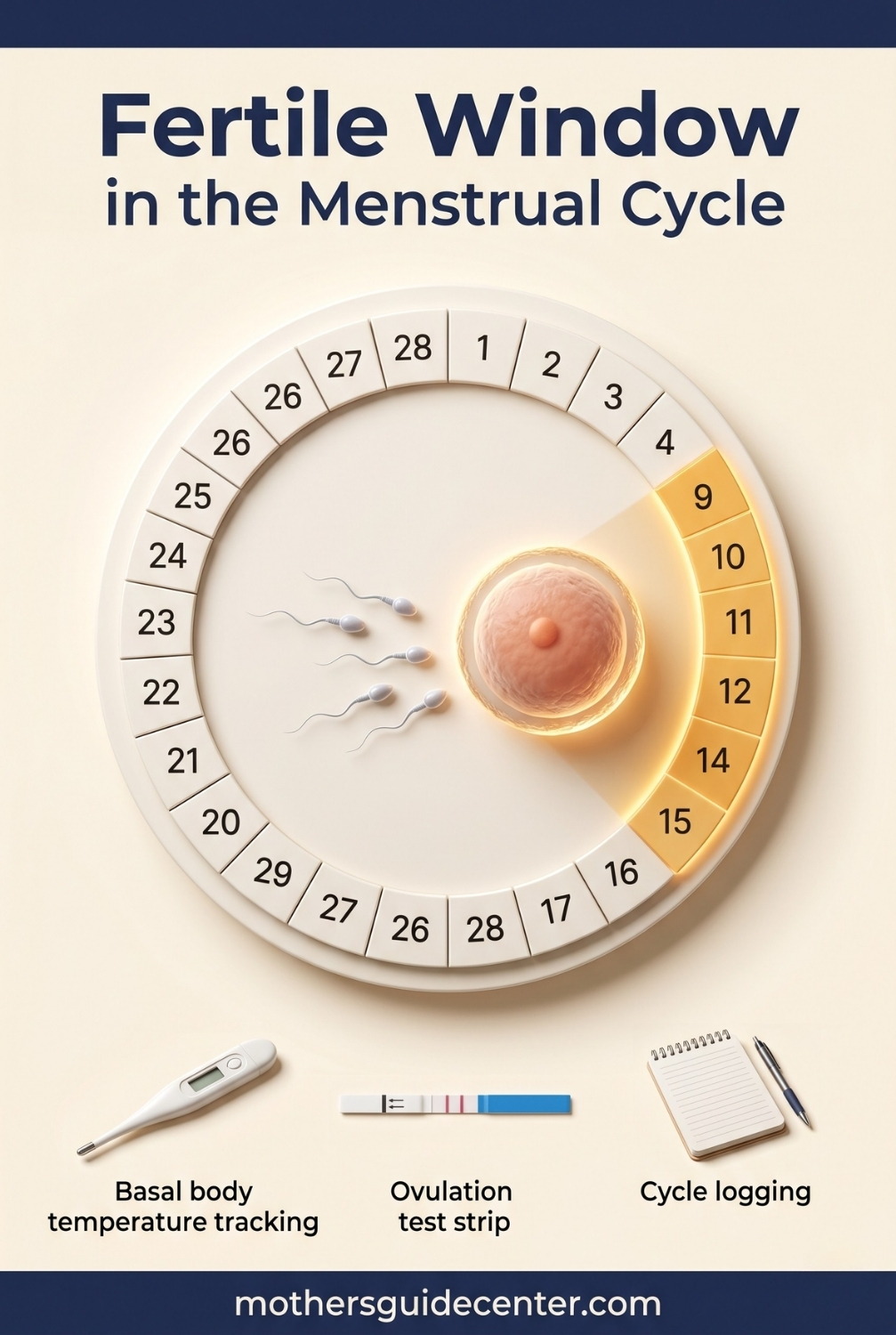
Your fertile window is the approximately six-day period each menstrual cycle during which pregnancy is possible — consisting of the five days before ovulation plus the day of ovulation itself. According to ACOG, understanding and identifying this window is one of the most evidence-based strategies for couples trying to conceive.
The challenge is that ovulation does not always occur on the same day, even in women with regular cycles. Stress, illness, travel, and hormonal fluctuations can all shift your ovulation date by several days. That is why relying on calendar math alone — counting back 14 days from your expected period — can miss the window entirely.
Ovulation predictor kits (OPKs) detect the surge in luteinizing hormone (LH) that occurs 24 to 36 hours before ovulation. A positive OPK tells you ovulation is imminent, giving you a clear signal to have intercourse. Most fertility specialists consider OPKs the most practical tracking method for the majority of women.
Basal body temperature (BBT) tracking involves measuring your resting temperature each morning before getting out of bed. After ovulation, progesterone causes a slight temperature rise of about 0.5 to 1.0 degrees Fahrenheit. While BBT confirms that ovulation has occurred, it cannot predict it in advance — which is why combining BBT with OPKs or cervical mucus observation provides the most complete picture.
Cervical mucus changes offer another biological signal. In the days leading up to ovulation, cervical mucus becomes clear, slippery, and stretchy — often compared to raw egg white consistency. This fertile-quality mucus helps sperm survive and travel more efficiently. If you notice unusual symptoms around ovulation, such as cramping during ovulation or feeling sick during ovulation, those can also serve as secondary ovulation signals worth tracking.
How often should you have sex when trying to conceive?
The recommended frequency of intercourse when trying to conceive is every one to two days during the fertile window, or every two to three days throughout the entire cycle if you prefer not to track ovulation closely. According to ASRM, frequent ejaculation does not reduce sperm quality in men with healthy sperm production — so having sex daily during the fertile window is perfectly safe and may maximize your chances.
There is a common misconception that couples should “save up” sperm by abstaining for several days before the fertile window. Research does not support this approach. ASRM notes that while prolonged abstinence of more than five days can actually reduce sperm quality, intervals of one to two days maintain optimal sperm concentration and motility.
The landmark study by Allen Wilcox and colleagues, published in the New England Journal of Medicine, found that the highest pregnancy rates occurred when intercourse happened on the day of ovulation or the two days before it. However, pregnancies were documented from intercourse as early as five days before ovulation, confirming the importance of the full six-day fertile window.
One practical point: there is no evidence that specific sexual positions, lying flat after intercourse, or elevating your hips improves conception rates. The Mayo Clinic confirms that sperm reach the cervix within seconds of ejaculation regardless of position.
What lifestyle changes improve your chances of getting pregnant?
Preconception lifestyle changes are specific adjustments to daily habits — including diet, exercise, substance use, and environmental exposures — that optimize both egg and sperm quality in the months before conception. The CDC recommends beginning preconception care three to six months before you start trying.
Maintain a healthy weight. Both underweight and overweight status can disrupt ovulation. According to ACOG, women with a body mass index (BMI) below 18.5 or above 30 have a higher risk of irregular ovulation and longer time to conception. Even a modest weight change of 5 to 10 percent can significantly improve ovulation regularity in women with weight-related fertility challenges.
Limit caffeine. ACOG considers moderate caffeine consumption — under 200 milligrams per day, roughly one 12-ounce cup of coffee — safe during the preconception period. Higher intake has been associated with longer time to conception in some studies, though the evidence is not conclusive.
Eliminate alcohol and tobacco. The CDC recommends avoiding alcohol entirely when trying to conceive because there is no known safe amount during early pregnancy — and you may not know you are pregnant immediately. Smoking reduces fertility in both men and women: the British Medical Association reports that women who smoke have a 40 percent lower chance of conceiving per cycle. Secondhand smoke exposure also matters.
Exercise moderately. Regular moderate exercise supports fertility, but excessive high-intensity training — defined as more than five hours per week of vigorous activity — has been linked to reduced ovulation in women with low body weight. The goal is consistency and balance, not intensity.
For the male partner: avoid prolonged heat exposure to the testicles (hot tubs, saunas, tight underwear, laptops directly on lap), limit alcohol, stop smoking, and maintain a healthy weight. Sperm development takes approximately 74 days, so lifestyle changes made today affect sperm quality roughly two to three months later.
What vitamins and nutrients support fertility?
Prenatal vitamins and targeted nutrient intake when trying to conceive are supplements and dietary choices that prepare the body for pregnancy by building nutrient reserves that support egg quality, ovulation, and early embryonic development. Starting supplementation before conception — not after a positive test — is critical because many key developmental events happen in the first weeks before most women know they are pregnant.
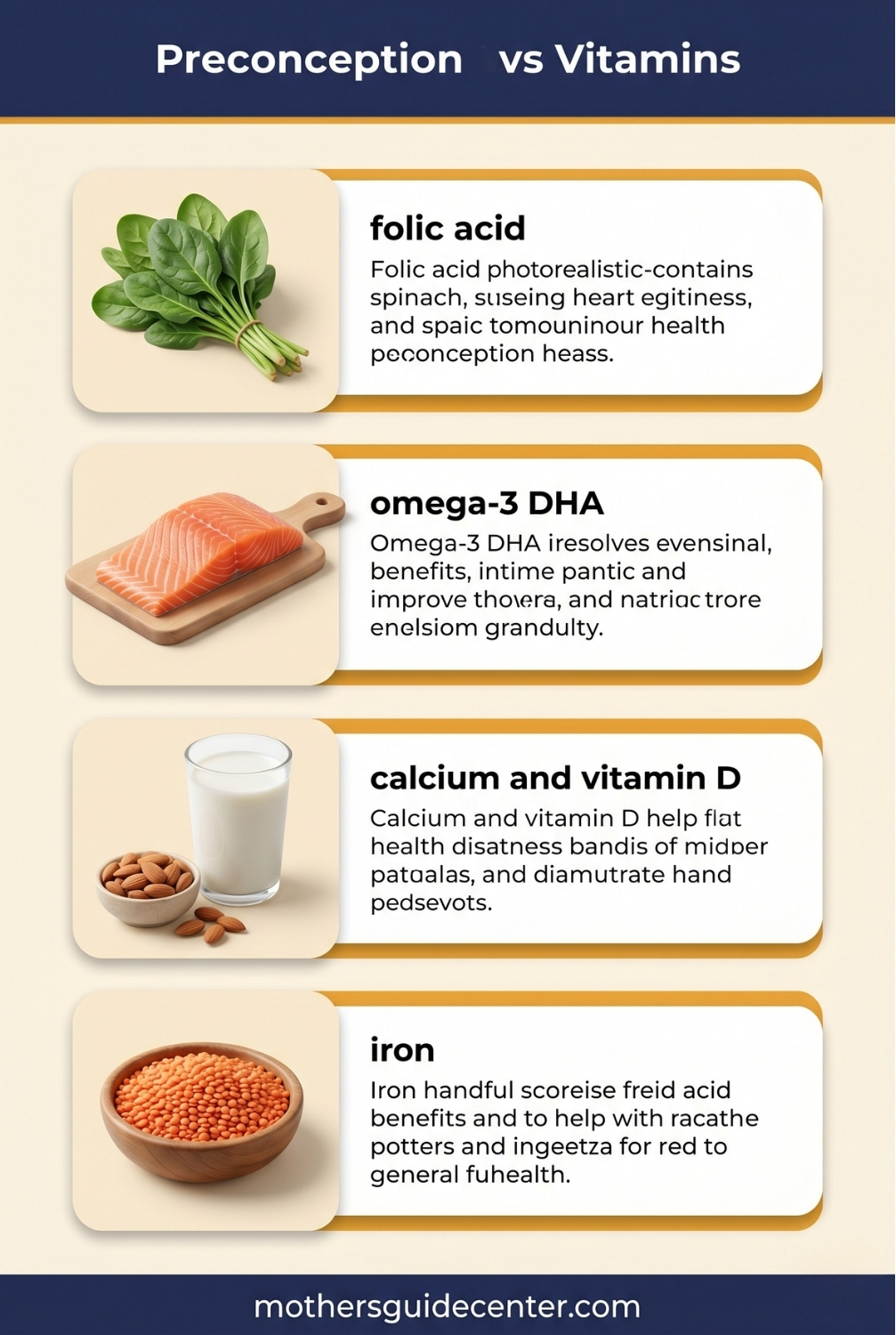
Folic acid is the single most important preconception supplement. The CDC recommends that all women of reproductive age take 400 micrograms of folic acid daily. Adequate folic acid intake beginning at least one month before conception and continuing through the first trimester reduces the risk of neural tube defects by up to 70 percent. Most prenatal vitamins contain this amount.
Iron supports the increased blood volume required during pregnancy. The National Institutes of Health (NICHD) recommends that women planning pregnancy have their iron status assessed during preconception counseling, as iron-deficiency anemia is common and can affect fertility.
Vitamin D plays a role in hormone regulation and reproductive function. Research suggests that women with adequate vitamin D levels may have higher implantation rates, though evidence is still evolving. A simple blood test can determine your vitamin D status.
Omega-3 fatty acids (DHA) support fetal brain and eye development from the earliest stages. The American Pregnancy Association recommends DHA supplementation beginning during the preconception period. Dietary sources include fatty fish (salmon, sardines), walnuts, and flaxseeds.
A fertility-supporting diet emphasizes whole foods: fruits, vegetables, whole grains, lean proteins, and healthy fats. The “fertility diet” pattern — studied extensively at Harvard School of Public Health — found that women who consumed more plant-based protein, full-fat dairy, and whole grains had a lower risk of ovulatory infertility.
How long does it usually take to conceive?
The average time to conceive for couples with no underlying fertility issues is approximately three to six months of well-timed intercourse, though individual timelines vary widely. ASRM data shows that about 50 percent of couples conceive within three months, approximately 75 percent within six months, and roughly 85 percent within one year of trying.
These statistics assume regular intercourse during the fertile window — at least two to three times per week — in a couple where neither partner has an underlying condition affecting fertility. If intercourse timing is less optimal or if cycles are irregular, the timeline can extend significantly.
Age has the most significant effect on this timeline. For women under 30, per-cycle conception rates are approximately 20 to 25 percent. Between 30 and 35, rates remain relatively strong at 15 to 20 percent per cycle. After 35, per-cycle rates decline more steeply — to approximately 10 to 15 percent — and after 40, rates drop to approximately 5 percent per cycle, according to ACOG.
If these numbers feel discouraging, remember that per-cycle probability is different from cumulative probability. A 15 percent per-cycle chance translates to a 75 percent chance over six months. The odds are working in your favor with each additional cycle — as long as no underlying condition is preventing conception.
What can affect your ability to get pregnant?
Fertility factors are the medical, lifestyle, and environmental conditions that influence how easily conception occurs — and they affect both women and men. The World Health Organization estimates that infertility affects approximately one in six couples worldwide, making it a far more common experience than most people realize.
Female factors that can affect conception include ovulatory disorders (such as polycystic ovary syndrome, or PCOS, which affects up to 12 percent of women of reproductive age), endometriosis, blocked fallopian tubes, thyroid disorders, diminished ovarian reserve, and uterine structural abnormalities. Irregular periods are often the first observable sign of an ovulatory issue — if your cycles are consistently shorter than 21 days or longer than 35 days, discuss this with your provider.
Male factors contribute to approximately one-third of infertility cases. Low sperm count, poor motility (movement), and abnormal morphology (shape) are the most common findings. Causes include varicocele (enlarged veins in the scrotum), hormonal imbalances, infections, certain medications, and lifestyle factors like excessive alcohol use, tobacco, and anabolic steroid use.
Age affects both partners. While the decline in female fertility after 35 is well documented, emerging research published in Human Reproduction shows that paternal age over 40 is associated with longer time to conception, higher miscarriage rates, and certain health risks for offspring.
Environmental exposures including pesticides, heavy metals, certain plastics (BPA), and occupational chemical exposures have been linked to reduced fertility in both men and women. ACOG’s Committee Opinion on prepregnancy counseling recommends discussing occupational and environmental exposures as part of preconception care.
When should you see a fertility specialist?
A fertility evaluation is the diagnostic process — typically involving both partners — that a reproductive endocrinologist or OB-GYN conducts when conception has not occurred within expected timeframes. The standard guidelines from ASRM and ACOG establish clear thresholds for when to seek evaluation.
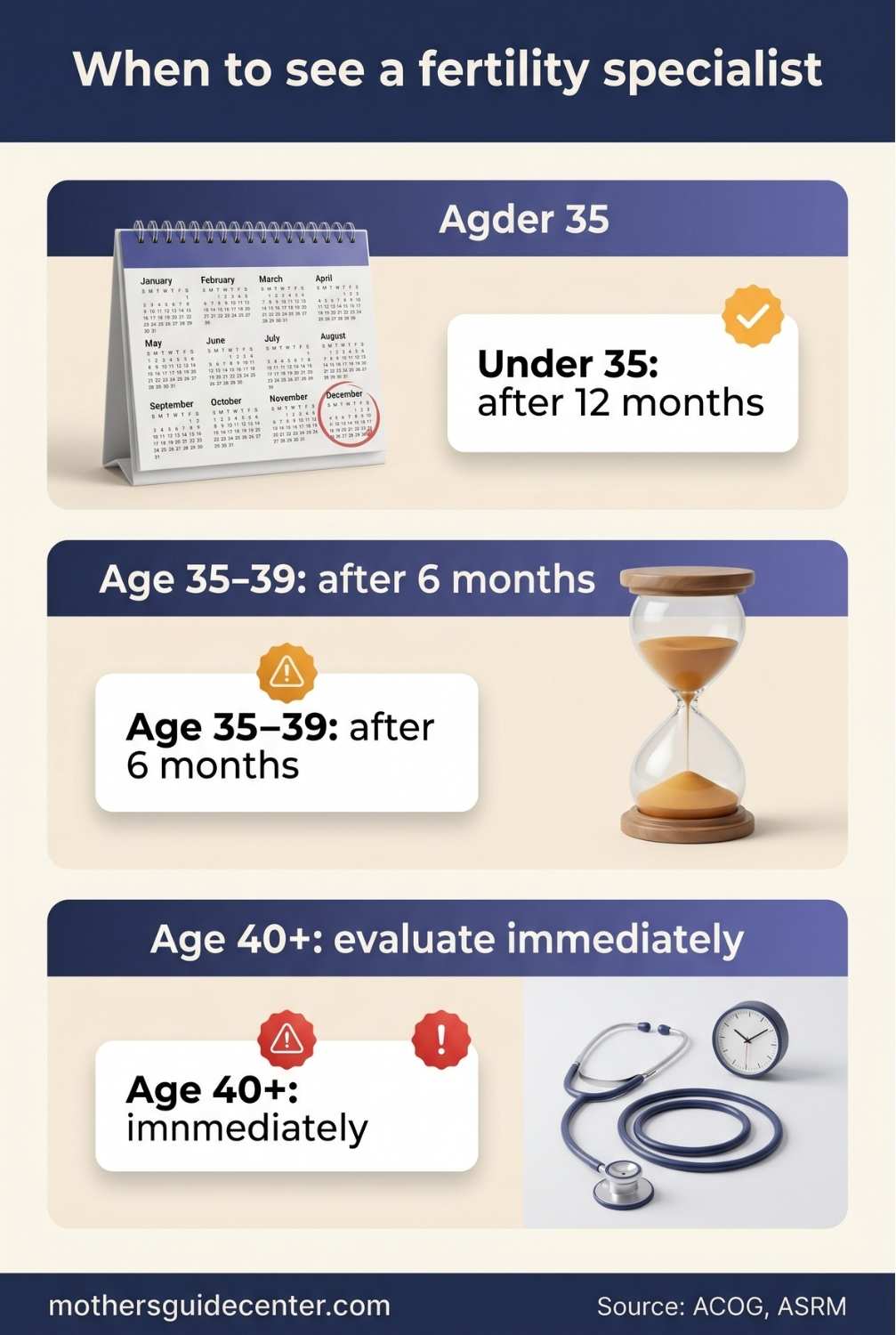
Under age 35: evaluation is recommended after 12 months of regular, well-timed unprotected intercourse without pregnancy.
Age 35 to 39: evaluation is recommended after 6 months of trying.
Age 40 and above: evaluation should occur immediately when you begin trying, given the more rapid decline in fertility and the time-sensitive nature of treatment options.
However, certain circumstances warrant earlier evaluation regardless of age. You should see a provider sooner if you have irregular or absent periods, a history of pelvic inflammatory disease or sexually transmitted infections, known endometriosis or PCOS, a history of two or more miscarriages, previous cancer treatment, or if the male partner has known reproductive health concerns.
A typical initial fertility evaluation includes blood tests to assess hormone levels (FSH, AMH, estradiol, thyroid function), a pelvic ultrasound to evaluate ovarian reserve and uterine structure, and a semen analysis for the male partner. According to the NIH, both partners should be evaluated simultaneously because male and female factors each account for roughly one-third of cases, with the remaining third involving both partners or unexplained causes.
How can you stay emotionally healthy while trying to conceive?
The emotional experience of trying to conceive is the psychological and relational impact of pursuing pregnancy — which can range from excitement and anticipation to anxiety, grief, and relationship strain, especially when conception takes longer than expected. This dimension of TTC is frequently underrepresented in medical literature, despite being one of the most challenging aspects of the journey.
Research consistently shows that the stress of infertility is comparable to the stress associated with serious medical diagnoses. While stress alone does not directly cause infertility, chronic psychological distress can affect hormonal balance, ovulation patterns, and relationship intimacy — all of which influence conception odds indirectly.
Set realistic expectations. Understanding that a 20 to 25 percent per-cycle chance is normal — not a failure — can significantly reduce month-to-month anxiety. Not conceiving in any single cycle is the statistically expected outcome, not a sign that something is wrong.
Communicate with your partner. TTC can place strain on a relationship, particularly when sex becomes scheduled rather than spontaneous. Maintain intimacy beyond fertile-window timing, and discuss openly how each of you is feeling throughout the process.
Limit social media comparison. Pregnancy announcements on social media can feel particularly painful during TTC. Setting boundaries around social media consumption — unfollowing, muting, or taking breaks — is a legitimate and widely recommended coping strategy.
Seek support when needed. Talking to a therapist who specializes in reproductive mental health, joining a support group, or confiding in trusted friends can make a significant difference. If you find that TTC is dominating your thoughts, affecting your sleep, or straining your relationship, professional support is a proactive and healthy step, not a sign of weakness.
Frequently asked questions
What is the best age to try to conceive?
Peak female fertility occurs between ages 20 and 30, when per-cycle conception rates are approximately 20 to 25 percent. Fertility begins to decline gradually after 30 and more rapidly after 35, with per-cycle rates dropping to approximately 10 to 15 percent at 35 and roughly 5 percent at 40. However, many women conceive healthily in their mid-to-late 30s and early 40s. The best time to conceive is when you feel personally, financially, and emotionally ready — with awareness of how age affects the timeline.
Should I track ovulation or just have sex regularly?
Both approaches can work. ASRM states that having intercourse every two to three days throughout the cycle provides adequate coverage of the fertile window without requiring any tracking. However, ovulation tracking with OPKs, BBT, or cervical mucus observation allows you to focus your efforts and can identify potential ovulatory issues earlier. For women with irregular cycles, tracking is especially valuable because the fertile window may be harder to predict.
Can stress prevent you from getting pregnant?
Stress alone is unlikely to prevent conception in a healthy couple, but chronic stress can indirectly affect fertility by disrupting hormonal signals that regulate ovulation, reducing libido, and contributing to lifestyle habits like poor sleep or unhealthy eating. The relationship between stress and fertility is complex and bidirectional — the stress of trying to conceive can itself become a contributing factor. Managing stress through exercise, mindfulness, and professional support is a reasonable part of any preconception plan.
How soon after stopping birth control can you get pregnant?
Fertility can return very quickly after stopping most forms of birth control. For oral contraceptives, ovulation typically resumes within one to three months. For hormonal IUDs and the implant, fertility usually returns within one to two cycles after removal. The exception is the Depo-Provera injection, where return to ovulation can take six to twelve months or longer. According to ACOG, there is no medical reason to wait any specific period after stopping contraception before trying to conceive — except with Depo-Provera, where planning ahead is advisable.
Do fertility supplements actually work?
A standard prenatal vitamin with folic acid, iron, and DHA has strong evidence supporting its use before conception. Beyond that, the evidence for additional fertility supplements — such as CoQ10, DHEA, myo-inositol, or herbal formulations — varies widely. Some have promising preliminary research, particularly CoQ10 for egg quality and myo-inositol for PCOS-related ovulatory dysfunction, but none have the level of evidence that folic acid has. Discuss any supplements beyond a standard prenatal with your provider before starting them.
What is a preconception visit and do I need one?
A preconception visit is an appointment with your OB-GYN or primary care provider specifically focused on optimizing your health before pregnancy. It typically includes a review of your medical history, current medications, vaccination status, genetic screening discussion, and baseline lab work. ACOG recommends a preconception visit for all women planning pregnancy — it is the single best opportunity to identify and address potential issues before they affect conception or early pregnancy.
When to contact your healthcare provider
Contact your provider if you experience any of the following while trying to conceive:
- ⚠️ Irregular or absent periods — cycles consistently shorter than 21 days or longer than 35 days may indicate an ovulatory disorder
- ⚠️ Very painful periods — severe menstrual pain that interferes with daily activities may suggest endometriosis
- ⚠️ Two or more pregnancy losses — recurrent miscarriage warrants evaluation for underlying causes
- ⚠️ Known history of STIs, pelvic surgery, or PID — these can affect tubal patency and reproductive anatomy
- ⚠️ 12 months without conception (under 35) or 6 months (35+) — standard threshold for fertility evaluation referral
This article is for educational purposes only and does not replace medical advice from a qualified healthcare provider.
Sources
- American Society for Reproductive Medicine. (2024). Optimizing Natural Fertility. ASRM.org.
- American College of Obstetricians and Gynecologists. (2019). Committee Opinion No. 762: Prepregnancy Counseling. ACOG.org.
- Centers for Disease Control and Prevention. (2024). Planning for Pregnancy. CDC.gov.
- Mayo Clinic. (2024). How to Get Pregnant. MayoClinic.org.
- Cleveland Clinic. (2026). Conception: Fertilization, Timeline & How to Get Pregnant. ClevelandClinic.org.
- Office on Women’s Health. (2026). Trying to Conceive. WomensHealth.gov.
- National Institute of Child Health and Human Development. (2024). Infertility and Fertility. NICHD.NIH.gov.
- World Health Organization. (2024). Infertility. WHO.int.
- American College of Obstetricians and Gynecologists. (2024). Having a Baby After Age 35. ACOG.org.
- Wilcox, A.J., et al. (1995). Timing of Sexual Intercourse in Relation to Ovulation. New England Journal of Medicine, 333(23), 1517-1521.