
Ashwagandha while breastfeeding is not recommended by most medical authorities due to insufficient safety data. According to LactMed (NIH), no data exist on whether ashwagandha components pass into breast milk, and the herb should be avoided especially while nursing a newborn or preterm infant. Safer evidence-based alternatives are available.
Key takeaways
If you are breastfeeding and searching for natural stress relief, ashwagandha has probably come across your feed. This ancient adaptogenic herb has surged in popularity for its potential to lower cortisol, improve sleep quality, and support emotional balance — benefits that sound ideal when you are running on broken sleep and adjusting to life with a newborn. But when it comes to ashwagandha and breastfeeding, the question is not whether the herb works for adults. The question is whether it is safe for your baby.
The answer, according to the most authoritative lactation safety database in the world, is that we simply do not know — and that uncertainty is reason enough for caution. This guide walks through what the evidence actually says, the specific risks that concern medical professionals, and the safer evidence-based alternatives you can use right now. Every claim here is sourced from Tier 1 medical authorities so you can make an informed decision with your provider.
What is ashwagandha and why do breastfeeding mothers consider it?
Ashwagandha (Withania somnifera) is an adaptogenic herb that has been used in Ayurvedic medicine for centuries to promote vitality, manage stress, and support overall well-being. According to the National Center for Complementary and Integrative Health (NCCIH), ashwagandha is classified as an adaptogen — a substance believed to help the body resist physical and mental stressors. Its active compounds include alkaloids, steroidal lactones (withanolides), and saponins.
Breastfeeding mothers often consider ashwagandha because the postpartum period brings significant hormonal shifts, sleep deprivation, and heightened anxiety. The herb has shown promise in general adult populations for reducing cortisol levels and improving sleep quality. It has also been traditionally used as a galactogogue — a substance believed to increase milk production — though this traditional use has not been validated by clinical trials. The combination of stress relief and potential milk-boosting properties makes it appealing, but appeal does not equal safety when a nursing infant is involved.
Is ashwagandha safe while breastfeeding?
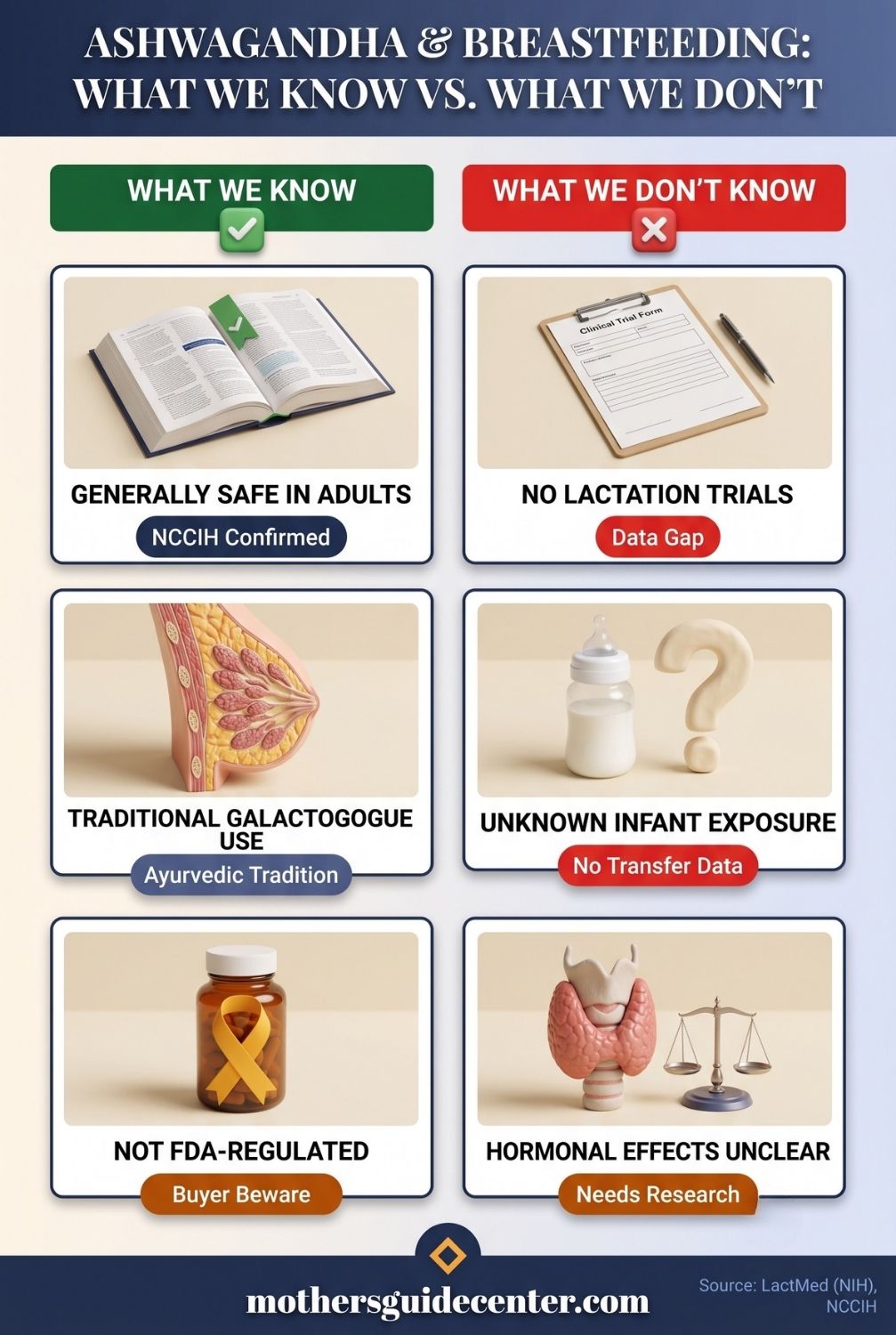
The current medical consensus is that ashwagandha is not recommended during breastfeeding due to insufficient evidence confirming its safety for nursing infants. LactMed, the gold-standard drug-and-lactation database maintained by the National Institutes of Health, is direct on this point: “No data exist on the excretion of any components of Withania into breastmilk or on the safety and efficacy of Withania in nursing mothers or infants.” The database recommends that ashwagandha should be avoided, especially while nursing a newborn or preterm infant.
This is an important distinction: the recommendation to avoid ashwagandha is not based on proven harm. It is based on the absence of safety data. When researchers and clinicians ask is ashwagandha safe while breastfeeding, the honest answer is that nobody has studied it well enough to say yes with confidence. For a substance that crosses biological barriers and affects the endocrine system, that uncertainty matters — particularly because infant organ systems are still developing and may respond differently than adult systems.
It is also worth noting that dietary supplements, including ashwagandha, are not required to undergo pre-market safety testing by the U.S. Food and Drug Administration (FDA). This means quality, potency, and purity can vary significantly between products — an additional layer of risk during a period when both mother and infant are vulnerable.
Can ashwagandha pass into breast milk?
Whether ashwagandha components transfer into breast milk is currently unknown. LactMed explicitly states that no published data exist on the excretion of any ashwagandha compounds into human breast milk. This is the central evidence gap that drives the recommendation to avoid the herb during lactation.
What we do know is that ashwagandha contains biologically active compounds — including withanolides, alkaloids, and saponins — that produce measurable effects on adult hormonal and neurological systems. Many substances with similar pharmacological activity do transfer into breast milk to varying degrees. The World Health Organization (WHO) and the American Academy of Pediatrics (AAP) both operate on a precautionary principle: when transfer data are absent, the substance should be treated as potentially transferable until proven otherwise.
This does not mean ashwagandha definitely enters breast milk. It means no researcher has measured it — and until someone does, the responsible position is caution rather than assumption of safety.
What are the specific risks of taking ashwagandha while breastfeeding?
Three specific risk areas concern medical professionals when it comes to ashwagandha use during lactation. These are theoretical risks based on ashwagandha’s known pharmacological effects in adults — not proven harms in breastfed infants. However, in the YMYL context of infant safety, theoretical risks with no safety data to counter them warrant serious consideration.
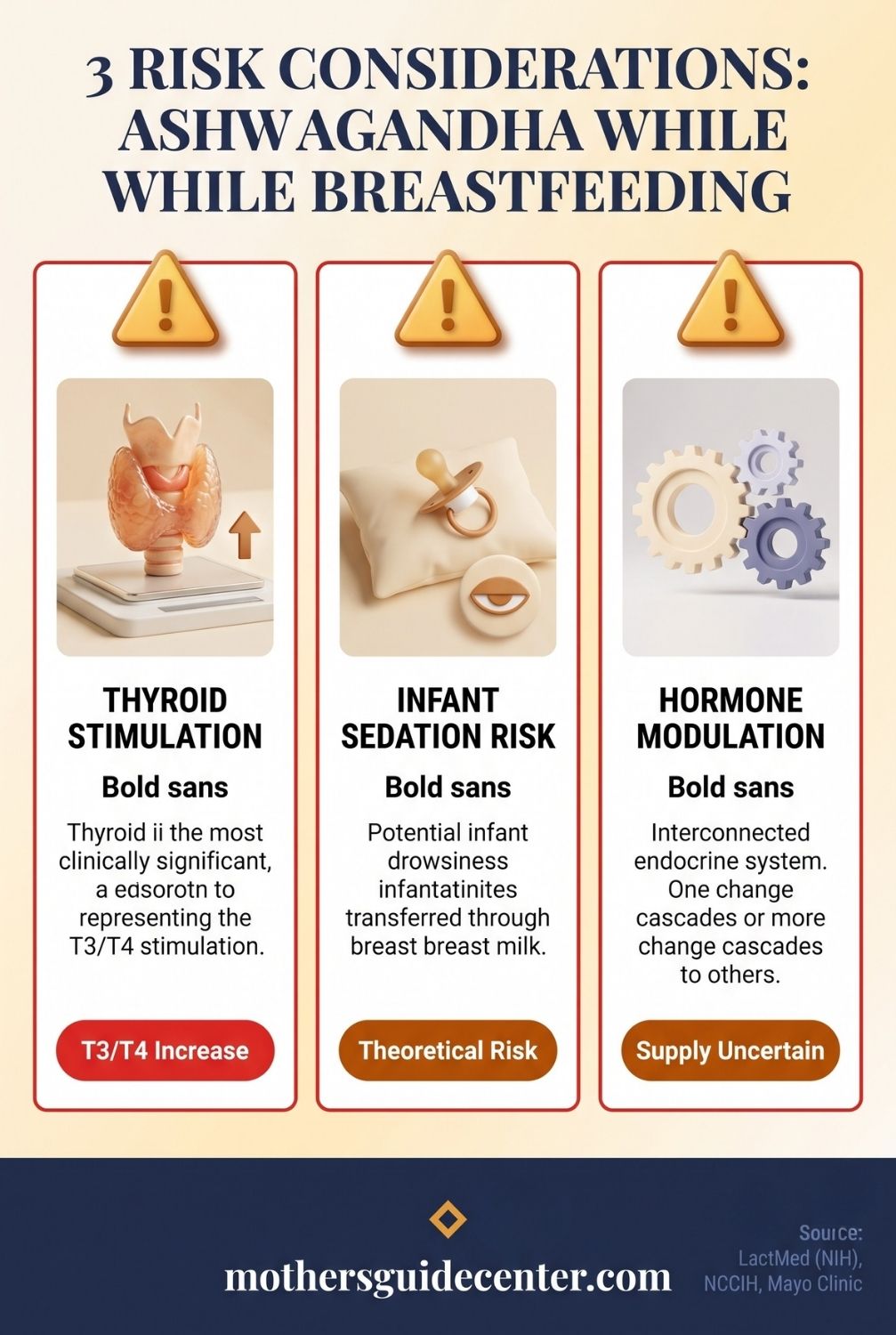
Thyroid stimulation. Ashwagandha has been shown to increase thyroid hormone levels (T3 and T4) in adults. According to the Mayo Clinic, this is a documented interaction that matters for anyone taking thyroid medication. During the postpartum period, thyroid function is already in flux — postpartum thyroiditis affects an estimated 5 to 10 percent of women. If ashwagandha compounds transfer into breast milk, they could theoretically affect the developing thyroid system of a nursing infant.
Sedative effects. The Cleveland Clinic and NCCIH both note that ashwagandha can cause drowsiness, particularly at higher doses. If sedative compounds transfer into breast milk, they could theoretically cause excessive drowsiness in a nursing infant. This concern is heightened for newborns and preterm infants whose metabolic systems are less developed.
Hormonal modulation. Ashwagandha interacts with the endocrine system, affecting cortisol, reproductive hormones, and stress-response pathways. Infant endocrine systems are still developing, and exposure to exogenous hormone-modulating substances is an area where pediatric experts exercise particular caution. The effects on milk supply are also unclear — the herb could theoretically either support or disrupt lactation depending on the hormonal context.
Does ashwagandha affect milk supply?
Ashwagandha’s effect on milk supply is one of the most commonly asked questions about this herb, and the evidence-based answer is that we do not have enough data to say. In Ayurvedic medicine, ashwagandha has been traditionally used as a galactogogue — a substance believed to promote milk production. However, LactMed is unambiguous: “No scientifically valid clinical trials support this use.”
One small study cited by LactMed involved 40 women with self-reported insufficient milk supply who were given a combination supplement called Lactare, which contained wild asparagus, ashwagandha, fenugreek, licorice, and garlic. By day four, milk supply improved and no infants needed supplemental formula. However, because five herbs were combined, it is impossible to determine how much ashwagandha contributed to the outcome — or whether it contributed at all.
LactMed also adds an important principle: “Galactogogues should never replace evaluation and counseling on modifiable factors that affect milk production.” If you are concerned about your milk supply, the most effective first steps are working with a lactation consultant, ensuring frequent and effective milk removal, staying hydrated, and addressing stress and sleep — not adding an unproven supplement.
What does the research say about ashwagandha and breastfeeding?
The research on ashwagandha and breastfeeding is defined by what does not exist rather than by what does. As of the most recent LactMed update (December 2024), there are no randomized controlled trials, no cohort studies, and no case-control studies examining ashwagandha’s effects on breastfeeding mothers or their infants.
Here is what each major authority has concluded. LactMed recommends avoidance due to the complete absence of breastmilk excretion and infant safety data. NCCIH acknowledges that ashwagandha is generally well tolerated in adults but does not address breastfeeding specifically. The American College of Obstetricians and Gynecologists (ACOG) advises that breastfeeding mothers should consult their provider before using any herbal supplement. The InfantRisk Center, a leading resource for medication-and-lactation queries, has publicly noted that the evidence trail for ashwagandha in lactation is frustratingly thin — with claims in the literature often tracing back to other claims rather than primary data.
Some herbalists and practitioners classify ashwagandha as “Lactation Category C” (compatible with breastfeeding based on traditional use), while institutional databases classify it as “insufficient data — avoid.” This disagreement is itself informative: when the clinical evidence is absent, individual practitioners may fall back on traditional frameworks, while institutions prioritize the precautionary principle. For a breastfeeding guide rooted in Tier 1 evidence, the institutional position carries more weight.
What are safer alternatives to ashwagandha while breastfeeding?
If you are looking for stress relief, better sleep, or emotional support while nursing, several options have stronger safety profiles than ashwagandha. These alternatives are not risk-free — no supplement is — but they have more established data in breastfeeding populations or carry no pharmacological exposure at all.
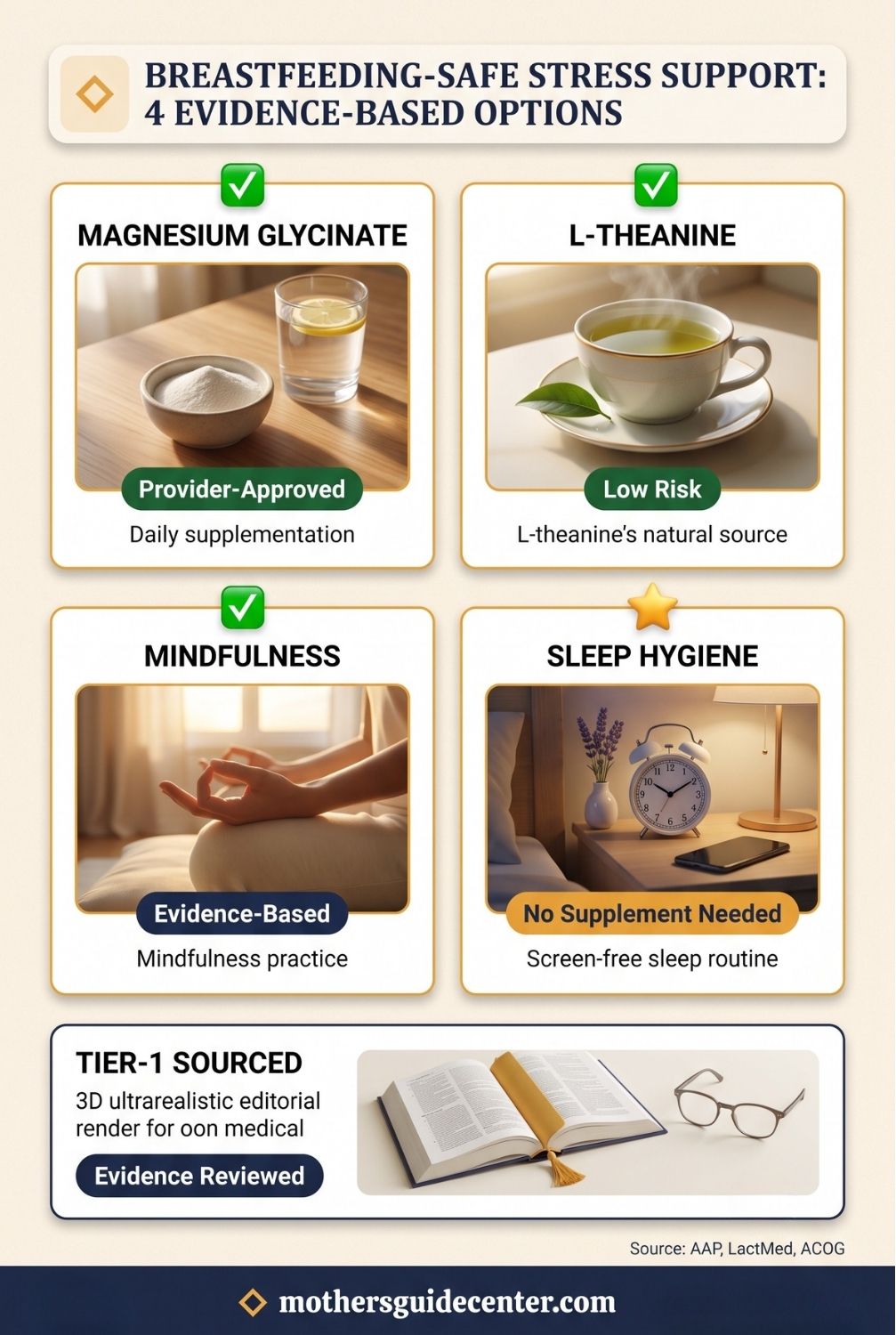
Magnesium glycinate. Magnesium is an essential mineral involved in over 300 enzymatic processes, including those related to stress response and sleep regulation. According to LactMed, magnesium supplementation at standard doses is generally considered compatible with breastfeeding. Magnesium glycinate is the form most commonly recommended for its calming properties and lower likelihood of gastrointestinal side effects. If you are considering magnesium while breastfeeding, discuss dosing with your provider.
L-theanine. Found naturally in green tea, L-theanine is an amino acid associated with relaxation without drowsiness. While formal lactation studies are limited, the compound has a favorable safety profile in adults and no adverse reports in breastfeeding have been documented. Moderate green tea consumption (two to three cups per day) is generally considered compatible with breastfeeding, though caffeine intake should be monitored.
Mindfulness and cognitive behavioral techniques. ACOG recognizes cognitive behavioral therapy (CBT) and mindfulness-based stress reduction as evidence-based approaches for managing postpartum anxiety. These approaches carry zero pharmacological risk to your infant and have strong clinical support for improving maternal well-being. Even brief daily mindfulness practice — five to ten minutes — has been shown to reduce perceived stress in postpartum populations.
Sleep hygiene. Structured sleep hygiene — consistent wind-down routines, reduced screen exposure before bed, and coordinating nighttime feeding duties with a partner or support person when possible — addresses stress at its root without any supplement. The AAP and WHO both emphasize adequate maternal rest as a foundational factor in successful breastfeeding. If you are experiencing postpartum brain fog or persistent fatigue, sleep optimization is the first-line recommendation before any supplement.
When can you start taking ashwagandha after weaning?
Most experts suggest that ashwagandha can be safely reintroduced once you have fully weaned and your milk production has ceased. At that point, the concern about infant exposure through breast milk no longer applies, and ashwagandha’s established safety profile in non-lactating adults becomes the relevant framework.
If you are considering ashwagandha after weaning, consult your healthcare provider before starting — especially if you take thyroid medication (ashwagandha may alter T3 and T4 levels), antidepressants or anti-anxiety medication (potential sedative interaction), or immunosuppressants (ashwagandha may modulate immune function). Start with the lowest recommended dose and monitor your response before increasing. Choose a product that has been third-party tested for purity, since the FDA does not regulate supplement quality before sale.
Frequently asked questions
Can you take ashwagandha while breastfeeding?
Most medical authorities recommend avoiding ashwagandha while breastfeeding due to insufficient safety data. According to LactMed, no data exist on the excretion of ashwagandha components into breast milk or on the safety and efficacy in nursing mothers or infants. The herb should be avoided especially while nursing a newborn or preterm infant.
Does ashwagandha increase or decrease milk supply?
Ashwagandha has been used traditionally as a galactogogue in Ayurvedic medicine, but no scientifically valid clinical trials confirm it increases milk supply. One small study used a combination supplement containing ashwagandha with four other herbs and showed improvement, but the contribution of ashwagandha alone could not be determined. LactMed notes that galactogogues should never replace evaluation of modifiable factors affecting milk production.
What adaptogens are safe while nursing?
Most adaptogens, including ashwagandha, rhodiola, ginseng, and maca, lack sufficient safety data for breastfeeding and are generally not recommended during lactation. Safer evidence-based options for stress management while nursing include magnesium glycinate, which has more established safety data, L-theanine from green tea in moderate amounts, and non-supplement approaches like mindfulness and structured sleep hygiene.
Can ashwagandha help with postpartum anxiety?
While ashwagandha has shown stress-reducing effects in general adult populations, its use specifically for postpartum anxiety during breastfeeding is not recommended due to insufficient safety data for nursing infants. Evidence-based alternatives for postpartum recovery anxiety include cognitive behavioral therapy, magnesium supplementation with provider approval, and the National Maternal Mental Health Hotline at 1-833-TLC-MAMA for immediate support.
What supplements should I avoid while breastfeeding?
Breastfeeding mothers should avoid supplements without established infant safety data. According to medical authorities, this includes most adaptogens such as ashwagandha, rhodiola, and ginseng, as well as herbs like St. John’s Wort, kava, and high-dose botanical extracts. The FDA does not require pre-market safety approval for dietary supplements, so quality and potency can vary. Always consult your healthcare provider before taking any supplement while nursing.
How long after weaning can I start ashwagandha?
Most experts suggest ashwagandha can be reintroduced after you have fully weaned and your milk production has stopped. If you are considering ashwagandha after weaning, consult your healthcare provider first — especially if you take thyroid medication, antidepressants, or immunosuppressants, as ashwagandha may interact with these medications.
When to contact your healthcare provider
Contact your provider or seek immediate care if you experience any of the following while taking any supplement during breastfeeding:
This article is for educational purposes only and does not replace medical advice from a qualified healthcare provider.
Sources
- Drugs and Lactation Database (LactMed). (2024, December 15). Withania. National Institute of Child Health and Human Development, National Library of Medicine.
- National Center for Complementary and Integrative Health. (2023, March). Ashwagandha. National Institutes of Health.
- U.S. Food and Drug Administration. (2024). Dietary Supplements. FDA.gov.
- American Academy of Pediatrics. (2022). Breastfeeding and the Use of Human Milk. Pediatrics.
- American College of Obstetricians and Gynecologists. (2024). Herbal Supplements During Pregnancy and Lactation. ACOG.org.
- Mayo Clinic. (2024). Ashwagandha. Mayo Clinic.
- Cleveland Clinic. (2024). Ashwagandha: What It Is, Benefits and Side Effects. Cleveland Clinic.
- World Health Organization. (2002). Breastfeeding and Maternal Medication. WHO.
- Association for the Promotion and Scientific and Cultural Research of Breastfeeding (APILAM). (2024). Withania somnifera — e-Lactancia Compatibility Database. e-Lactancia.org.