
Postpartum gas is a buildup of trapped air in the digestive tract that commonly occurs in the days and weeks after childbirth. According to the American College of Obstetricians and Gynecologists (ACOG), bowel problems and gas are a normal part of the postpartum phase. Hormonal shifts, weakened pelvic floor muscles, constipation, and surgical effects after a C-section all contribute to increased gas after giving birth.
Key takeaways
- ✓ Postpartum gas is normal after both vaginal and C-section delivery and usually improves within two to six weeks.
- ✓ C-section gas pain involves different mechanisms, including postoperative ileus and referred shoulder pain from CO2 insufflation.
- ✓ Walking is the single most effective home remedy — even five-minute walks stimulate bowel function and gas release.
- ✓ Simethicone (Gas-X) is not absorbed systemically and requires no special precautions during breastfeeding, according to LactMed.
- ✓ Contact your provider if you cannot pass gas or stool for 72 hours, develop fever with abdominal pain, or experience severe distension.
If you are dealing with painful gas, bloating, or flatulence in the days after delivering your baby, you are far from alone. Postpartum gas affects the vast majority of new mothers — whether they delivered vaginally or by cesarean section — and it can range from mildly uncomfortable to genuinely painful. The causes span hormonal shifts, pelvic floor changes, medications, dietary adjustments, and the physical aftermath of surgery.
Despite how common this experience is, it is rarely discussed in prenatal preparation, leaving many mothers surprised and concerned. Understanding why gas after giving birth feels the way it does, why C-section recovery involves different digestive challenges than vaginal birth, and which relief strategies are backed by clinical evidence can help you move through this phase with more confidence. This guide walks through the causes, timelines, home remedies, medication safety, and the warning signs that mean it is time to call your provider.
What causes postpartum gas?
Postpartum gas is a digestive condition caused by the combined effects of hormonal changes, physical strain on the pelvic floor, constipation, and medication side effects that occur during and after childbirth. Under normal circumstances, according to the National Institute of Diabetes and Digestive and Kidney Diseases (NIDDK), the average person passes gas around 15 to 25 times per day. During the postpartum period, multiple factors converge to increase gas production and make it harder to pass.
The most significant driver is progesterone withdrawal. Throughout pregnancy, elevated progesterone relaxes smooth muscle — including the walls of your intestines — slowing digestion. After delivery, progesterone drops sharply, but your digestive system does not snap back immediately. This lag leaves food sitting in the intestines longer, where gut bacteria ferment it and produce excess gas.
Constipation compounds the problem. According to ACOG, constipation is one of the most common postpartum complaints. When stool moves slowly, it creates a physical blockage that traps gas behind it, building pressure and cramping. Pain medications — particularly opioids prescribed after cesarean delivery — further slow bowel transit. Iron supplements given to address postpartum blood loss are another well-documented constipation trigger.
The pelvic floor also plays a direct role. These muscles support the rectum and control the anal sphincter — the ring of muscle that holds gas in. Pregnancy puts months of strain on the pelvic floor, and delivery stretches or tears these muscles further. The result is reduced control over when and how gas passes, which many mothers experience as unexpected or uncontrollable flatulence. This is a distinct issue from trapped gas pain, though the two often occur together.
Why does gas pain feel different after a C-section?
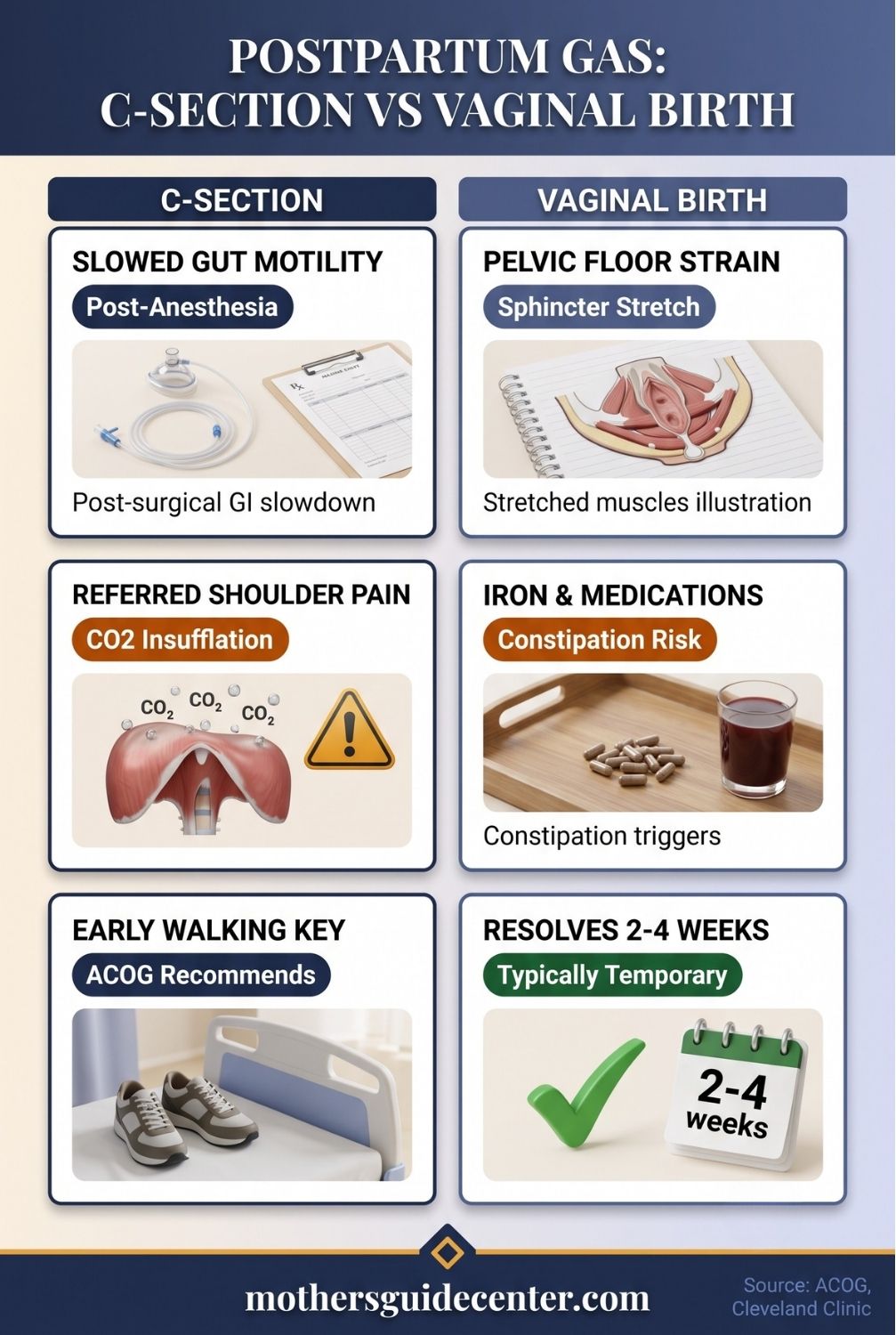
Gas pain after a C-section is a distinct clinical phenomenon caused primarily by postoperative ileus — a temporary slowdown or shutdown of intestinal motility following abdominal surgery. According to the Cleveland Clinic, anesthesia, surgical manipulation of the abdominal organs, and opioid pain medication all contribute to this temporary gut paralysis. Your intestines essentially go quiet for a period after surgery, allowing gas to accumulate with no forward movement to release it.
One of the most surprising symptoms of gas pain after C-section is referred shoulder pain. During cesarean surgery, carbon dioxide (CO2) is sometimes introduced into the abdominal cavity, and residual gas can become trapped beneath the diaphragm after the procedure. This trapped gas irritates the phrenic nerve, which runs from the neck through the chest to the diaphragm. The brain interprets this irritation as pain in the shoulder — a phenomenon known as referred pain. This is not a shoulder injury; it is gas pressure inside the abdomen registering in a different location. The shoulder pain typically resolves within a few days as the CO2 is gradually absorbed by the body.
Gas pain after C-section typically peaks around day two to three and begins improving as bowel function returns. Hospital staff will ask whether you have passed gas — this is a clinical milestone signaling that your intestines are waking up. Most women pass gas within 24 to 48 hours post-surgery. Research has shown that simple interventions like chewing gum can stimulate the gut and speed the return of bowel function after abdominal surgery. Walking, even in short increments, remains the most consistently recommended approach by ACOG for post-cesarean GI recovery.
Is postpartum gas normal after vaginal birth?
Gas after vaginal birth is completely normal and primarily driven by pelvic floor strain and hormonal readjustment rather than surgical gut slowdown. According to ACOG’s guidance on postpartum pain management, mothers may pass gas when they do not mean to or do not expect it — a direct consequence of the stretching and potential tearing of the anal sphincter muscles during delivery.
An episiotomy — the surgical cut sometimes made between the vaginal opening and the anus to prevent tearing — can further weaken pelvic floor control and extend the time needed to regain muscle function. Women who experienced third- or fourth-degree perineal tears during delivery have a higher likelihood of temporary anal incontinence, which includes involuntary passage of gas. These symptoms are most pronounced in the first few weeks and typically improve as the pelvic floor heals.
Unlike C-section gas, vaginal-birth gas does not usually involve the severe trapped-gas pain or referred shoulder pain. The discomfort is more commonly related to postpartum recovery bloating, constipation from fear of straining against healing tissues, and the ongoing hormonal transition that slows digestive motility for several weeks after delivery.
How long does postpartum gas typically last?
Postpartum gas is a temporary condition that typically resolves as hormones stabilize and the digestive system returns to its pre-pregnancy function. The exact timeline depends on how you delivered and what is driving your symptoms.
After an uncomplicated vaginal delivery, most women notice gas and bloating improving within the first one to two weeks as the pelvic floor begins to recover and constipation eases. If an episiotomy or significant tear occurred, discomfort may persist for two to three weeks while the area heals.
After a C-section, the initial acute gas pain from postoperative ileus usually peaks around day two to three and improves significantly within the first week. Broader postpartum bloating and gas may continue for two to four weeks as your GI tract fully recovers from surgery and medication effects.
According to the Cleveland Clinic, most postpartum digestive symptoms resolve within the first six to eight weeks. If gas pain, severe bloating, or changes in stool patterns persist beyond six weeks without improvement, a clinical evaluation is warranted to rule out conditions like food intolerance, pelvic floor dysfunction, or thyroid-related digestive changes that can emerge in the postpartum period.
What foods make postpartum gas worse?
Dietary triggers for postpartum gas are the same gas-producing foods that affect anyone — but a recovering digestive system is less equipped to handle them efficiently. According to the NIDDK, the most common offenders include cruciferous vegetables (broccoli, cabbage, Brussels sprouts), beans and lentils, whole grains, onions, and certain fruits high in fructose like apples and pears.
Dairy products can be a significant trigger for mothers who develop temporary lactose sensitivity postpartum. Carbonated drinks add swallowed air directly to the digestive tract. Eating too quickly — common when caring for a newborn — increases the amount of air swallowed with each bite. Chewing gum and drinking through straws also introduce excess air.
If you are breastfeeding, do not eliminate entire food groups without guidance from your provider — your body needs adequate nutrition to sustain milk production. Instead, try a food-and-symptom diary for seven to ten days to identify specific triggers. A practical approach from postpartum meal prep planning: focus on smaller, more frequent meals with cooked (not raw) vegetables, lean proteins, and adequate hydration. These adjustments reduce the digestive workload without compromising nutritional quality.
How can you relieve postpartum gas at home?
Postpartum gas relief involves a combination of movement, positioning, dietary adjustments, and targeted comfort measures. No single remedy resolves all symptoms, but layering several strategies together typically produces meaningful improvement within a few days.
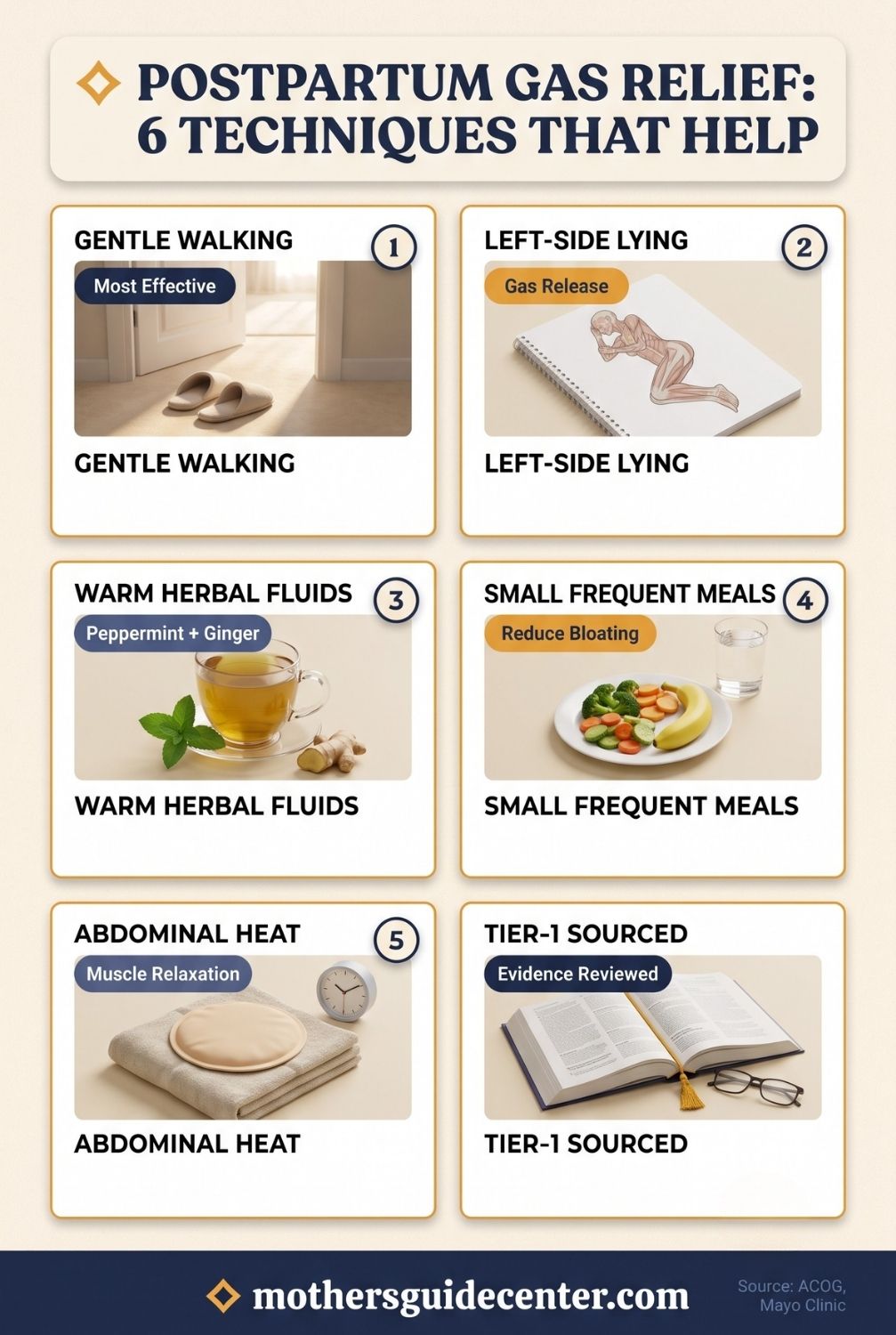
Walking is the most consistently recommended approach. ACOG encourages early mobilization after both vaginal and cesarean births. Even five-minute walks around your room or hallway every hour stimulate peristalsis — the rhythmic muscle contractions that move gas through the intestines. You do not need long walks; frequency matters more than distance. If you had a C-section, walk at whatever pace feels comfortable, and use an abdominal support if it reduces incision-site pulling.
Positioning can make a significant difference. Lying on your left side with knees gently drawn toward your chest allows gas to move through the colon more efficiently — this takes advantage of the anatomical curve of the large intestine. The knees-to-chest position (lying on your back and slowly bringing both knees up) helps release trapped gas from the lower intestines. If you had a C-section, attempt these positions only when cleared by your care team and stop if you feel sharp incision pain.
Warm fluids and heat therapy offer additional relief. Warm water, peppermint tea, or ginger tea can relax intestinal smooth muscle and encourage gas movement. A warm compress or heating pad on a low setting placed over the lower abdomen helps relax abdominal muscles, though it should not be placed directly on a healing C-section incision. Gentle clockwise abdominal massage — following the path of the colon — can also help move gas along.
Hydration deserves emphasis. Dehydration hardens stool, worsens constipation, and amplifies gas buildup. Aim for at least eight glasses of water per day — more if you are breastfeeding, since milk production increases fluid requirements.
Is Gas-X (simethicone) safe while breastfeeding?
Simethicone — the active ingredient in Gas-X, Mylicon, and similar over-the-counter gas relief products — is a silicone-based compound that works by breaking up gas bubbles in the digestive tract, making them easier to pass. According to LactMed (NIH Drugs and Lactation Database), simethicone is not absorbed orally and therefore cannot be transferred into breastmilk. The database states that no special precautions are required for breastfeeding mothers taking simethicone.
The StatPearls (NIH) pharmacology reference further confirms that simethicone is not absorbed systemically and is considered safe in both pregnancy and breastfeeding. Notably, simethicone is also given directly to infants for colic-related gas — another indicator of its safety profile.
For constipation-related gas, ACOG notes that docusate sodium (Colace) is a commonly used stool softener in the postpartum period. As with any medication, confirm specific dosing with your provider, particularly if you are taking other postpartum medications simultaneously.
Can breastfeeding itself cause gas in mothers?
Breastfeeding does not directly cause postpartum gas in mothers, but several breastfeeding-related factors can worsen digestive discomfort. The physical demands of nursing — frequent feedings, disrupted sleep, and limited time to prepare or eat meals — often lead to eating too quickly, skipping meals, or relying on convenience foods that are higher in processed ingredients and more likely to produce gas.
Dehydration is a significant but often overlooked factor. Breastfeeding mothers require additional fluid intake to sustain milk production, and inadequate hydration slows bowel transit and worsens constipation. Hormonal shifts specific to breastfeeding — elevated prolactin and oxytocin — may also subtly influence gut motility, though research on this mechanism is limited.
If you notice that postpartum gas breastfeeding patterns seem connected — for example, worsening during cluster feeding periods when meals are rushed — the solution is usually practical rather than medical: keep water and easy-to-eat, gas-friendly snacks like bananas, rice cakes, or prepared postpartum snacks within reach during feeding sessions.
Frequently asked questions
Why does my postpartum gas smell so bad?
Foul-smelling postpartum gas is usually caused by bacterial fermentation of food sitting longer in a slower digestive tract. Progesterone withdrawal, constipation, iron supplements, and antibiotics given during labor or C-section all shift your gut microbiome temporarily. As your digestive function normalizes over the first few weeks, the odor typically improves. Staying hydrated and eating probiotic-rich foods like yogurt may help restore balance sooner.
Does walking help with postpartum gas?
Walking is one of the most effective and evidence-supported remedies for postpartum gas. Even short five-minute walks stimulate peristalsis — the wave-like muscle contractions that move gas through the intestines. ACOG recommends early mobilization after both vaginal and cesarean births. Start with slow walks around your room or hallway and gradually increase distance as your recovery allows.
Can iron supplements make postpartum gas worse?
Iron supplements are a common contributor to postpartum constipation and gas. Many providers prescribe iron after delivery to address blood loss, but the mineral slows bowel transit and can increase bloating. If iron supplements are worsening your gas, ask your provider about adjusting the dose, switching formulations, or taking the supplement with vitamin C and plenty of water to improve absorption and reduce side effects.
Can pelvic floor exercises help with gas after birth?
Pelvic floor exercises can help improve gas control over time by strengthening the muscles around the anal sphincter. Kegel exercises — contracting and releasing the pelvic floor muscles — are a common starting point. However, results take weeks to months, and these exercises address gas incontinence rather than trapped gas pain. If symptoms persist, a pelvic floor physical therapist can provide a tailored assessment and treatment plan. Your postpartum body benefits from targeted rehabilitation.
Is postpartum bloating the same as postpartum gas?
Postpartum bloating and postpartum gas are related but not identical. Bloating refers to the sensation of abdominal fullness, tightness, or visible swelling, which can result from gas but also from fluid retention, uterine changes, or weakened abdominal muscles. Postpartum gas specifically involves excess air trapped in the digestive tract causing flatulence, cramping, or sharp pain. The two often occur together during postpartum recovery.
How soon after a C-section should you be able to pass gas?
Most women pass gas within 24 to 48 hours after a C-section, which is why hospital staff often ask about it — it signals that bowel function is returning. According to Cleveland Clinic guidance on postoperative recovery, passing gas means the intestines are waking up after anesthesia. If you have not passed gas within 72 hours, let your care team know, as this may indicate a need for further evaluation.
When should you contact your healthcare provider?
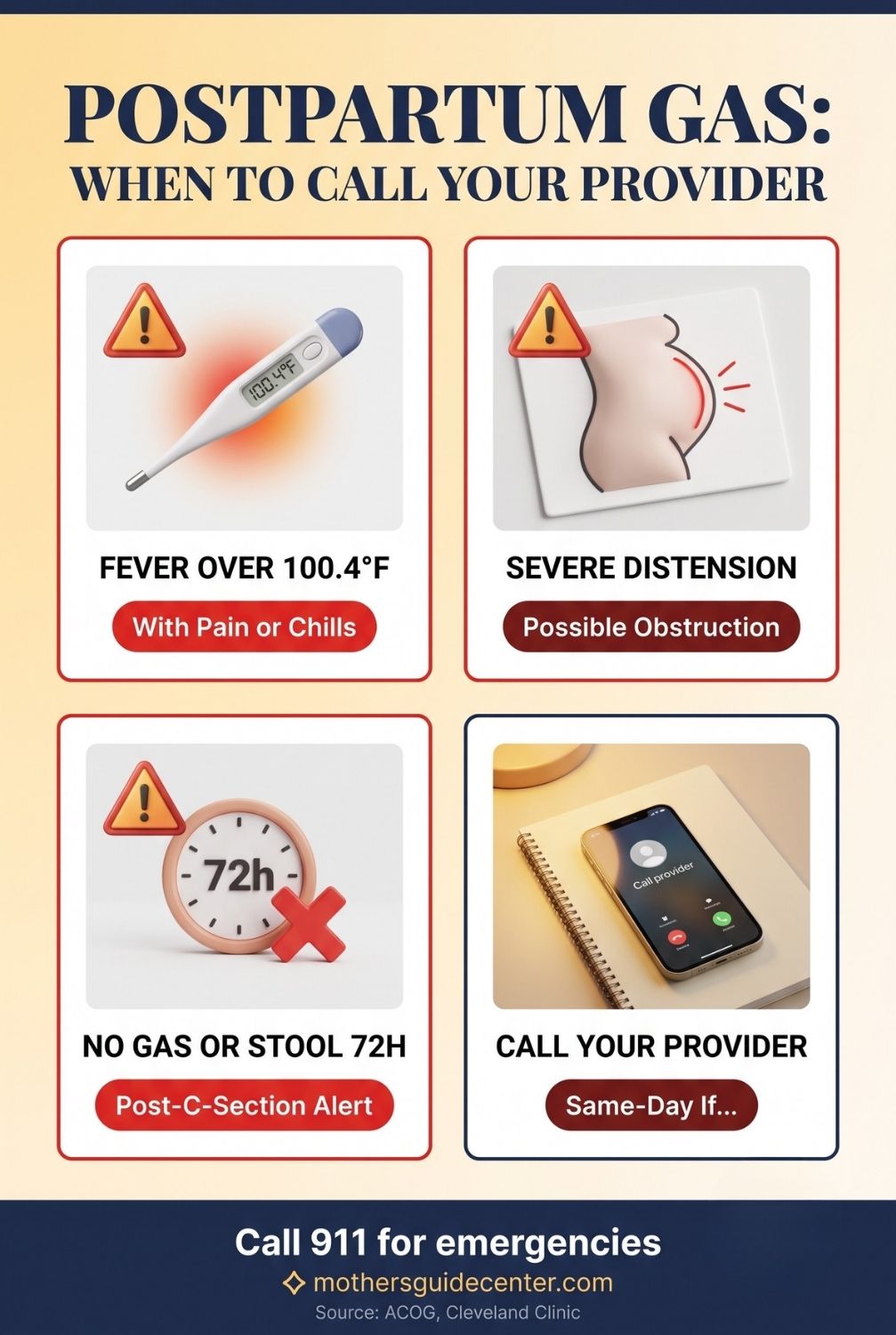
While postpartum gas is overwhelmingly normal, certain symptoms indicate a condition that needs medical evaluation. Contact your provider or seek immediate care if you experience:
- ⚠️ Inability to pass gas or stool for 72 hours after a C-section — may indicate postoperative ileus or bowel obstruction
- ⚠️ Fever over 100.4°F (38°C) with abdominal pain — possible sign of infection
- ⚠️ Severe abdominal distension with vomiting — may indicate bowel obstruction requiring urgent evaluation
- ⚠️ Blood in your stool or black tarry stool — requires evaluation regardless of other symptoms
- ⚠️ Gas pain that worsens rather than improving over the first two weeks — may signal an underlying condition
This article is for educational purposes only and does not replace medical advice from a qualified healthcare provider.
Sources
- American College of Obstetricians and Gynecologists. (2024). Postpartum Pain Management. ACOG.org.
- American College of Obstetricians and Gynecologists. (2024). Cesarean Birth. ACOG.org.
- Cleveland Clinic. (2025). Postpartum: Stages, Symptoms & Recovery Time. clevelandclinic.org.
- Cleveland Clinic. (2024). Ileus. clevelandclinic.org.
- National Institute of Diabetes and Digestive and Kidney Diseases. (2024). Gas in the Digestive Tract. NIDDK.nih.gov.
- Drugs and Lactation Database (LactMed). (2026). Simethicone. National Library of Medicine. Revised February 2026.
- Becker DE. (2023). Simethicone — Mechanism of Action and Clinical Use. StatPearls, National Library of Medicine.
- Mayo Clinic. (2024). Postpartum Care: What to Expect After a Vaginal Delivery. mayoclinic.org.
- Mayo Clinic. (2024). C-Section: Overview. mayoclinic.org.
- Short V, et al. (2015). Chewing gum for postoperative recovery of gastrointestinal function. Cochrane Database of Systematic Reviews. PubMed.